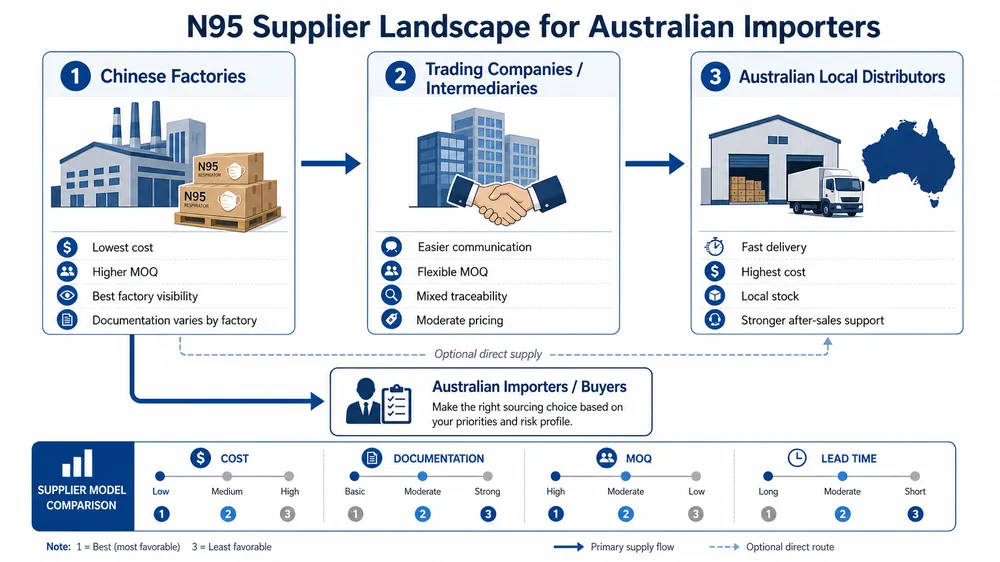
The Australian N95 market is messier than it looks from the outside. Post-COVID procurement left a lot of buyers with warehouses full of masks that passed a price check but failed a compliance audit. The TGA tightened its oversight of imported respiratory protective equipment, and distributors who had been buying from trading companies on Alibaba found themselves holding product with incomplete documentation, inconsistent BFE results, or certifications that didn't map cleanly to Australian import requirements.
This guide is for buyers who are past that phase — distributors building repeatable hospital or aged-care supply chains, procurement teams sourcing for institutional tenders, and importers who want to understand the full supplier landscape before committing to a sourcing route. We'll cover the regulatory context, the evaluation criteria that actually matter, and 10 real suppliers worth knowing about, including where factory-direct sourcing changes the economics.

The Australian Regulatory Context: What TGA and AS/NZS 1716 Actually Require
Before evaluating any supplier, you need to be clear on what the Australian regulatory framework demands — because it's not the same as the US or EU framework, and suppliers who don't understand that distinction will cost you time at customs.
In Australia, N95-equivalent respirators fall under two overlapping frameworks depending on their end use. AS/NZS 1716:2012 is the Australian/New Zealand standard for respiratory protective devices — it's the benchmark for workplace safety applications and is referenced by Safe Work Australia. For medical-grade use in healthcare settings, the Therapeutic Goods Administration (TGA) regulates surgical N95 respirators as Class IIa medical devices under the Therapeutic Goods Act. If you're supplying hospitals, aged-care facilities, or any clinical environment, TGA registration or inclusion on the Australian Register of Therapeutic Goods (ARTG) is the relevant requirement.
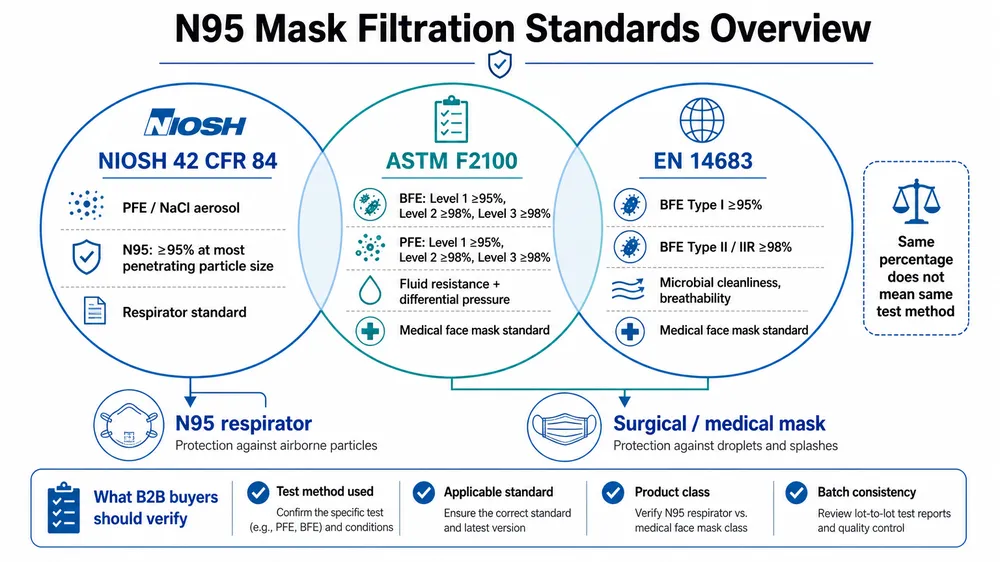
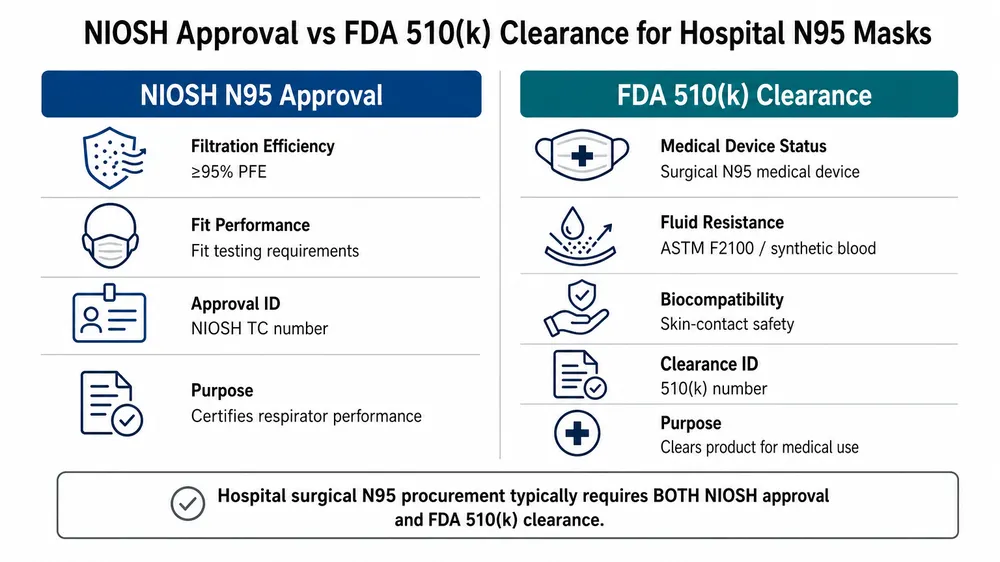
The practical implication: a mask that carries NIOSH N95 approval or CE (EU MDR) clearance is not automatically TGA-registered. Those certifications are strong evidence of product quality and regulatory maturity, and TGA assessors do look at them — but they don't substitute for the ARTG pathway if your buyer is a hospital procurement team. (We've seen this catch Australian distributors off guard when they move from industrial PPE supply into healthcare supply. The documentation requirements are different, and the TGA's post-market surveillance has teeth.)
For importers sourcing from China, the practical documentation checklist looks like this:
- ISO 13485:2016 — Medical device quality management system; TGA expects this from manufacturers supplying Class IIa devices
- CE (EU MDR) clearance — Recognized by TGA as supporting evidence of conformity
- FDA 510(k) registration — Signals regulatory maturity; not a TGA substitute but respected by procurement auditors
- Third-party test reports — BFE, PFE, and Delta-P results from accredited labs (NELSON, SGS, Intertek, or equivalent)
- Certificate of Conformity — Batch-specific, not just a general company certificate
- Packing lists and shipping documentation — Required for customs clearance; errors here cause delays regardless of product quality
The gap most trading companies can't fill is the batch-specific documentation. A factory with a real QC system generates test reports per production run. A trading company that sources from multiple factories often can't provide that — they have a general certificate from one audit cycle and nothing that ties to your specific shipment.
How to Evaluate N95 Suppliers Before You Commit to a Volume Order
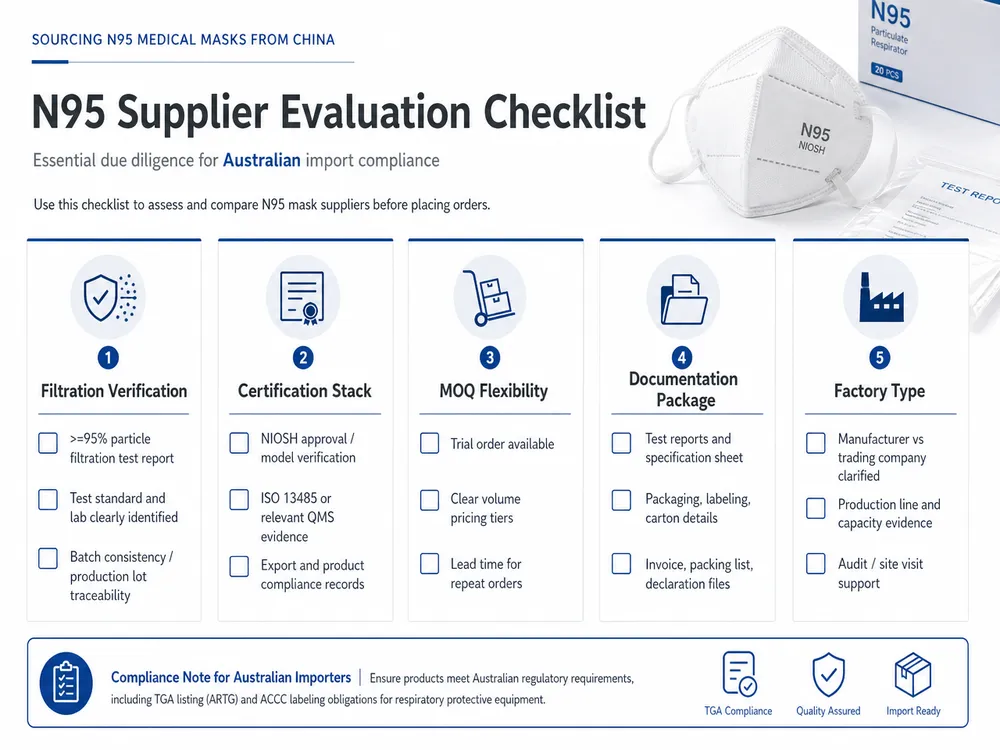
The evaluation criteria that matter for Australian import compliance are different from what a US buyer prioritizes. Here's the framework we'd apply:
Filtration verification — the non-negotiable
N95 designation means ≥95% particulate filtration efficiency against 0.3-micron particles. The question is not whether the supplier claims this — every supplier claims it. The question is whether they can show you batch-specific PFE test results from an accredited third-party lab, and whether those results are consistent across multiple production runs. One test report from 2021 is not evidence of current production quality.
The underlying variable is the meltblown nonwoven layer. Meltblown fabric is the filtration layer — the middle layer in an N95 that does the actual work. Its performance depends on fiber diameter, basis weight, and electrostatic charge, all of which degrade if the fabric is stored improperly or sourced from inconsistent suppliers. Factories that buy meltblown from outside suppliers are exposed to that variability. Factories that produce their own meltblown control it.
Certification stack — depth, not just breadth
ISO 13485:2016 is the baseline. CE (EU MDR) and FDA 510(k) registration indicate the factory has been through a rigorous third-party audit process — not just a paper review. Ask for the certificate number and verify it. CE certificates under the old MDD (Medical Device Directive) are no longer valid under EU MDR; if a supplier is showing you a pre-2021 CE certificate, that's a flag.
MOQ and documentation per shipment
For Australian distributors entering hospital or aged-care supply chains, trial orders in the 50,000–200,000 piece range are common before committing to annual contracts. A supplier with a 500,000-piece MOQ minimum is not a realistic partner for market entry. Equally important: confirm that the supplier provides batch-specific test reports and a Certificate of Conformity with every shipment, not just on request.
Export documentation completeness
Your customs broker and your buyer's compliance team will both need: commercial invoice, packing list, bill of lading, Certificate of Conformity, and test reports. If the supplier can't produce all of these as a standard package, you're doing their paperwork for them.
The 10 N95 Medical Mask Suppliers Australian Importers Should Know
The suppliers below represent the realistic landscape for Australian buyers — a mix of Chinese manufacturers with export-grade certification stacks, established local distributors, and one factory-direct option positioned specifically for importers who want to control their supply chain economics. Supplier descriptions are based on publicly available information; verify current certifications, MOQs, and pricing directly before placing orders.
1. eztio (Gaomi Eztio Medical Technology Co., Ltd.)
Type: Factory-direct Chinese manufacturer Website: eztio.com Location: Gaomi, Shandong, China
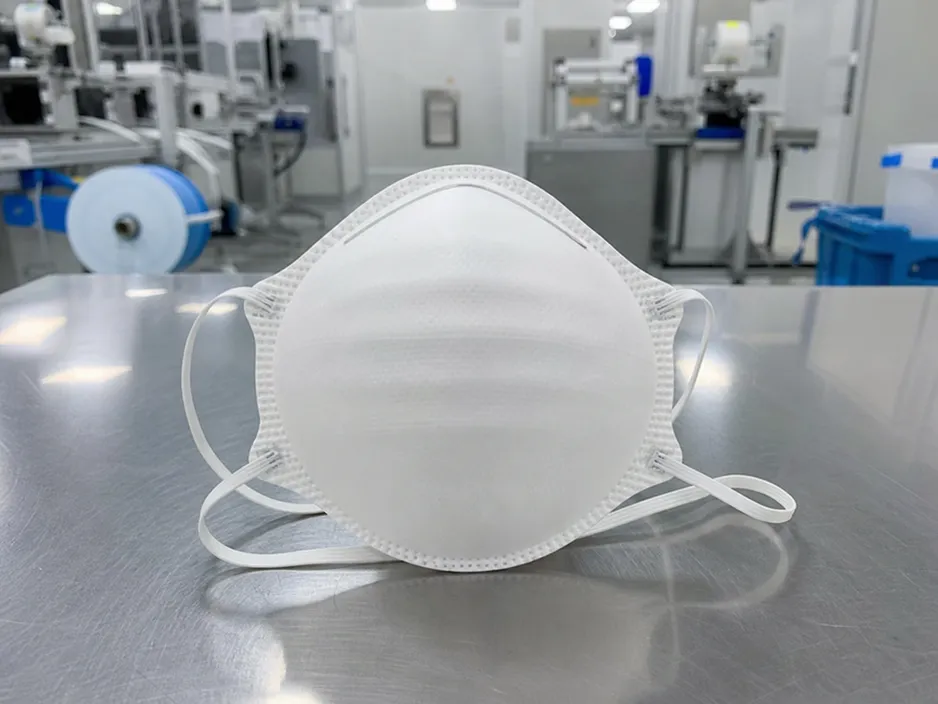
We manufacture N95 respirators and surgical masks from a 12,000 m² facility in Gaomi, Shandong. Six fully automated production lines, 150 employees, 120 million pieces annual capacity. The certification stack — ISO 13485:2016, ISO 9001:2015, CE (EU MDR), FDA 510(k) registered, SGS — covers the documentation requirements that TGA-aware procurement teams and Australian customs both look for.
The differentiator that matters most for Australian buyers is in-house meltblown production. We produce the filtration layer ourselves, which means BFE and PFE specs are controlled at the source, not dependent on a third-party fabric supplier's batch consistency. When you order a mask rated at ≥95% PFE, we're not hoping the fabric supplier shipped the right roll — we set the fiber diameter, basis weight, and electrostatic charge to match the spec. Batch-specific test reports from our in-house QC lab (BFE, PFE, Delta-P) travel with every shipment, along with a Certificate of Conformity and full export documentation package.
MOQ for standard N95 SKUs starts at 50,000 pieces — sized for market-entry orders and trial programs before you commit to annual contract volumes. OEM/ODM packaging is available for distributors building private-label programs for hospital or aged-care channels. (Most of our Australian inquiries come from distributors who've had a documentation problem with a previous Chinese supplier and are looking for a factory that can actually produce the compliance paperwork, not just the masks.)
For a deeper look at our N95 Medical Masks range and specifications, the product page covers configurations, filtration specs, and packaging options.
2. 3M Australia
Type: Global manufacturer with local distribution Website: 3m.com/en-AU Location: Australian operations; manufacturing in multiple global facilities
3M's N95 respirators — particularly the 8210 and 1860 series — are the benchmark product in Australian healthcare procurement. NIOSH-approved, TGA-registered for surgical N95 applications, and stocked through major Australian distributors including Blackwoods and Bunzl. The supply chain is reliable and the compliance documentation is complete.
The trade-off is cost and flexibility. 3M product carries a significant price premium over factory-direct Chinese alternatives, and MOQ and lead time are dictated by distributor stock levels rather than direct factory terms. For institutional buyers where brand recognition matters in procurement audits, 3M is often the path of least resistance. For distributors building margin-competitive supply chains, the unit economics are harder to justify at scale.
3. Honeywell Safety Products Australia
Type: Global manufacturer with local distribution Website: honeywellsafety.com/au Location: Australian distribution; manufacturing in US and Asia
Honeywell's DF300 and Survivair N95 lines are well-established in Australian industrial and healthcare markets. NIOSH-approved and available through Australian safety distributors. Honeywell's supply chain is more diversified than 3M's, with manufacturing across multiple Asian facilities, which has historically provided better availability during supply disruptions.
Similar cost profile to 3M — premium pricing relative to factory-direct sourcing, with the trade-off being established local stock and familiar compliance documentation for Australian procurement teams.
4. Moldex-Metric
Type: US manufacturer with Australian distribution Website: moldex.com Location: US manufacturing; distributed in Australia through safety supply channels
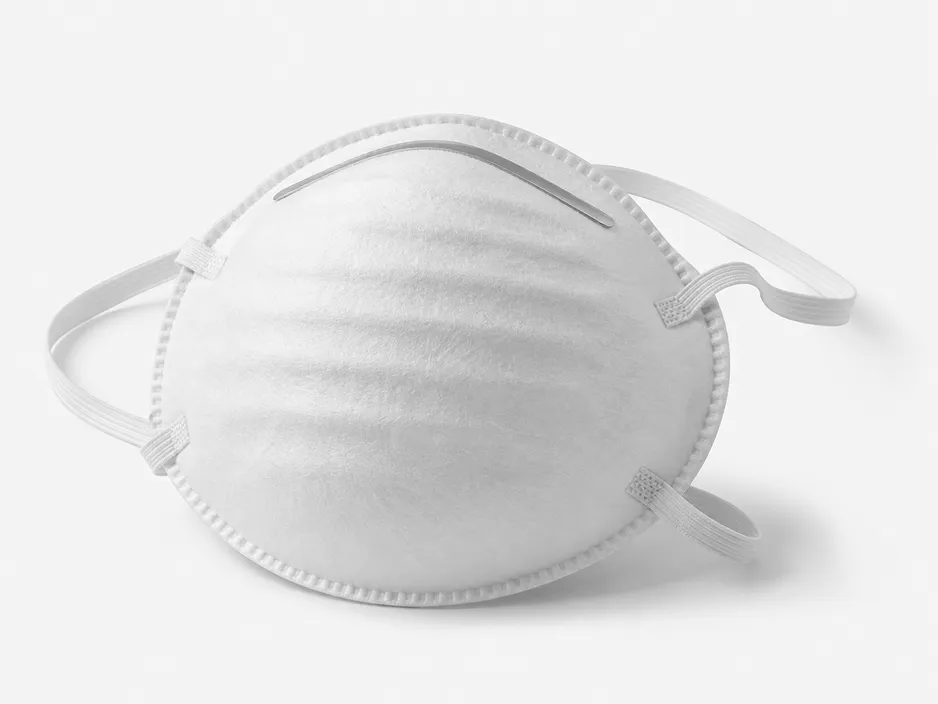
Moldex N95 respirators (Series 2200, 2300) carry NIOSH approval and are available in Australia through industrial safety distributors. Moldex is known for its cup-style respirator design and has a strong reputation in healthcare and industrial applications. Less dominant in Australian hospital procurement than 3M but a credible alternative for industrial and construction applications.
5. Kimberly-Clark Professional (Halyard Health)
Type: Global manufacturer with Australian distribution Website: kcprofessional.com/en-au Location: Australian distribution; manufacturing in Asia and US
Kimberly-Clark's FLUIDSHIELD N95 surgical respirators are TGA-registered and used in Australian hospital systems. The product is positioned specifically for surgical environments — fluid resistance is the differentiating spec. Available through healthcare supply distributors in Australia. For buyers supplying operating theatre or procedural environments, this is a relevant option; for general clinical or aged-care supply, the premium over standard N95 configurations may not be justified.
6. Ansell Healthcare
Type: Australian-headquartered global manufacturer Website: ansell.com Location: Headquartered in Melbourne; manufacturing in Asia and globally
Ansell is one of the few Australian-headquartered companies with genuine manufacturing capability in the PPE space. Their respiratory protection range includes N95-equivalent products distributed through their global network. For Australian buyers, Ansell offers the combination of local commercial relationships and global manufacturing scale. Their compliance documentation for Australian markets is typically complete, and their sales teams understand TGA requirements.
7. Blackwoods (Wesfarmers Industrial & Safety)
Type: Australian distributor Website: blackwoods.com.au Location: Australia-wide distribution network
Blackwoods is the largest industrial safety distributor in Australia, stocking N95 respirators from 3M, Honeywell, Moldex, and other brands. For buyers who need immediate stock, local credit terms, and a single-supplier relationship for broader PPE categories, Blackwoods is the practical choice. They are not a manufacturer — they are a distribution channel.
The margin structure reflects that. Blackwoods pricing includes distributor margin on top of manufacturer pricing, so unit costs are higher than factory-direct sourcing at equivalent volumes. The value proposition is convenience, local stock, and consolidated invoicing — not unit economics.
8. Bunzl Healthcare Australia
Type: Australian healthcare distributor Website: bunzlhealthcare.com.au Location: Australia-wide distribution
Bunzl Healthcare is a major supplier to Australian hospitals, aged-care facilities, and medical practices. Their N95 range includes TGA-registered products from established global brands. For buyers supplying into hospital procurement systems, Bunzl's existing supplier relationships and compliance documentation make them a low-friction option.
Same trade-off as Blackwoods: distributor pricing, not factory pricing. Bunzl's value is in healthcare-specific supply chain management and the ability to handle hospital procurement requirements, not in unit cost competitiveness.
9. Protective Industrial Products (PIP) / Protective Gear Australia
Type: Distributor / importer Website: pipglobal.com Location: US-headquartered with Australian operations
PIP is a global PPE distributor with Australian market presence. Their N95 range sources from multiple manufacturers and is distributed through industrial and safety channels. Less dominant in healthcare procurement than Bunzl or Blackwoods, but relevant for industrial and construction buyers who need N95 respirators alongside broader PPE categories.
10. Direct Factory Sourcing via Verified Chinese Manufacturers (Guangdong / Shandong Cluster)
Type: Factory-direct sourcing channel Representative domains: eztio.com, and verified manufacturers on Made-in-China.com with ISO 13485 + FDA 510(k) documentation
The Shandong and Guangdong manufacturing clusters in China produce the majority of the world's N95 and surgical mask supply. Beyond eztio, there are several verified factories in these regions with legitimate ISO 13485 and CE (EU MDR) certification stacks that supply Australian importers directly. The challenge for buyers is verification — the same directories that list legitimate factories also list trading companies presenting themselves as factories.
The verification checklist: request the ISO 13485 certificate number and verify it against the issuing body's registry; request the FDA 510(k) number and verify it at the FDA's 510(k) database; ask for a factory audit report (SGS, Bureau Veritas, or equivalent); and request batch-specific test reports from a named accredited lab, not a generic certificate. Factories that can produce all four without hesitation are the ones worth talking to. (We've had buyers come to us after spending three months trying to verify a "factory" that turned out to be a trading company with a rented showroom. The verification process is worth doing before you place a sample order, not after.)
Trading Companies vs. Verified Factories: The Documentation Gap That Costs Australian Buyers
This is the sourcing risk that doesn't show up until you're at customs or in a procurement audit.
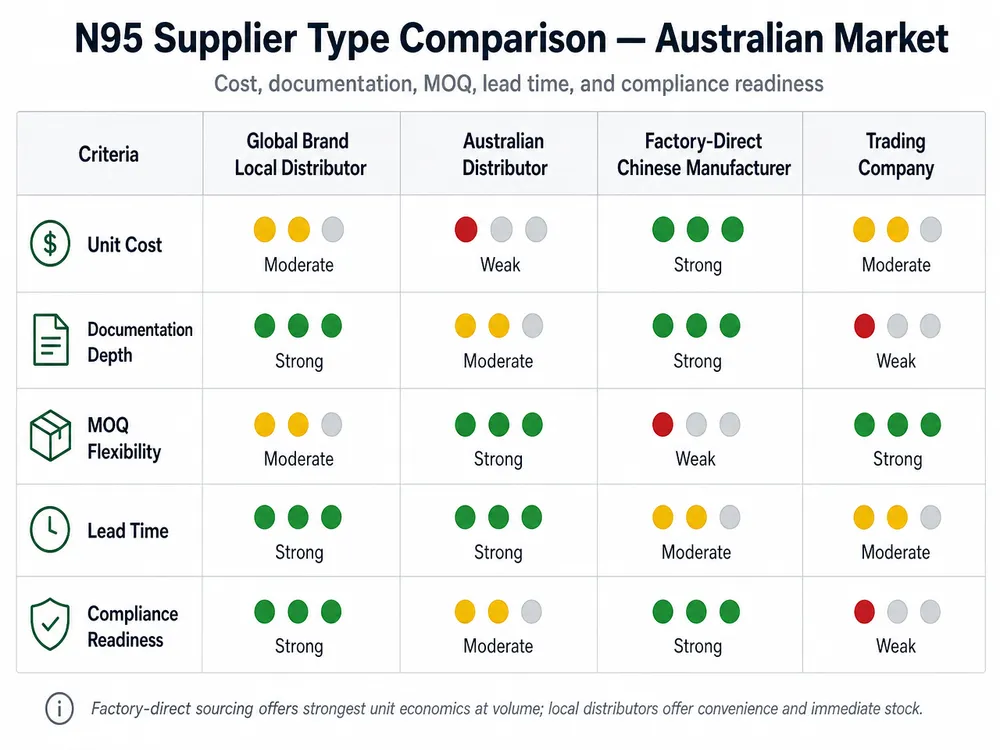
Trading companies — and there are thousands of them on Alibaba and Global Sources presenting as manufacturers — typically hold a general ISO certificate and a product test report from one audit cycle. What they can't provide is batch-specific documentation: a Certificate of Conformity tied to your specific production run, test reports from the batch that's in your container, and a QC record that traces back to the factory that actually made the product.
For Australian buyers supplying into hospital or aged-care procurement systems, this matters because institutional procurement audits increasingly require batch-level traceability. A hospital's infection control team doesn't want a general certificate from 2022 — they want the test report for the masks in the box. Trading companies structurally can't provide this because they don't control production.
The other risk is meltblown consistency. Trading companies source from whichever factory has stock at the right price. That factory may be sourcing meltblown fabric from a different supplier than the one that produced the certified product. BFE and PFE results can vary significantly between meltblown batches — we've seen this in our own incoming material testing before we brought meltblown production in-house. A mask that tested at 97% BFE in the certification run can test at 91% if the meltblown fabric changes. That's the difference between an N95 and a product that doesn't meet the standard.
For N95 mask sourcing from China, the practical rule is: if the supplier can't show you their meltblown fabric source and batch-specific filtration test results, treat them as a trading company regardless of what their website says.
Landed Cost Reality: FOB China vs. CIF Sydney for N95 Bulk Orders
Unit price is not landed cost. Australian importers who've done this calculation know it — but it's worth laying out for buyers who are comparing a local distributor quote to a factory-direct FOB price.
For a 500,000-piece N95 order from a verified Chinese factory, the cost components look roughly like this:
| Cost Component | Typical Range |
|---|---|
| FOB unit price (factory-direct, verified) | USD 0.35–0.65 per piece |
| Ocean freight (FCL, China to Sydney) | USD 2,500–4,500 per 20GP container |
| Australian customs duty (PPE, varies) | 0–5% of CIF value |
| TGA import requirements / compliance review | Variable; budget AUD 500–2,000 for first import |
| Customs broker fees | AUD 300–600 per shipment |
| Local warehousing and distribution | Buyer-dependent |
A local distributor quote for the same product typically runs 40–80% above the factory-direct landed cost at this volume, depending on the brand and the distributor's margin structure. That gap is the convenience premium — and it's a legitimate trade-off when you need immediate stock, local credit terms, or a single supplier relationship for a broader PPE category.
The math changes at lower volumes. Below 50,000 pieces, the fixed costs of importing (freight, customs, compliance) compress the unit cost advantage significantly. At 10,000 pieces, buying from a local distributor is often the right economic decision. At 200,000+ pieces on a repeat cycle, factory-direct sourcing is almost always the better margin structure.
(One note on freight: container rates between China and Australia fluctuate significantly. The figures above are representative of normal market conditions — not the COVID-era spike rates. Get a current freight quote from your forwarder before finalizing your landed cost calculation.)
When Local Supply Is the Right Answer
A credible sourcing guide should say this clearly: local distributors are the right choice in specific scenarios, and pretending otherwise doesn't help you make a good decision.
Buy local when:
- You need stock within 1–2 weeks for an urgent tender or emergency replenishment
- Your order volume is below 50,000 pieces and the import economics don't work
- Your buyer requires a TGA-registered product already on the ARTG, and you don't have time to navigate the import pathway
- You're supplying a project where consolidated PPE invoicing from a single local supplier simplifies procurement administration
- You're new to the product category and want to test market demand before committing to a direct import program
Consider factory-direct when:
- You're placing repeat orders of 100,000+ pieces per cycle and the margin difference is material
- You need OEM or private-label packaging for a branded healthcare supply program
- Your buyer requires batch-specific test reports and Certificates of Conformity — documentation that trading companies and some distributors can't reliably provide
- You're building a supply chain for a hospital or aged-care tender where price competitiveness and documentation depth both matter
- You want to control the filtration spec rather than accept whatever the distributor has in stock
The transition point for most Australian distributors we've worked with is around the 200,000-piece annual volume mark. Below that, local supply is often more practical. Above it, the landed cost difference starts to justify the import infrastructure investment.
Structuring Your First Factory-Direct N95 Order: A Practical Sequence
If you're moving from local distribution to factory-direct sourcing for the first time, the sequence matters. Skipping steps here is how buyers end up with a container of product they can't sell.
Step 1: Supplier verification before samples Verify the ISO 13485 certificate number with the issuing certification body. Verify the FDA 510(k) number at the FDA's online database. Request a factory audit report from SGS, Bureau Veritas, or equivalent. This takes a week and costs nothing — do it before you spend money on samples.
Step 2: Sample order with full documentation Order a sample quantity (typically 200–500 pieces) and request the full documentation package with it: batch-specific test report (BFE, PFE, Delta-P), Certificate of Conformity, and product specification sheet. If the supplier can't provide batch-specific documentation for a sample order, they won't provide it for a bulk order either.
Step 3: Independent filtration testing Send samples to an accredited Australian lab (SGS Australia, Intertek Australia, or NATA-accredited facilities) for independent BFE/PFE verification. This costs AUD 500–1,500 per test series and is the only way to confirm that the product in your hands matches the certificate on the paper. (We encourage buyers to do this with our product. If the results don't match our test reports, we want to know about it.)
Step 4: First bulk order with defined documentation requirements Specify in your purchase order that the shipment must include: Certificate of Conformity for the specific production batch, third-party test reports for BFE/PFE/Delta-P, packing list with carton-level detail, and any market-specific declarations your customs broker requires. Get this in writing before production starts.
Step 5: Customs and TGA pathway Work with a customs broker experienced in medical device imports. If your end buyer requires TGA registration, confirm the ARTG pathway before you place the order — not after the container arrives in Sydney.
For a detailed breakdown of N95 filtration efficiency and what the BFE/PFE numbers actually mean for your product's performance claims, that resource covers the technical side in depth.
Sourcing Route Decision Guide
| Scenario | Recommended Route |
|---|---|
| Urgent order, < 50,000 pieces, needed within 2 weeks | Local distributor (Blackwoods, Bunzl) |
| First import trial, 50,000–200,000 pieces, 4–6 week lead time acceptable | Factory-direct, verified manufacturer |
| Repeat annual contract, 500,000+ pieces, private-label program | Factory-direct, OEM/ODM capable manufacturer |
| Hospital tender requiring TGA-registered product on ARTG | Confirm ARTG status first; local distributor or TGA-registered importer |
| Aged-care supply chain, batch documentation required | Factory-direct with ISO 13485 + batch-specific test reports |
| Industrial/construction application, AS/NZS 1716 compliance | Local distributor or verified factory with AS/NZS test data |
The N95 supplier landscape for Australian importers is not a simple ranking — it's a decision framework. The right supplier depends on your volume, your timeline, your buyer's compliance requirements, and whether you're building a one-time procurement or a repeatable supply chain. Local distributors solve the speed and convenience problem. Factory-direct sourcing solves the margin and documentation problem. Most serious distributors end up using both, depending on the order.
If you're evaluating factory-direct sourcing for a specific volume and product configuration, the Request Quote page is the fastest way to get a landed cost comparison with full documentation specs included.