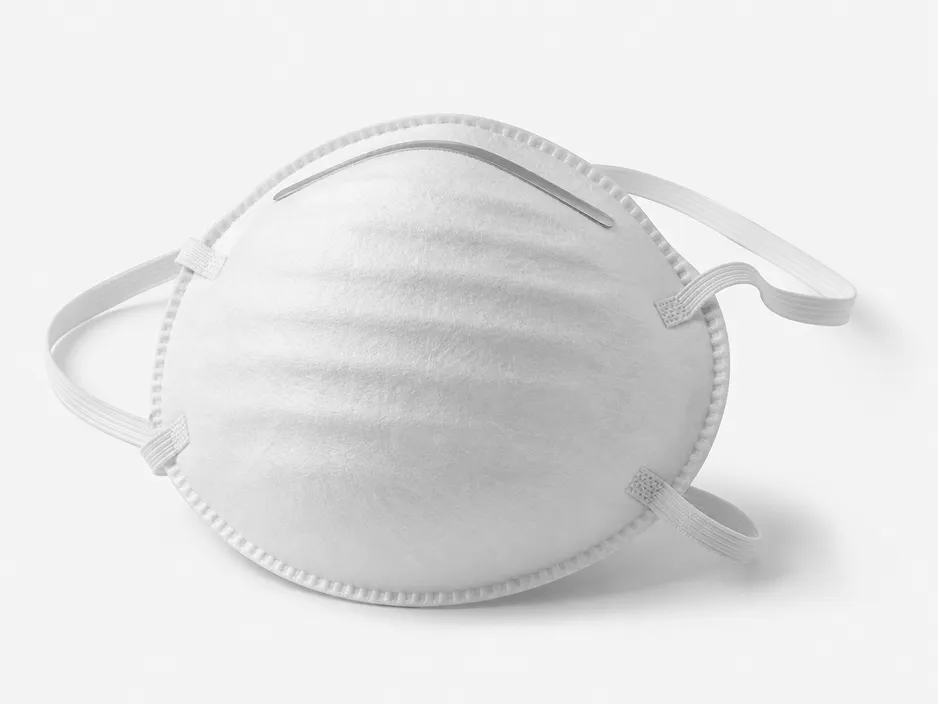
We've had buyers contact us after a CBP hold — container sitting at the port, customs broker asking for documents the supplier never mentioned. The hold is almost always the same root cause: the importer didn't understand the difference between NIOSH approval and FDA 510(k) clearance, and the supplier didn't volunteer the distinction.
This guide explains both, tells you exactly what to verify before your shipment leaves the factory, and shows you what a compliant documentation package looks like from the manufacturer's side.

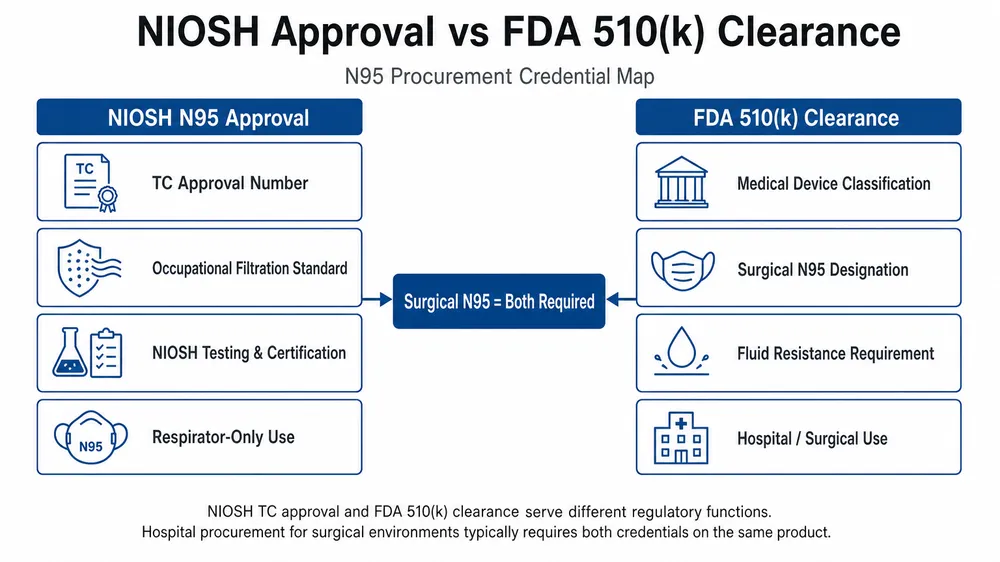
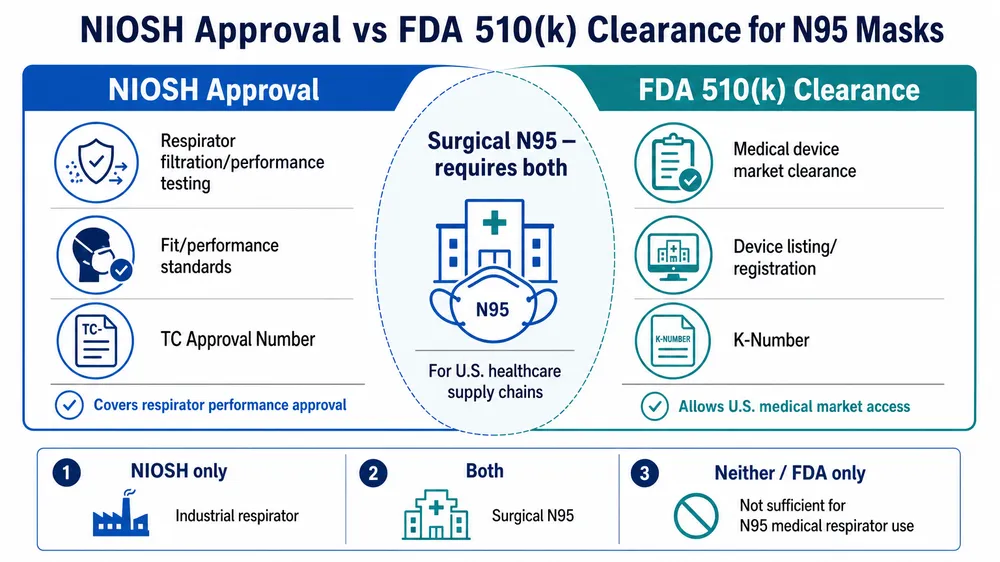
NIOSH Certifies Performance. FDA 510(k) Clears the Device for Sale.
These are two separate regulatory systems run by two separate agencies, and they answer two different questions.
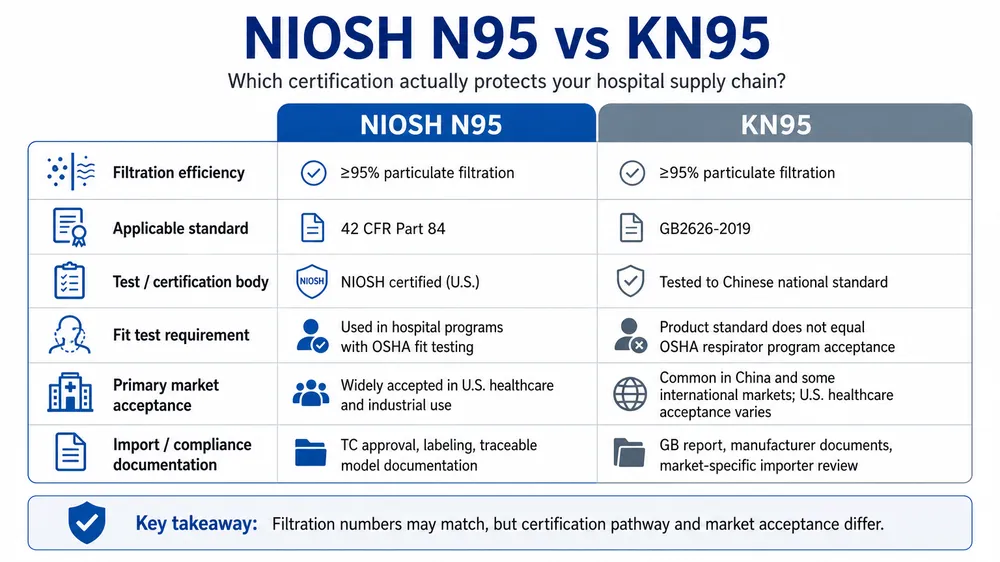
NIOSH (National Institute for Occupational Safety and Health) tests whether a respirator actually filters what it claims to filter. An N95 approval from NIOSH means the mask passed a battery of performance tests — ≥95% filtration efficiency against 0.3-micron NaCl aerosol, fit testing protocols, breathing resistance limits — and received a TC (Testing and Certification) approval number. NIOSH approval is about the respirator's physical performance. It says nothing about whether the product can be sold as a medical device.
FDA 510(k) is a premarket notification process. When a manufacturer submits a 510(k), they're demonstrating to the FDA that their device is substantially equivalent to a legally marketed predicate device. For N95 masks intended for use in healthcare settings — surgical N95 respirators — FDA clearance is required to market the product as a medical device in the United States. The 510(k) number (formatted as K followed by six digits, e.g., K201234) is the FDA's confirmation that the device cleared that review.
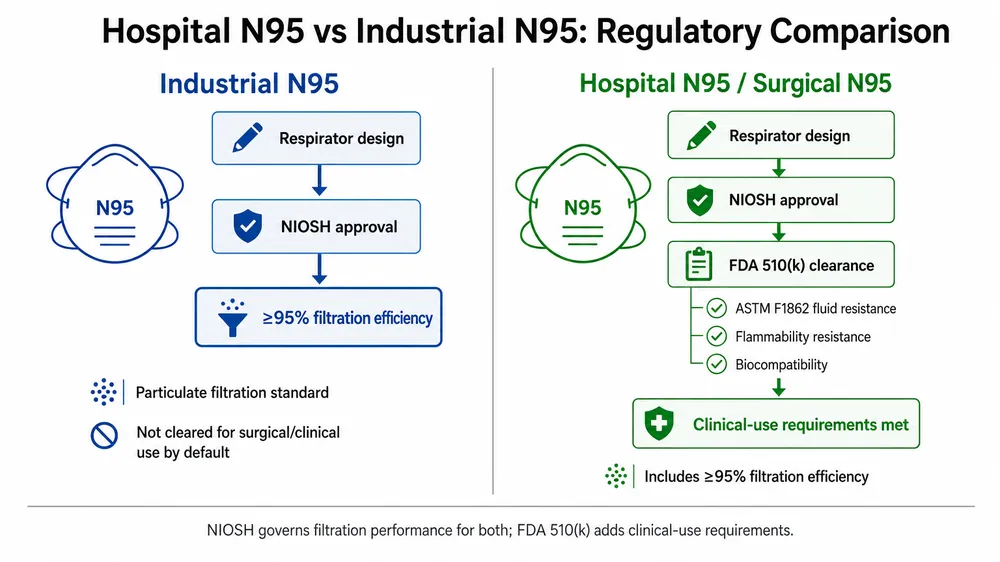
The practical split: a standard industrial N95 respirator needs NIOSH approval but not FDA 510(k) clearance. A surgical N95 respirator — one marketed for use in healthcare environments where exposure to blood and body fluids is possible — needs both. If your buyer is a hospital, a healthcare distributor, or any institutional procurement channel that specifies "surgical N95," you need a supplier with FDA 510(k) clearance, not just NIOSH approval.
(We see this confusion regularly. A buyer sources what they believe is a compliant N95, the product has a valid NIOSH TC number, and then it fails the hospital procurement audit because the facility requires FDA-cleared surgical N95s. Two different certifications, two different use cases.)
What the FDA 510(k) Number Actually Tells You
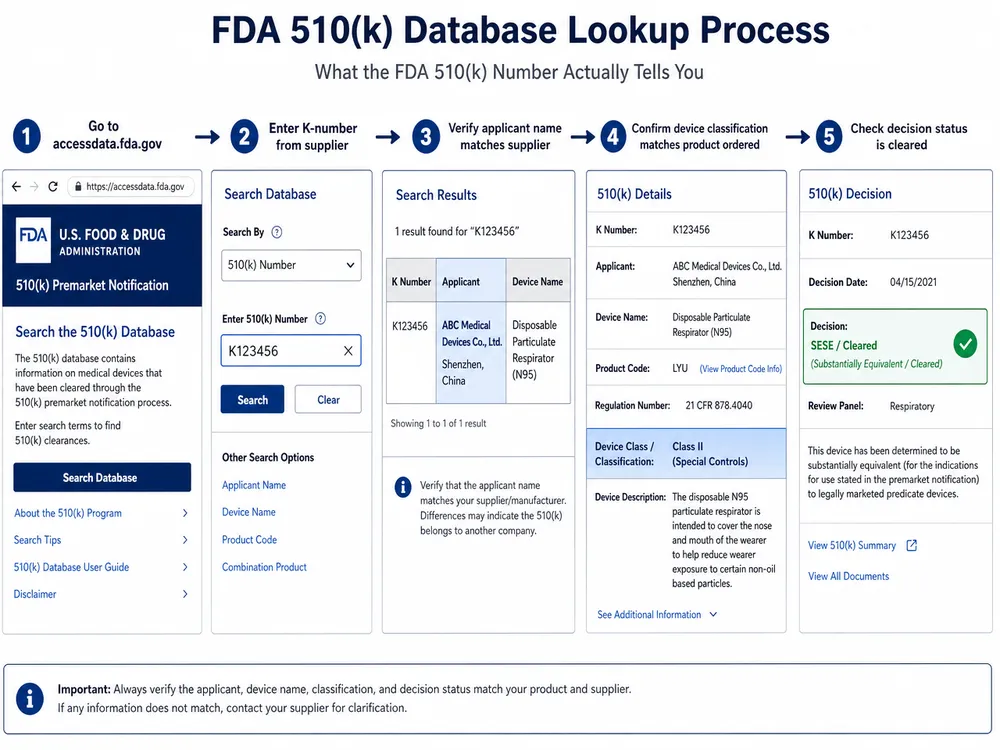
The 510(k) number is not just a compliance checkbox — it's a searchable record in the FDA's public device database. Before you place an order, you can look up the exact device, the manufacturer, the cleared indications, and the submission date.
Go to the FDA's 510(k) Premarket Notification database at accessdata.fda.gov and search by the K-number your supplier provides. What you're verifying:
- Device name and classification: Confirm the cleared device matches what you're ordering. A 510(k) for a surgical mask does not cover an N95 respirator, even if the same manufacturer holds both.
- Applicant name: The company name on the 510(k) must match your supplier. If your supplier is a trading company reselling product from a different factory, the 510(k) may belong to the factory — and the factory may not be the entity you're contracting with.
- Decision date: 510(k) clearances don't expire, but they can be superseded or withdrawn. A clearance from 2010 is still valid unless the FDA has taken action against it. Check the decision status.
- Product codes and device class: Surgical N95 respirators typically fall under FDA product code MSH (Class II). Confirm the product code matches the device type you're importing.
One thing the database won't tell you: whether the specific production batch you're receiving was manufactured to the same spec as the cleared device. That's where the documentation package from your supplier becomes the second verification layer.
The Labeling Requirement That Trips Up Most Shipments
FDA regulations require that the 510(k) number appear on the device labeling. This is where a lot of shipments run into trouble — not because the manufacturer lacks clearance, but because the labeling doesn't reflect it correctly.
For a surgical N95 respirator, the product label (and the packaging) must include:
- The FDA 510(k) clearance number (K-number)
- The NIOSH TC approval number
- The manufacturer's name and address
- Intended use statement consistent with the cleared indications
- Lot number or batch identifier for traceability
- Expiration date or shelf life statement
The 510(k) number on the label must match the number in the FDA database exactly. A label that says "FDA Registered" without a K-number is not the same as FDA 510(k) clearance. "FDA Registered" refers to facility registration — every medical device manufacturer shipping to the US must register their facility with the FDA, but facility registration is not device clearance. These are different things, and CBP inspectors know the difference.
We've seen shipments held because the label said "FDA Approved" — which is technically incorrect terminology for 510(k) devices (the FDA clears, not approves, 510(k) submissions) — and the CBP officer flagged it for review. The product was compliant; the label language was sloppy. That cost the importer two weeks at the port.
The NIOSH TC number on the label must also match the NIOSH Approved Respirators list, which NIOSH maintains at cdc.gov/niosh/npptl. If the TC number on the label doesn't appear on that list, or if the manufacturer name doesn't match, the product is not NIOSH-approved regardless of what the label claims.
Pre-Clearance Documentation Checklist
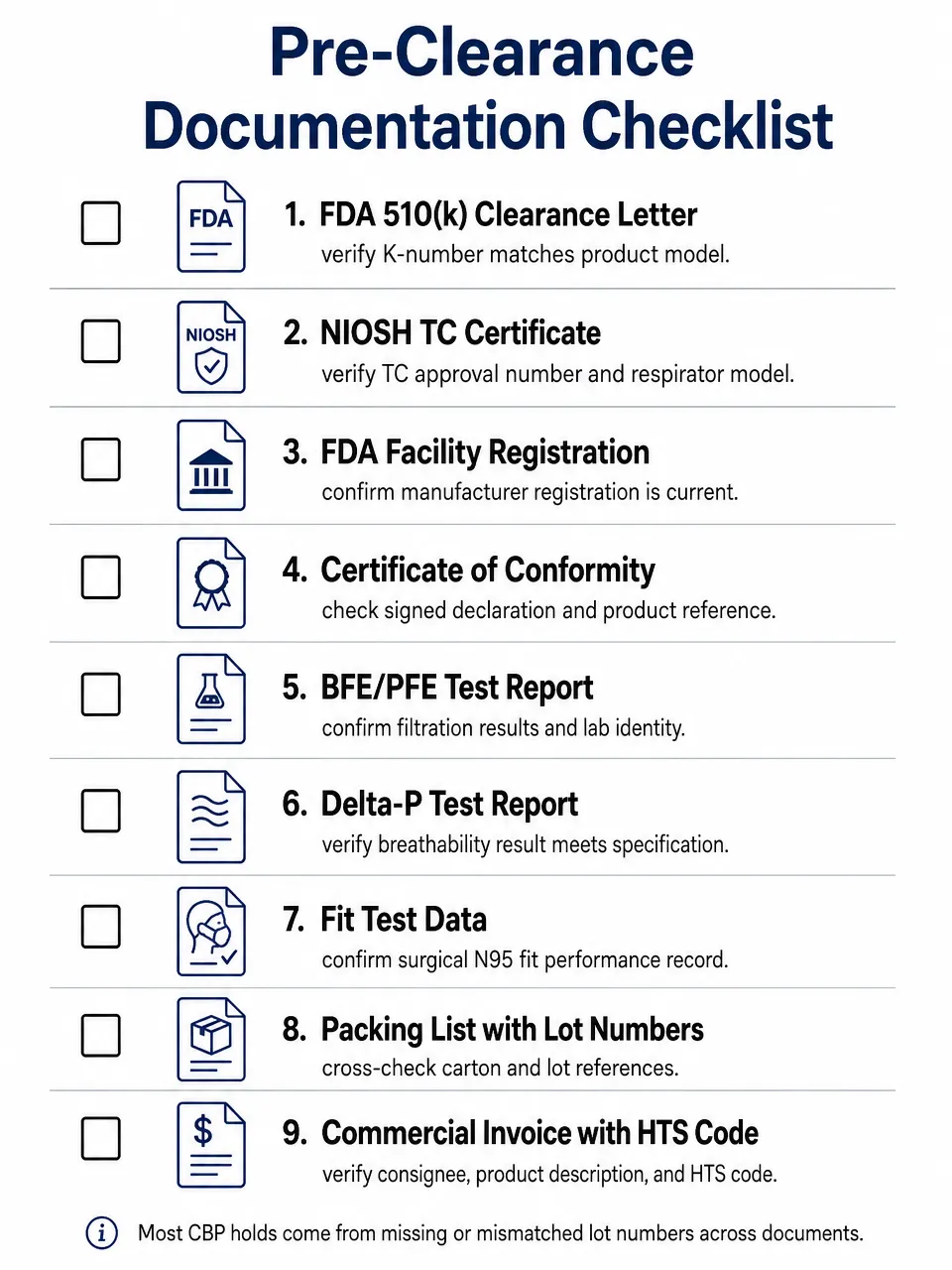
Before your container ships, request and verify each of these documents from your supplier. This is the checklist we use internally when preparing export documentation for US-bound orders.
| Document | What to Verify |
|---|---|
| FDA 510(k) clearance certificate | K-number matches FDA database; device name matches product ordered |
| NIOSH TC approval certificate | TC number matches NIOSH approved respirators list; manufacturer name matches |
| FDA facility registration number | Manufacturer's facility is registered with FDA as a medical device establishment |
| Certificate of Conformity (CoC) | States the specific product, lot number, applicable standards (ASTM F2100 Level 1/2/3 for surgical N95), and certifying authority |
| BFE/PFE test report | Third-party lab report showing ≥95% filtration efficiency; report date and lot number should correspond to the production batch |
| Delta-P (breathability) test report | Pressure differential result within ASTM F2100 or equivalent standard limits |
| Fit test data (if required by buyer) | NIOSH-approved fit test protocol results for the specific mask model |
| Packing list with lot numbers | Lot numbers on packing list must match lot numbers on test reports and CoC |
| Commercial invoice with HTS code | Correct HTS classification for surgical N95 respirators (typically 6307.90 or 9020.00 depending on classification) |
The lot number linkage is the one most buyers overlook. Your test reports and CoC must reference the same lot numbers as your packing list. If a CBP officer or FDA import reviewer pulls the documentation and the lot numbers don't match across documents, the shipment is flagged — even if every individual document is legitimate.
(We print the lot number on every document in the package and cross-reference them before the container is sealed. It sounds obvious, but we've seen documentation packages from other suppliers where the test report was from a different production run than the shipment. That's not a minor error.)
Common CBP Hold Scenarios and How to Avoid Them
CBP holds on N95 mask shipments tend to cluster around a few recurring issues. Knowing them in advance lets you verify the right things before the container leaves the factory.
Hold scenario 1: Missing or unverifiable 510(k) number The label shows "FDA Registered" or "FDA Cleared" without a K-number, or the K-number doesn't appear in the FDA database. Resolution requires the manufacturer to provide the actual clearance documentation, which takes time. Prevention: verify the K-number in the FDA database before you place the order.
Hold scenario 2: NIOSH TC number not on the approved list The product claims NIOSH N95 approval, but the TC number either doesn't exist in the NIOSH database or belongs to a different manufacturer. This is a serious compliance failure — it means the product is misrepresenting its certification status. Prevention: cross-check the TC number at cdc.gov/niosh/npptl before ordering.
Hold scenario 3: Labeling inconsistency between carton and inner packaging The outer carton shows one K-number or TC number; the individual mask packaging shows a different one, or shows none. CBP inspectors check both. Prevention: request a sample of both the retail/clinical packaging and the master carton before bulk production.
Hold scenario 4: Lot number mismatch across documents Test reports reference lot numbers that don't appear on the packing list. This is the documentation error we see most often in shipments from factories that don't have a rigorous document control process. Prevention: require your supplier to provide a document package where every document references the same lot numbers, and verify this before the container is loaded.
Hold scenario 5: Incorrect HTS classification The commercial invoice uses an HTS code that doesn't match the product's regulatory classification. Surgical N95 respirators have specific HTS classifications, and using the wrong one can trigger additional scrutiny or duty rate issues. Prevention: confirm the HTS code with your customs broker before the invoice is issued.
What a Compliant Supplier Documentation Package Looks Like
From our side of the transaction, here's what we prepare for every US-bound order of N95 Medical Masks:
The documentation package ships with the container and is also sent electronically to the importer before the vessel departs. The package includes the FDA 510(k) clearance certificate with our K-number, the NIOSH TC approval certificate, our FDA facility registration confirmation, a Certificate of Conformity specific to the production lot, BFE and PFE test reports from the production batch (tested in our in-house lab and confirmed by third-party testing), Delta-P results, and a packing list with lot numbers that match every other document in the package.
Because we produce our own meltblown nonwoven fabric, the BFE and PFE specs in those test reports reflect actual production control, not a claim based on a fabric supplier's data sheet. When our test report says ≥95% PFE, that number comes from testing the finished mask with the meltblown layer we produced and characterized ourselves. That's a different level of traceability than a factory that buys meltblown from an outside supplier and tests the finished product without controlling the input.
For buyers importing Hospital N95 Medical Masks into healthcare supply chains, we can also provide fit test data for the specific mask model and configuration you're ordering. Hospital procurement teams often require this as part of their supplier qualification process, and having it ready before the order ships saves a round of back-and-forth after delivery.
The same documentation discipline applies to Disposable N95 Medical Masks for non-healthcare distribution channels — the regulatory requirements differ slightly, but the documentation package structure is the same.
The NIOSH vs FDA 510(k) Decision Matrix for Your Sourcing Context
Not every N95 order requires FDA 510(k) clearance. The requirement depends on how the product will be used and marketed downstream.
| Use Case | NIOSH Approval Required | FDA 510(k) Required |
|---|---|---|
| Industrial/construction worker respiratory protection | Yes | No |
| General public use (non-medical) | Yes | No |
| Healthcare worker general respiratory protection | Yes | Recommended, may be required by facility |
| Surgical N95 — healthcare settings with fluid exposure risk | Yes | Yes |
| Hospital procurement / institutional tender | Yes | Yes (typically required by spec) |
| Private-label brand for US healthcare distribution | Yes | Yes |
If your downstream buyers are hospitals, healthcare systems, or institutional procurement channels, assume FDA 510(k) clearance is required. Most hospital GPO (Group Purchasing Organization) contracts specify it explicitly. Sourcing a NIOSH-only N95 for a healthcare channel is a compliance gap that will surface at the procurement audit stage, not at customs — but it will surface.
FAQ: N95 Medical Mask FDA 510(k) and US Import Compliance
Does FDA 510(k) clearance expire? 510(k) clearances don't have an expiration date, but they can be superseded if the manufacturer makes a significant change to the device that requires a new submission. The FDA can also withdraw clearance if post-market surveillance identifies safety issues. Always verify the current status in the FDA database, not just the existence of a K-number.
Can a Chinese manufacturer hold FDA 510(k) clearance directly? Yes. FDA 510(k) clearance is granted to the device manufacturer regardless of country of origin. The manufacturer must also register their facility with the FDA as a foreign medical device establishment. Both the 510(k) clearance and the facility registration are searchable in FDA databases. We hold both.
What's the difference between FDA 510(k) clearance and FDA registration? FDA registration (facility registration) means the manufacturing facility is listed with the FDA as a medical device establishment. It's required for any manufacturer shipping medical devices to the US, but it does not mean the device itself has been reviewed or cleared. FDA 510(k) clearance is a device-specific review. A facility can be registered without having any cleared devices. When a supplier says "FDA registered," ask specifically whether they mean facility registration or 510(k) device clearance — these are different things.
What happens if my shipment is held by CBP for missing 510(k) documentation? CBP can detain the shipment and issue a Notice of FDA Action. The FDA then has the option to refuse admission of the shipment. Refused shipments must be re-exported or destroyed at the importer's expense. The process can take weeks to months. The practical outcome is that the importer bears the cost — storage fees, re-export freight, and the loss of the order. Prevention is significantly cheaper than resolution.
How do I verify a NIOSH TC number before ordering? NIOSH maintains the Certified Equipment List (CEL) at cdc.gov/niosh/npptl. Search by TC number or manufacturer name. The listing shows the approved model, the manufacturer, the approval date, and the specific filter class. If the TC number your supplier provides doesn't appear on this list, the product is not NIOSH-approved.
What is the correct HTS code for surgical N95 respirators? HTS classification for N95 respirators can fall under 6307.90.9889 (other made-up textile articles) or 9020.00.6000 (breathing appliances) depending on the product's construction and intended use. The correct classification affects duty rates and may affect FDA import entry requirements. Confirm with your customs broker before the commercial invoice is issued — reclassification after the fact creates delays.
If your sourcing requirements include FDA 510(k)-cleared surgical N95 masks with full compliance documentation, submit an RFQ with your required specification, quantity, and destination market. We'll confirm the applicable 510(k) and NIOSH documentation with the quote.