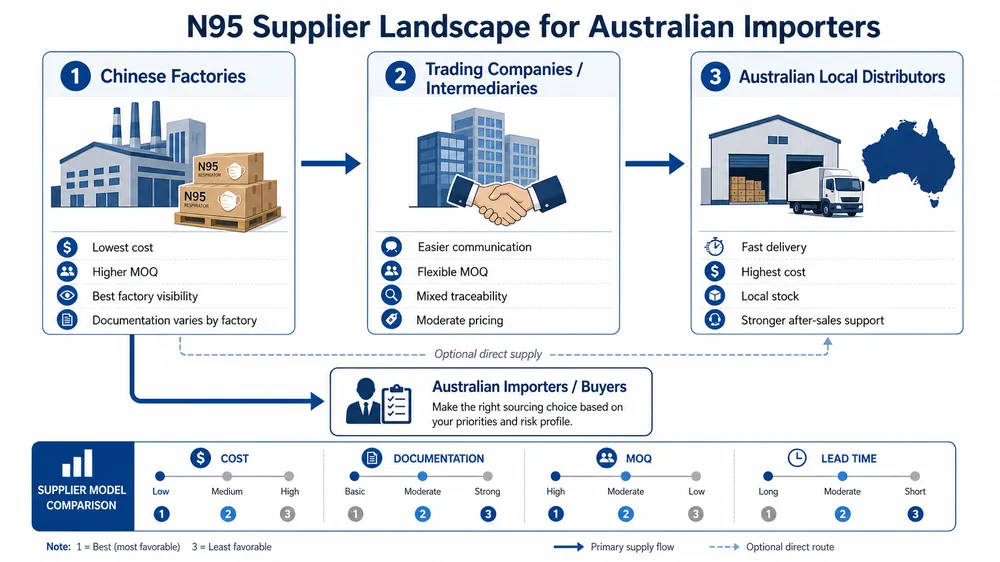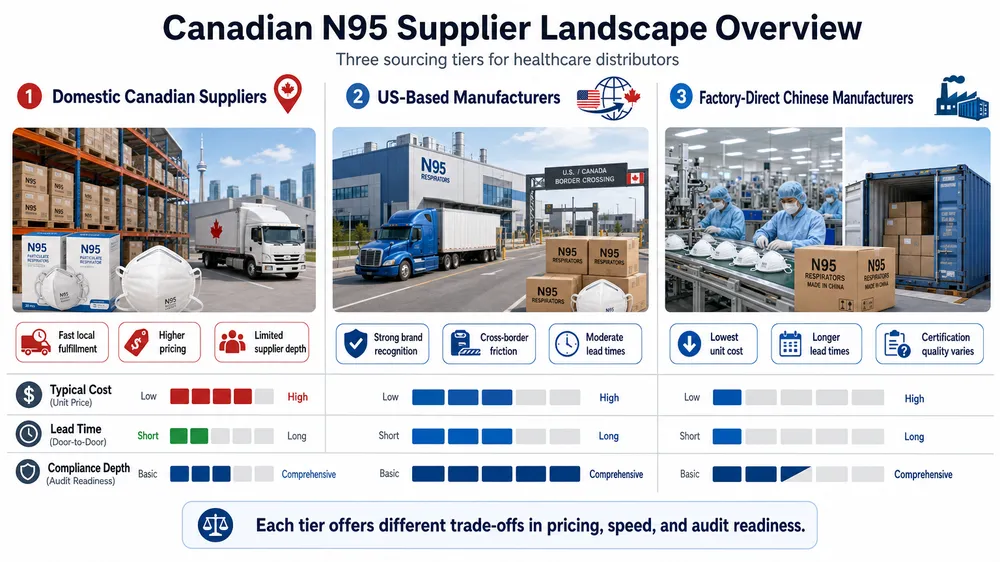
The Canadian N95 supply market has a structural problem that most supplier lists don't address honestly: the domestic supply chain is thin, the US-based options carry cross-border friction, and the majority of Chinese factories that show up in search results lack the certification depth that Health Canada procurement audits actually require. If you're building a reliable N95 supply program — not just filling a one-time order — the supplier landscape looks very different depending on which criteria you weight.
This review covers 10 suppliers relevant to Canadian healthcare distribution. Some are domestic. Some are US manufacturers with Canadian reach. One is a factory-direct option from China with the documentation stack to clear Canadian customs without surprises. The goal isn't a theatrical ranking — it's a sourcing framework that helps you understand what each supplier model is actually good for, and where the trade-offs land on your margin and compliance exposure.
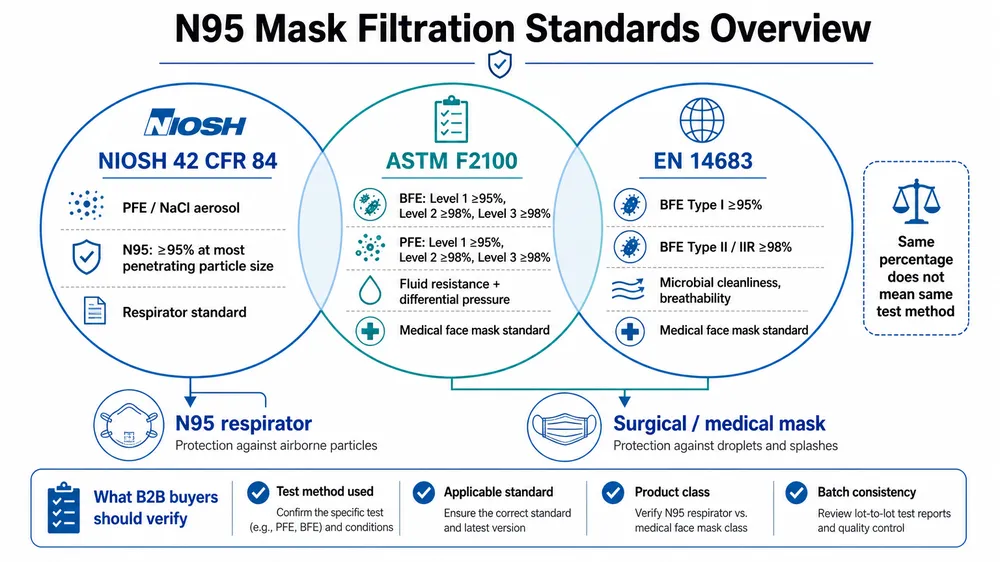
Before we get into the list, a note on methodology: NIOSH approval and Health Canada's Medical Device Regulations are not the same requirement, and confusing them is how procurement teams end up with product that clears US customs but fails a Canadian hospital's procurement audit. We'll address that distinction directly in the evaluation criteria section.

What Canadian Healthcare Procurement Actually Requires
Most supplier comparison articles skip this part. They list companies, add a few bullet points, and leave you to figure out whether the product actually clears your procurement process. Let's be direct about what the Canadian market requires before evaluating any supplier.
Health Canada Medical Device Regulations (MDR) classify N95 respirators as Class I or Class II medical devices depending on their intended use. A standard industrial N95 (NIOSH-approved for occupational use) is not automatically a medical device in Canada. If your downstream buyers are hospitals, long-term care facilities, or any institution that procures under Health Canada MDR, the product needs a Medical Device Establishment Licence (MDEL) on the importer's side and, for Class II devices, a Medical Device Licence (MDL) on the product itself.
NIOSH approval is a US standard administered by the National Institute for Occupational Safety and Health. It certifies that a respirator meets 42 CFR Part 84 filtration and fit requirements. NIOSH approval is widely recognized in Canadian healthcare procurement as a proxy for performance quality — but it is not a Health Canada MDL. The two are complementary, not interchangeable.
FDA 510(k) clearance matters specifically for Canadian distributors who serve cross-border clients or who import through US distribution channels. A 510(k)-cleared surgical N95 satisfies both the respirator performance standard and the surgical mask fluid resistance requirement — relevant for operating room and procedural environments.
ISO 13485:2016 is the quality management system standard for medical device manufacturers. Health Canada's MDR audit process aligns closely with ISO 13485 requirements. When you're evaluating a Chinese factory as a direct import source, ISO 13485 certification is the strongest single indicator that their QMS will survive a Health Canada compliance review.
The practical checklist for Canadian healthcare procurement:
| Requirement | Standard | Who Needs It |
|---|---|---|
| Respirator performance | NIOSH 42 CFR Part 84 | All N95 suppliers |
| Medical device QMS | ISO 13485:2016 | Manufacturers supplying medical-use N95 |
| Canadian market access | Health Canada MDL (Class II) | Importers of medical-use N95 |
| Surgical N95 (OR use) | FDA 510(k) + ASTM F2100 | Surgical/procedural environments |
| Importer registration | MDEL | Canadian importers of Class II devices |
Keep this table in front of you as you evaluate the suppliers below. The gap between "NIOSH approved" and "Health Canada MDR compliant" is where most sourcing problems originate.
How We Evaluated These 10 Suppliers
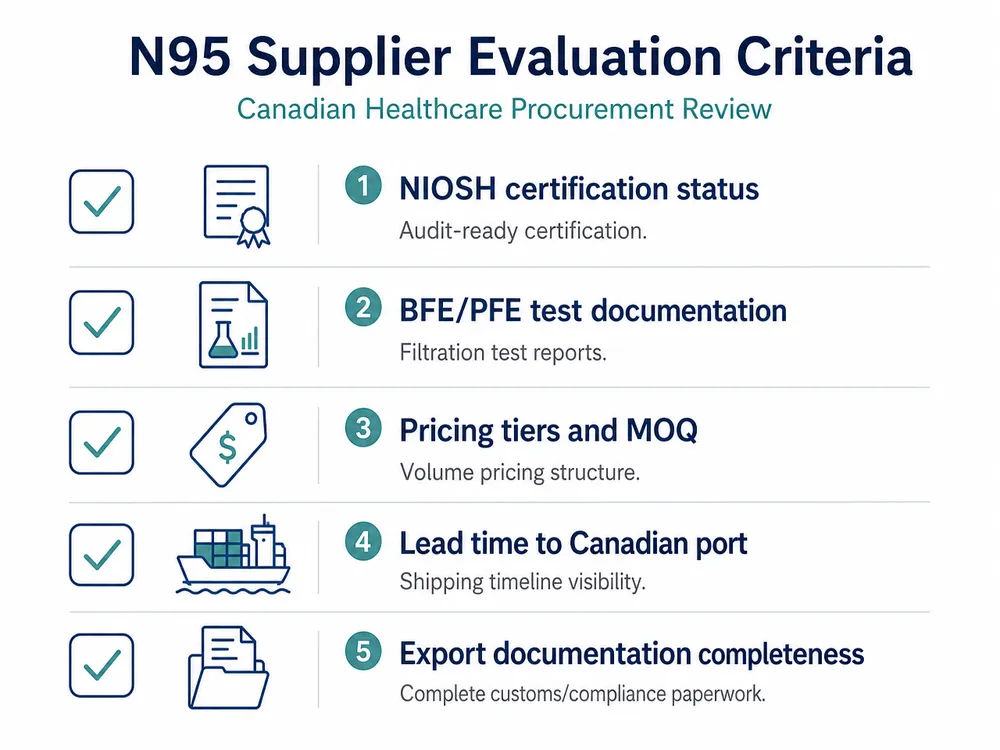
The evaluation criteria below reflect what actually matters for Canadian healthcare distribution — not generic supplier quality metrics.
NIOSH certification status: Is the product on the NIOSH Approved Respirators list? This is verifiable at the CDC NIOSH website. Any supplier claiming NIOSH approval should be able to provide the TC approval number.
BFE/PFE test documentation: For medical-use N95s, bacterial filtration efficiency and particulate filtration efficiency test reports from accredited labs are the performance evidence your procurement team needs. Suppliers who can't produce these on request are a compliance risk.
Pricing tiers and MOQ: Canadian healthcare distributors operate across a wide volume range — from regional hospital networks ordering 500k pieces annually to smaller distributors filling 50k-piece institutional contracts. MOQ and per-unit pricing at different volume tiers determine whether a supplier is actually accessible for your order profile.
Lead time to Canadian port: This is where domestic, US-based, and factory-direct suppliers diverge most sharply. We'll address the cross-border logistics reality for each model.
Export documentation completeness: Certificate of conformity, test reports, packing lists, and any Health Canada-specific declarations. Incomplete documentation is the most common cause of customs delays on medical device imports.
The 10 Suppliers: A Sourcing Landscape Review
1. 3M Canada — The Benchmark Domestic Option
Website: 3m.com/ca Supplier type: Global manufacturer with Canadian distribution
3M's N95 respirators — particularly the 8210 and 1860 series — are the reference standard in Canadian healthcare procurement. NIOSH-approved, widely stocked, and accepted by virtually every hospital procurement department without additional documentation review. The 1860 is a surgical N95 with FDA 510(k) clearance, which covers operating room and procedural use cases.
The trade-off is pricing and availability. 3M Canada operates through a tiered distribution network, and healthcare distributors buying at mid-volume (50k–200k pieces) are typically purchasing through a regional distributor rather than direct from 3M. That adds a margin layer. During periods of elevated demand — which the Canadian healthcare system has experienced repeatedly since 2020 — 3M's allocation system can create supply gaps that catch distributors without backup sourcing.
Best fit: Institutional procurement where 3M brand acceptance is a hard requirement. Less competitive on per-unit cost at mid-volume tiers.
2. Honeywell Safety Products Canada — Industrial-to-Healthcare Crossover
Website: honeywellsafety.com Supplier type: Global manufacturer, industrial safety primary focus
Honeywell's N95 line (including the DF300 and Survivair series) carries NIOSH approval and is distributed in Canada through safety supply channels. The product is well-regarded for industrial and construction applications. For healthcare-specific procurement, the documentation depth — particularly BFE test reports and ISO 13485 QMS certification — requires verification on a product-by-product basis, as Honeywell's primary regulatory framework is occupational safety rather than medical device.
Canadian distributors targeting hospital and clinical accounts should confirm whether the specific Honeywell SKU they're sourcing carries the medical device documentation their buyers require, not just NIOSH approval.
Best fit: Industrial safety distributors expanding into healthcare. Verify medical device documentation before committing to healthcare-channel orders.
3. Moldex-Metric — Fold-Flat N95 Specialist
Website: moldex.com Supplier type: US manufacturer, Canadian distribution through safety supply network
Moldex produces NIOSH-approved N95 respirators with a strong reputation for fit and comfort — the 2200 and 2300 series are commonly specified in Canadian healthcare settings. The fold-flat design has practical advantages for storage and distribution logistics: higher unit density per carton, easier shelf stocking, and better fit compliance for users who find cup-style respirators uncomfortable.
Moldex distributes in Canada through safety supply distributors. Lead times from US manufacturing to Canadian distribution points typically run 2–4 weeks depending on stock levels. Pricing at mid-volume tiers is competitive with 3M but similarly subject to distributor margin layers.
Best fit: Healthcare distributors whose downstream buyers prioritize fit compliance and storage efficiency. Fold-flat format suits high-turnover clinical environments.
4. Kimberly-Clark Professional — Surgical N95 for Clinical Environments
Website: kcprofessional.com Supplier type: Global manufacturer, healthcare and professional focus
Kimberly-Clark's FLUIDSHIELD N95 Particulate Filter Respirator and Surgical Mask is one of the few products in the Canadian market that combines NIOSH N95 approval with ASTM F2100 Level 3 fluid resistance — the combination required for surgical and high-fluid-exposure procedural environments. FDA 510(k) cleared. This is a genuinely differentiated product for distributors serving operating room supply chains.
The pricing reflects the dual-certification premium. Per-unit cost at standard distribution volumes runs higher than non-surgical N95 alternatives. For distributors building a surgical N95 program, the documentation package is strong and the product is well-accepted by Canadian hospital procurement.
Best fit: Surgical and procedural supply chains where fluid resistance is a hard specification requirement.
5. Medicom — Canadian Manufacturer with Healthcare Focus
Website: medicom.com Supplier type: Canadian manufacturer (Montreal-based), healthcare primary
Medicom is one of the few genuinely Canadian N95 manufacturers — their SafeMask and AuraDefense lines are produced domestically and carry Health Canada MDL registration alongside NIOSH approval. For Canadian distributors, this is a meaningful advantage: domestic production means no import documentation complexity, no cross-border lead time risk, and a supplier whose regulatory standing is directly within the Health Canada framework.
The domestic production premium is real. Medicom's per-unit pricing at comparable volumes runs higher than US or Chinese alternatives. But for distributors serving government tenders, long-term care procurement, or any buyer with a "Canadian-made" preference, Medicom's domestic status is a commercial differentiator worth the cost.
(Medicom expanded Canadian production capacity significantly after 2020 — their Quebec facility is now one of the larger domestic N95 production operations in the country. Worth tracking if domestic supply security is a priority for your buyers.)
Best fit: Government tenders, long-term care procurement, and buyers with domestic sourcing requirements. Premium pricing justified by domestic regulatory standing.
6. Vitacore Industries — BC-Based N95 Manufacturer
Website: vitacore.ca Supplier type: Canadian manufacturer (British Columbia), healthcare focus
Vitacore is a smaller Canadian N95 manufacturer that emerged from the domestic production push during the pandemic period. Their VN501 respirator carries NIOSH approval and is produced in British Columbia. For Western Canadian distributors in particular, Vitacore represents a domestic supply option with shorter logistics chains than Eastern Canadian or US-based alternatives.
The production scale is more limited than Medicom or the global manufacturers, which means large-volume orders (500k+ pieces) may require lead time planning. For distributors building regional supply programs in BC, Alberta, or the Pacific Northwest healthcare corridor, Vitacore's domestic status and regional proximity are practical advantages.
Best fit: Western Canadian distributors, regional healthcare networks, buyers with domestic sourcing mandates.
7. Levitt-Safety — National Distributor with Healthcare Reach
Website: levitt-safety.com Supplier type: Canadian safety supply distributor, multi-brand
Levitt-Safety is a national Canadian safety supply distributor carrying N95 respirators from multiple manufacturers — 3M, Moldex, Honeywell, and others. For distributors who need a single Canadian supplier relationship to access multiple N95 brands and SKUs, Levitt-Safety provides that consolidation. They have branch locations across Canada and can support regional delivery logistics.
The distributor model means you're buying through a margin layer above the manufacturer. Per-unit pricing reflects that. The value proposition is convenience, multi-brand access, and a Canadian supplier relationship that simplifies procurement administration.
Best fit: Distributors who need multi-brand N95 access through a single Canadian account. Not the most cost-efficient route for single-brand volume procurement.
8. Dentec Safety Specialists — Canadian Distributor with Respiratory Focus
Website: dentecsafety.com Supplier type: Canadian safety distributor, respiratory protection focus
Dentec Safety is a Canadian distributor with a specific focus on respiratory protection products, including N95 respirators for industrial and healthcare applications. They carry NIOSH-approved products and have experience supporting Canadian buyers through fit testing programs and compliance documentation.
For healthcare distributors whose buyers require fit testing support alongside product supply, Dentec's respiratory specialization is relevant. They can provide fit testing equipment and training resources that a general safety distributor typically doesn't offer.
Best fit: Healthcare distributors whose buyers need fit testing program support alongside N95 supply. Useful for institutional accounts building new respiratory protection programs.
9. BioMedical Systems / Dealmed Canada — Healthcare Supply Distributor
Website: dealmed.com Supplier type: Healthcare supply distributor, US-based with Canadian reach
Dealmed is a US-based healthcare supply distributor that serves Canadian buyers through cross-border fulfillment. They carry NIOSH-approved N95 respirators from multiple manufacturers and have experience with healthcare procurement documentation requirements. The cross-border model means US-to-Canada lead times apply — typically 1–3 weeks depending on customs clearance and shipping method.
For Canadian distributors who already have US supplier relationships and cross-border import processes in place, Dealmed can be a useful supplementary source. For buyers without established cross-border import infrastructure, the customs documentation and potential duty exposure add complexity that domestic or factory-direct alternatives avoid.
Best fit: Canadian distributors with existing US import infrastructure. Less practical for buyers without cross-border logistics experience.
10. eztio (Gaomi Eztio Medical Technology Co., Ltd.) — Factory-Direct from Shandong
Website: eztio.com Supplier type: Chinese N95 manufacturer, factory-direct export
We're the factory. We've been producing certified medical-grade masks since 2012, and we supply Canadian distributors directly — no trading company, no intermediary margin layer. Here's what that means in practice for your sourcing program.
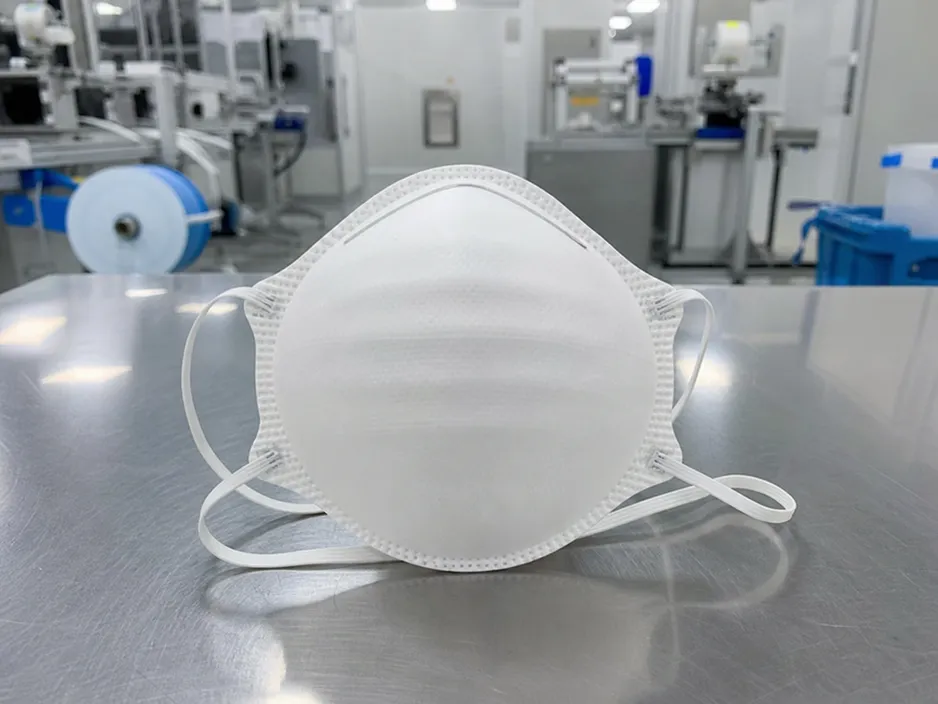
Our N95 Medical Masks are produced in a Class 100,000 (ISO 8) cleanroom facility in Gaomi, Shandong. The certifications that matter for Canadian healthcare procurement are in place: ISO 13485:2016 (the QMS standard that aligns with Health Canada MDR audit requirements), FDA 510(k) registration (relevant for cross-border clients and surgical N95 applications), CE under EU MDR, and SGS third-party verification.
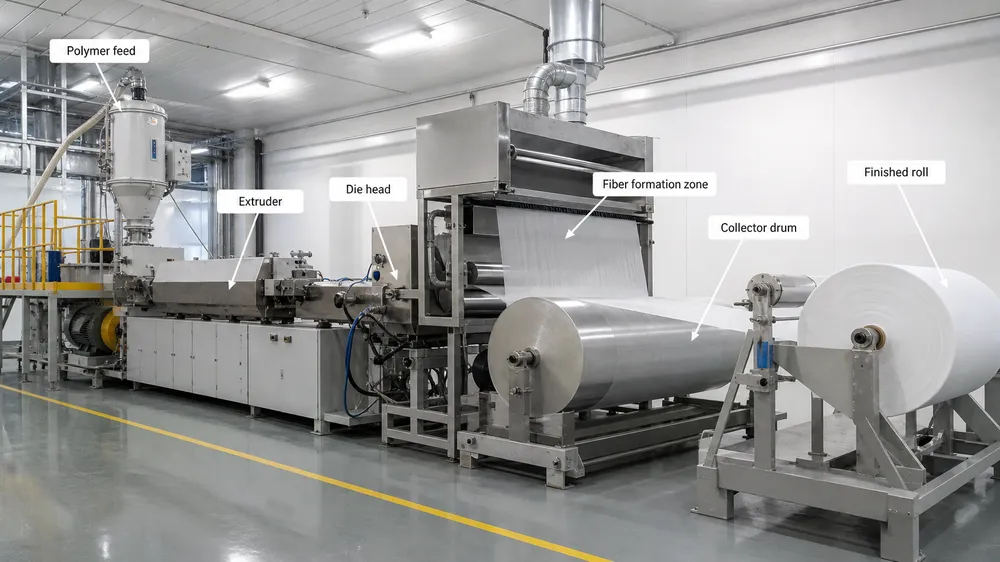
The differentiator that most Chinese factories can't match is in-house meltblown production. Meltblown nonwoven fabric is the filtration layer — the component that determines whether a mask actually achieves ≥95% BFE. Most factories buy this from outside suppliers, which means their filtration performance is only as consistent as their fabric supplier's last production run. We manufacture our own meltblown fabric, which means we set the fiber diameter, basis weight, and electrostatic charge level to match the filtration spec we're targeting. When we ship you a batch rated at ≥95% BFE, we know what's in the mask because we made the material. (We've seen what happens when a factory's meltblown supplier changes a parameter without notice — the masks look identical but the BFE drops. That's not a risk we're willing to carry, and it shouldn't be a risk you carry either.)
Our Disposable N95 Medical Mask and Hospital N95 Medical Mask lines are available with full export documentation: certificate of conformity, BFE/PFE/Delta-P test reports from accredited labs, packing lists, and any Health Canada-specific declarations your customs broker needs. We've shipped to North American buyers through multiple order cycles and understand what the documentation package needs to look like to clear Canadian customs without delays.
Pricing at volume tiers (indicative, subject to current material costs and order specifications):
| Order Volume | Indicative Per-Unit Range (USD) | Notes |
|---|---|---|
| 50,000 pieces | $0.38–$0.45 | Standard SKU, stock configuration |
| 200,000 pieces | $0.28–$0.34 | Volume pricing, 15–20 day lead time |
| 500,000 pieces | $0.22–$0.27 | Committed volume, OEM packaging available |
These ranges are for standard fold-flat N95 configuration. Surgical N95 (with fluid resistance layer) and custom OEM packaging carry different pricing — send us your spec and we'll quote specifically.
Lead time: 15–25 days from order confirmation to Shandong port. Add 18–25 days ocean freight to Vancouver or Montreal, plus customs clearance. Total door-to-warehouse timeline for a standard order runs 35–50 days. That's the honest number — plan your inventory cycle accordingly.
Best fit: Canadian distributors running repeat-volume procurement programs where per-unit cost and documentation quality are the primary criteria. Not the right choice for emergency fill orders or buyers who need product in hand within two weeks.
The Cost of Convenience: What Domestic and US Distribution Actually Costs
Local supply has real value. If you need 5,000 masks delivered to a hospital in Winnipeg within 72 hours, a domestic distributor is the right answer. No factory in China can compete with that timeline, and we wouldn't pretend otherwise.
But the convenience premium compounds at volume. Here's how the economics typically work for a Canadian distributor running a 200,000-piece annual N95 program:
Domestic distributor model: Per-unit cost at 200k pieces through a Canadian distributor typically runs $0.55–$0.85 USD equivalent, depending on brand and SKU. That includes the manufacturer's margin, the distributor's margin, and domestic logistics. For a 200k-piece program, you're looking at $110,000–$170,000 in product cost.
Factory-direct model: At 200k pieces direct from a certified Chinese manufacturer, per-unit cost runs $0.28–$0.34 USD. Same 200k-piece program: $56,000–$68,000 in product cost, plus approximately $8,000–$12,000 in ocean freight and customs clearance. Total landed cost: $64,000–$80,000.
The difference — $30,000–$90,000 on a single annual program — is the convenience premium. For some buyers, that premium is worth paying: faster replenishment, simpler procurement administration, no import complexity. For distributors running multiple institutional accounts with predictable annual volumes, that margin difference is the difference between a profitable program and a thin one.
The honest trade-off: factory-direct requires inventory planning discipline. You need to order 6–8 weeks ahead of your delivery requirement, maintain a safety stock buffer, and have a domestic backup source for emergency fills. Distributors who build that discipline into their procurement cycle capture the margin. Those who don't end up paying the convenience premium on every order.
NIOSH vs Health Canada: The Compliance Gap That Catches Buyers Off Guard
This is the section most supplier lists skip entirely. Let me be direct about the regulatory reality.
NIOSH approval certifies that a respirator meets US occupational safety standards. It's a performance certification — filtration efficiency, breathing resistance, fit. It does not automatically make a product a Health Canada-approved medical device.
Health Canada MDR classifies N95 respirators intended for medical use as medical devices. Class II medical devices require a Medical Device Licence (MDL) — issued to the manufacturer — and the importer must hold a Medical Device Establishment Licence (MDEL). If you're importing N95 masks for resale to Canadian hospitals or long-term care facilities, you need to understand whether the product you're importing has an MDL, and whether your business has or needs an MDEL.
The practical implication: a NIOSH-approved N95 from a Chinese factory without ISO 13485 certification and without an MDL on file with Health Canada may clear customs as a general import but will fail a hospital procurement audit that checks for Health Canada medical device compliance. We've seen this happen to Canadian distributors who sourced based on NIOSH approval alone.
Our ISO 13485:2016 certification is the QMS foundation that Health Canada MDR audits are designed to verify. It doesn't replace the MDL application process — that's your responsibility as the Canadian importer — but it means the factory documentation you need to support that application is in place and audit-ready.
(If you're new to the MDEL process, Health Canada's Medical Devices Directorate publishes the application requirements. The process is manageable — most distributors complete it in 4–8 weeks — but it needs to happen before your first shipment, not after.)
Supplier Comparison: Quick-Reference Matrix
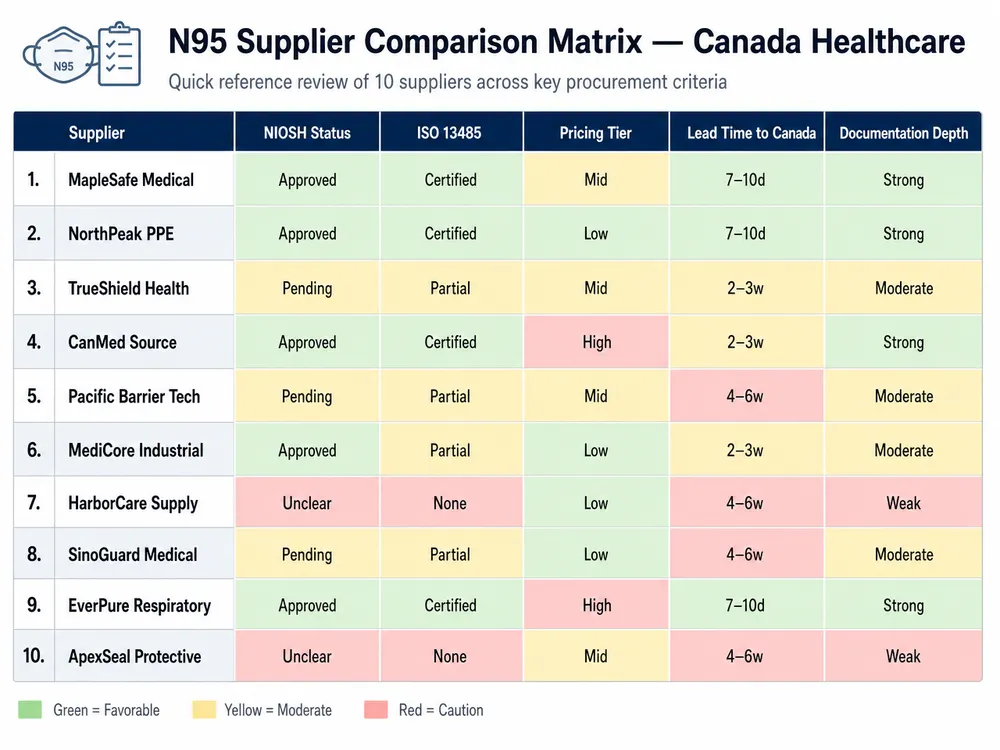
| Supplier | NIOSH Status | ISO 13485 | Pricing Tier | Lead Time (Canada) | Best For |
|---|---|---|---|---|---|
| 3M Canada | ✓ Approved | Yes | High | 1–2 weeks (domestic) | Brand-required institutional |
| Honeywell | ✓ Approved | Verify by SKU | Mid–High | 2–3 weeks | Industrial-to-healthcare |
| Moldex | ✓ Approved | Yes | Mid | 2–4 weeks | Fit compliance, fold-flat |
| Kimberly-Clark | ✓ Approved (surgical) | Yes | High | 2–4 weeks | Surgical/OR environments |
| Medicom | ✓ Approved | Yes | Mid–High | 1–2 weeks (domestic) | Domestic mandate buyers |
| Vitacore | ✓ Approved | Verify | Mid | 1–3 weeks (domestic) | Western Canada regional |
| Levitt-Safety | Multi-brand | N/A (distributor) | Mid–High | 1–2 weeks | Multi-brand consolidation |
| Dentec Safety | Multi-brand | N/A (distributor) | Mid–High | 1–2 weeks | Fit testing program support |
| Dealmed | Multi-brand | N/A (distributor) | Mid | 2–4 weeks (cross-border) | US import infrastructure |
| eztio | FDA 510(k) + ISO 13485 | Yes | Low–Mid | 35–50 days (factory-direct) | Repeat-volume, margin-focused |
When Local Supply Is the Right Answer
Factory-direct sourcing isn't always the right call. Here's when staying with a domestic or US-based supplier makes more sense:
Emergency and short-cycle orders: If your buyer needs product in 5–10 business days, a domestic distributor is the only viable option. Factory-direct lead times don't compress for urgent orders.
Small-volume institutional accounts: For accounts ordering under 20,000 pieces annually, the import logistics overhead of factory-direct sourcing — customs documentation, freight coordination, inventory carrying cost — often erodes the per-unit savings. Domestic distribution is simpler and the cost difference is smaller at low volumes.
Government tenders with domestic sourcing requirements: Some Canadian government procurement programs specify domestic or North American manufacturing. Medicom and Vitacore are the relevant options here. Factory-direct from China doesn't qualify.
First-time N95 distribution programs: If you're new to N95 distribution and haven't yet established your MDEL or built import logistics infrastructure, starting with a domestic supplier while you build that capability is a reasonable approach. The margin improvement from factory-direct sourcing is worth pursuing — but not before your compliance infrastructure is in place.
Building a Sourcing Program That Protects Margin at Scale
The distributors who build durable N95 programs in Canada typically run a two-tier sourcing model: a factory-direct primary source for planned volume, and a domestic backup for emergency fills and small-volume accounts. That structure captures the margin improvement on the bulk of their volume while maintaining the service flexibility their institutional buyers expect.
The factory-direct tier works when three conditions are met: you have MDEL registration in place, you're ordering with 6–8 weeks of lead time, and your volume justifies the import logistics overhead (typically 50,000 pieces minimum per shipment to make the economics work). Below those thresholds, domestic distribution is the more practical choice.
For the factory-direct tier, the supplier selection criteria that matter most for Canadian healthcare are ISO 13485 certification (QMS alignment with Health Canada MDR), in-house filtration layer control (BFE consistency across batches), and a documentation package that your customs broker can work with without back-and-forth. Those three criteria narrow the field considerably.
If you're evaluating factory-direct options for your N95 program, our N95 Medical Masks page covers the full product range, specifications, and certification documentation. For volume-specific pricing and a confirmed lead time, the fastest path is to submit an RFQ with your target volume, N95 grade (standard or surgical), and delivery window — we'll respond with factory-direct pricing and a specific production schedule.
Frequently Asked Questions
What is the minimum order quantity for factory-direct N95 import to Canada?
The practical minimum for factory-direct import economics is 50,000 pieces per shipment. Below that, the per-unit freight and customs clearance cost erodes most of the per-unit savings versus domestic distribution. At 50,000 pieces, the economics start to work; at 200,000+ pieces, the margin improvement is substantial.
Does NIOSH approval satisfy Health Canada requirements for medical-use N95 masks?
Not automatically. NIOSH approval certifies respirator performance under US occupational safety standards. For medical-use N95s sold to Canadian hospitals or long-term care facilities, the product may also need a Health Canada Medical Device Licence (MDL), and the importer typically needs a Medical Device Establishment Licence (MDEL). NIOSH approval is a strong performance indicator, but it's not a substitute for Health Canada medical device registration.
What documentation should a Chinese N95 factory provide for Canadian import?
At minimum: NIOSH approval certificate (with TC number), ISO 13485:2016 certificate, BFE and PFE test reports from an accredited third-party lab, certificate of conformity, and a packing list with HS code. For surgical N95s, add FDA 510(k) clearance documentation and ASTM F2100 test reports. Your customs broker will also need the manufacturer's SFDA/NMPA registration if the product is classified as a medical device in China.
How does in-house meltblown production affect BFE consistency?
Meltblown nonwoven fabric is the filtration layer in an N95 mask. Its fiber diameter, basis weight, and electrostatic charge level determine filtration efficiency. Factories that buy meltblown from outside suppliers are dependent on that supplier's production consistency — a parameter change at the fabric supplier level can shift BFE performance without any visible change to the finished mask. Factories with in-house meltblown production control those parameters directly, which means BFE consistency across batches is a function of their own QC process, not a third party's.
What is the realistic total lead time for factory-direct N95 import from China to Canada?
Factory production: 15–25 days from order confirmation. Ocean freight (Shandong to Vancouver or Montreal): 18–25 days. Customs clearance: 3–7 business days. Total realistic timeline: 36–57 days from order to warehouse. Plan your inventory cycle with a minimum 8-week lead time to avoid stockouts.