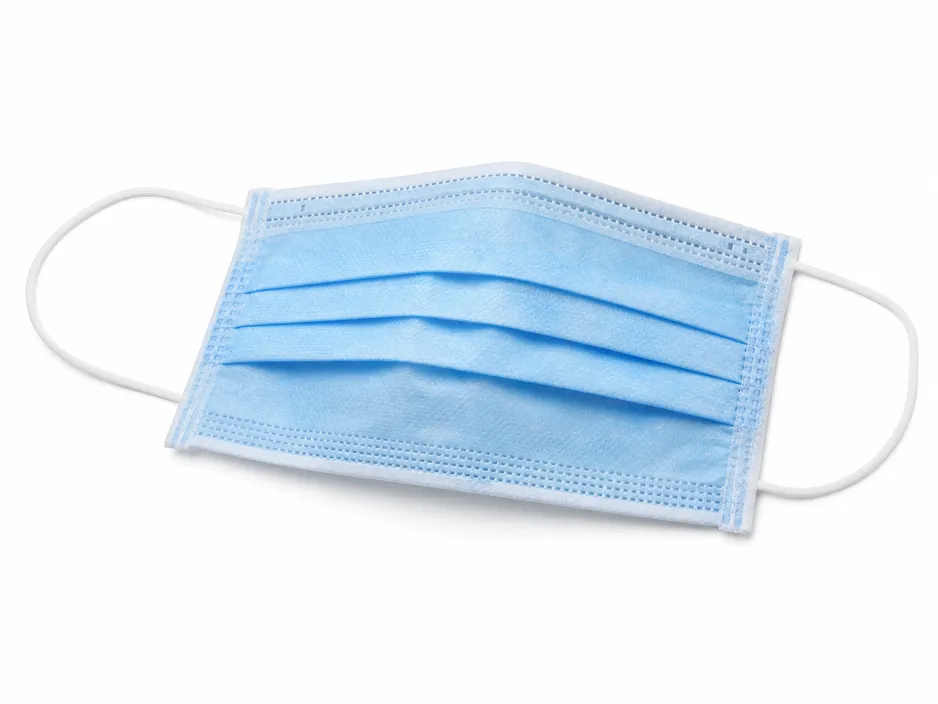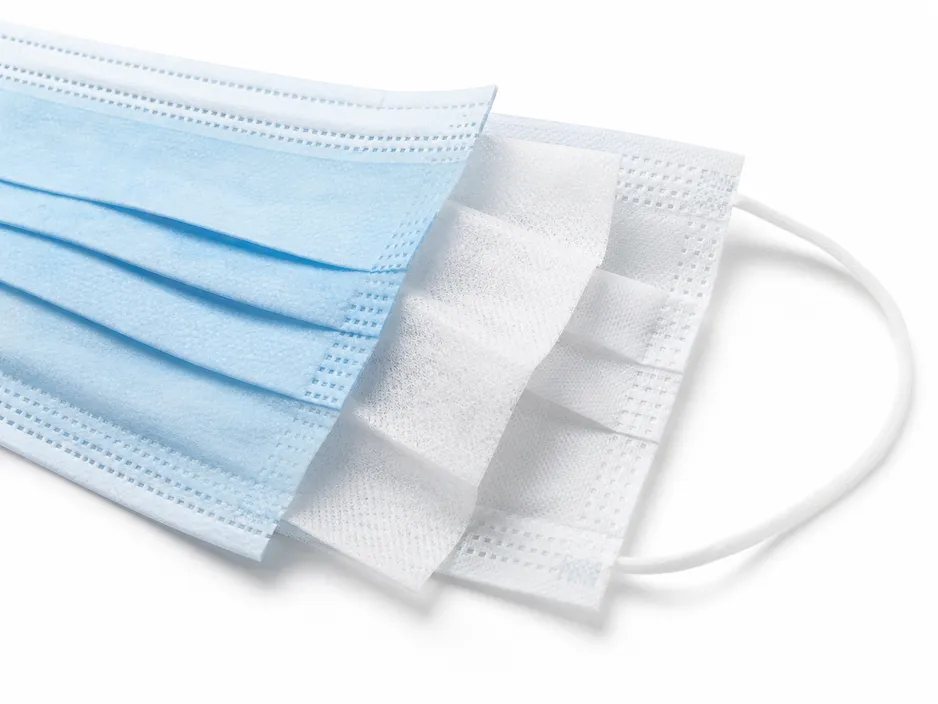
The confusion is understandable. Both masks carry the N95 designation. Both filter ≥95% of airborne particles. Both look nearly identical in a product photo. But put a standard N95 respirator on a surgeon during a procedure and you've created a compliance gap that your hospital's infection control committee will flag — and that your procurement audit will not survive.
The difference between an N95 surgical mask and a standard N95 respirator is not about filtration performance. It's about fluid resistance. One mask is tested and certified to resist blood and body fluid splash. The other is not. That single distinction determines which mask is legally appropriate in a surgical or procedural setting, and it determines which certification documents your supplier needs to provide.
Quick verdict: If your procurement covers operating rooms, procedure suites, or any setting where fluid splash is a clinical risk, you need a dual-certified N95 — NIOSH-approved for particulate filtration and ASTM F2100-compliant for fluid resistance. A standard N95 respirator does not satisfy that requirement regardless of its filtration rating.
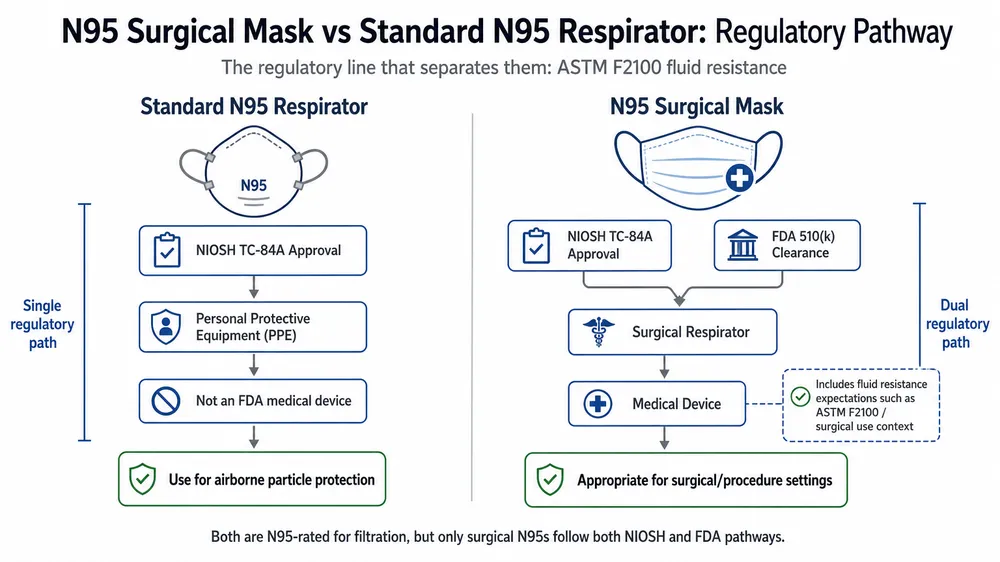
The Regulatory Line That Separates Them: ASTM F2100 Fluid Resistance
NIOSH certification — the TC-84A approval number on every legitimate N95 — tests one thing: particulate filtration efficiency at ≥95% against 0.3-micron particles under controlled airflow. That's the respirator standard. It says nothing about what happens when a fluid splash hits the mask surface.
ASTM F2100 is the standard that governs surgical mask performance in the US market. It covers three performance tiers (Level 1, Level 2, Level 3) and includes a fluid resistance test: a synthetic blood challenge at defined pressure (80 mmHg for Level 1, 120 mmHg for Level 2, 160 mmHg for Level 3). A mask that passes this test is rated for surgical use. A mask that doesn't isn't — regardless of its filtration number.
An N95 surgical mask carries both: NIOSH TC-84A approval for the respirator function, and ASTM F2100 compliance (typically Level 2 or Level 3) for the surgical mask function. The FDA classifies it as a combination product — a surgical respirator — and it requires FDA 510(k) clearance to be marketed as such in the US.
A standard N95 respirator carries only the NIOSH approval. It is regulated as a personal protective device, not a medical device. No FDA 510(k) required. No fluid resistance test required.
(We've seen buyers try to substitute standard N95s into surgical settings during supply crunches. Hospital infection control teams catch it. The documentation doesn't match the clinical requirement, and the order gets rejected at the department level even if it cleared central purchasing.)

Head-to-Head Specification Matrix
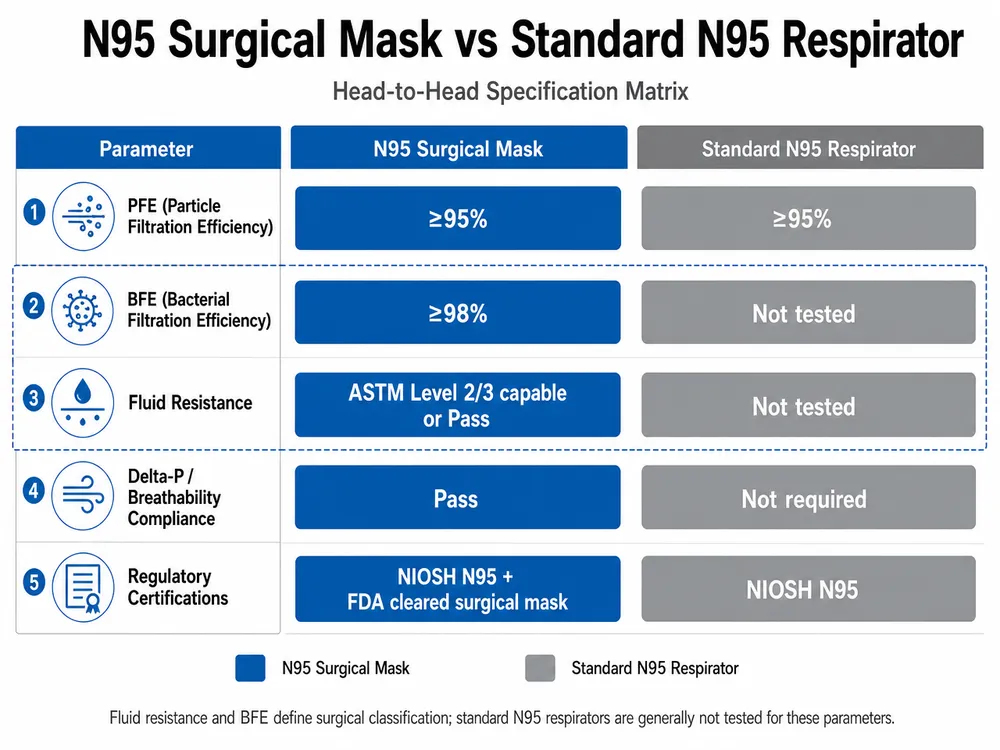
The table below covers the commercially meaningful differences — the ones that determine which mask belongs in your order and what documentation your supplier must provide.
| Specification | N95 Surgical Mask | Standard N95 Respirator |
|---|---|---|
| Particulate Filtration (PFE) | ≥95% | ≥95% |
| Bacterial Filtration Efficiency (BFE) | ≥98% (ASTM F2100) | Not tested / not required |
| Fluid Resistance | ≥80 mmHg synthetic blood (Level 2) or ≥160 mmHg (Level 3) | Not tested — no requirement |
| Delta-P (Breathability) | ≤5.0 mm H₂O/cm² (ASTM F2100) | ≤35 mm H₂O/cm² (NIOSH 42 CFR 84) |
| NIOSH TC-84A Approval | Required | Required |
| FDA 510(k) Clearance | Required | Not required |
| CE (EU MDR) Classification | Class I Medical Device (surgical respirator) | PPE Category III (respirator only) |
| ISO 13485 Manufacturing | Required for medical device classification | Not required for PPE-only |
| Applicable Standard | ASTM F2100 + NIOSH 42 CFR 84 | NIOSH 42 CFR 84 only |
| Regulatory Classification | Surgical respirator (medical device) | Personal protective equipment |
Two numbers in that table deserve attention. The Delta-P limit for surgical masks (≤5.0 mm H₂O/cm²) is significantly tighter than the NIOSH respirator limit (≤35 mm H₂O/cm²). This is not a minor footnote — it means the surgical N95 must achieve high filtration AND maintain breathability within a much narrower window. That's a harder manufacturing target, and it's why meltblown fabric quality is the controlling variable. A fabric that filters well but restricts airflow too much fails the surgical standard even if it passes NIOSH.
The BFE requirement is the other critical line. Standard N95s are never tested for bacterial filtration efficiency because they're not classified as surgical masks. An N95 surgical mask must hit ≥98% BFE — a higher bar than the filtration efficiency the NIOSH test measures, and tested against a different challenge (bacterial aerosol, not polydisperse NaCl particles).
Where Each Mask Belongs: Clinical Setting Determines the Right SKU
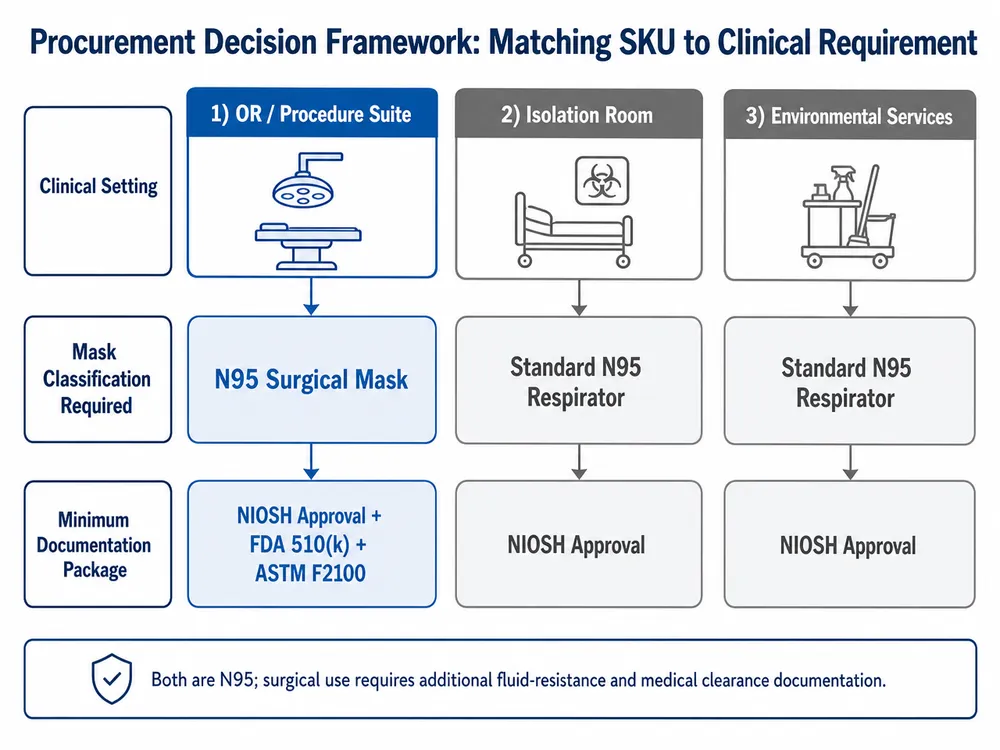
The clinical setting is the decision variable. Not preference, not price, not what was ordered last quarter.
N95 surgical mask — required settings:
- Operating rooms and procedure suites where aerosol-generating procedures (AGPs) occur alongside fluid splash risk
- Labor and delivery units during delivery procedures
- Emergency department trauma bays
- Bronchoscopy, intubation, and tracheostomy procedures
- Any setting where your hospital's infection control policy requires both respiratory protection and surgical mask classification
In these settings, the mask must satisfy two simultaneous requirements: protect the wearer from airborne particles (the respirator function) and protect the sterile field and patient from the wearer's respiratory emissions while resisting fluid splash (the surgical mask function). Only a dual-certified product does both. A standard N95 respirator covers the first requirement and fails the second.
Standard N95 respirator — appropriate settings:
- Isolation rooms for airborne-precaution patients (TB, measles, varicella) where fluid splash is not a clinical concern
- Respiratory therapy and patient transport in non-procedural contexts
- Environmental services staff working in airborne-precaution areas
- Industrial and occupational health programs within the hospital system
The standard N95 is the right tool when the clinical risk is airborne particle exposure without fluid splash. It's also the lower-cost option, which matters when you're managing high-volume consumption in non-surgical departments.
The procurement mistake we see most often: a hospital standardizes on one N95 SKU to simplify inventory, then discovers that the standard N95 they chose doesn't satisfy the surgical requirement in the OR. The result is a split order, a compliance gap in the interim, and a supplier conversation that should have happened before the contract was signed.
The Hidden Procurement Cost: Dual Certification Is Not Just a Label Upgrade
Buyers sometimes approach dual-certified N95 surgical masks as a premium version of the standard N95 — same product, extra paperwork, higher price. That framing misses the manufacturing reality.
Producing a mask that simultaneously meets NIOSH 42 CFR 84 and ASTM F2100 requires a different production environment and a different QC infrastructure. The ASTM F2100 fluid resistance requirement means the outer layer material must be selected and tested for hydrophobic performance. The BFE ≥98% requirement means the meltblown layer must be controlled to a tighter spec than NIOSH alone demands. The Delta-P ceiling of ≤5.0 mm H₂O/cm² means the meltblown basis weight and fiber diameter must be optimized to hit both filtration and breathability targets simultaneously — a narrower process window than standard N95 production.
We produce our meltblown fabric in-house, which is the only way we can reliably hit that dual-spec window. When you're buying from a factory that sources meltblown from an outside supplier, the filtration spec is only as consistent as that supplier's batch-to-batch quality. We've seen what happens when a meltblown roll comes in slightly off-spec: the masks pass visual inspection, they may even pass a quick BFE spot-check, but they fail the full ASTM F2100 battery. That failure shows up in your hospital's incoming inspection, not at the factory.
The manufacturing environment matters too. Our core production runs in a Class 100,000 (ISO 8) cleanroom — continuous particle monitoring, controlled access, documented environmental records. Hospital procurement audits increasingly require evidence of cleanroom manufacturing for surgical-classified products. A factory producing N95 surgical masks in an uncontrolled environment cannot provide that documentation, which means your procurement audit has a gap even if the product itself tests correctly.
(The ISO 13485:2016 certification is the other signal to check. It requires documented risk management and design controls at a level that most PPE-only factories haven't built. If a supplier holds ISO 13485 for their surgical mask line, they've been through the audit discipline that medical device manufacturing requires. If they only hold ISO 9001, they haven't.)
Procurement Decision Framework: Matching SKU to Clinical Requirement
The practical question for hospital supply chain is not "which mask is better" — it's "which mask does each department actually need, and can one supplier provide both with the right documentation?"
Here's the decision logic we walk buyers through:
Step 1 — Map your clinical settings to mask classification:
- Identify which departments require surgical respirator classification (OR, procedure suites, AGP settings)
- Identify which departments require respirator-only protection (isolation rooms, transport, environmental services)
- Determine whether you need one SKU or two
Step 2 — Verify the certification stack for each SKU:
For N95 surgical masks, the minimum documentation package for US hospital procurement:
- NIOSH TC-84A approval number (verifiable on the NIOSH Certified Equipment List)
- FDA 510(k) clearance number (verifiable on the FDA 510(k) database)
- ASTM F2100 Level 2 or Level 3 test report from an accredited laboratory
- ISO 13485:2016 certificate from the manufacturing facility
- BFE, PFE, and Delta-P test reports (batch-specific, not just product-level)
For standard N95 respirators, the minimum documentation package:
- NIOSH TC-84A approval number
- PFE test report
- For hospital use: ISO 9001 or ISO 13485 certificate from the manufacturing facility
Step 3 — Evaluate the supplier's manufacturing evidence:
- Does the factory hold FDA 510(k) for the specific surgical N95 SKU you're ordering?
- Is the cleanroom classification documented and auditable?
- Is meltblown production in-house or sourced externally?
- Can the supplier provide batch-specific test reports, not just product-level certificates?
The last point is where a lot of procurement teams stop short. A product-level certificate tells you the mask design was tested and approved. A batch-specific test report tells you the masks in your shipment were tested. For hospital procurement, you need both.
Why Dual-Certified Sourcing Reduces Compliance Risk Across Your Supply Chain
The compliance argument for sourcing dual-certified N95 surgical masks from a single qualified supplier is straightforward: fewer documentation gaps, fewer audit findings, fewer emergency substitutions.
When a hospital runs two separate N95 SKUs from two separate suppliers, every procurement cycle carries two sets of certification renewal dates, two sets of batch test reports to track, and two supplier qualification files to maintain. If one supplier has a production disruption, the substitution options are constrained by the certification requirement — you can't substitute a standard N95 into a surgical setting even temporarily without an infection control exception process.
Sourcing both SKUs from a single FDA 510(k)-registered, ISO 13485-certified manufacturer with documented cleanroom production simplifies that picture considerably. One supplier qualification file. One audit relationship. One documentation standard applied across both products.
We hold FDA 510(k) registration and CE under EU MDR for our N95 Surgical Medical Mask line. The same facility, the same cleanroom, the same meltblown production, and the same QC infrastructure that produces our surgical N95s also produces our standard N95 respirators. If your procurement covers both clinical settings, you can source both products from one qualified supplier with one documentation package.
For buyers supplying into the EU market, the CE (EU MDR) classification adds another layer: surgical respirators are classified as Class I medical devices under EU MDR, requiring a technical file, a Declaration of Conformity, and a registered EU Authorized Representative. Standard N95-equivalent respirators (FFP2 under EN 149) are classified as PPE Category III — a different regulatory pathway entirely. If you're building a European hospital supply program, the distinction matters at customs and at the hospital procurement audit level.
Scenario Decisions: Which Mask Wins in Each Procurement Context
Scenario 1: Regional hospital network, OR and ICU procurement
You're sourcing for a 12-hospital network. The OR and ICU departments require surgical respirator classification. The isolation ward and environmental services teams need standard N95 protection. Your compliance team requires FDA 510(k) documentation for all surgical-classified products and ISO 13485 certification for all suppliers.
Winner: Dual-certified N95 surgical mask for OR/ICU, standard N95 for isolation/EVS — both from a single ISO 13485-certified, FDA 510(k)-registered supplier. Consolidating to one supplier reduces your qualification burden and gives you a single point of accountability for documentation.
Scenario 2: Healthcare distributor building a hospital supply catalog
You're building a catalog for hospital system customers. Your buyers will ask for both surgical and non-surgical N95 SKUs. They'll require FDA 510(k) documentation for the surgical SKU and will run incoming inspection on both.
Winner: Source both SKUs from a manufacturer with in-house meltblown production and batch-specific test reports. Your hospital customers' incoming inspection will catch batch-to-batch inconsistency. A supplier without in-house meltblown control cannot guarantee that consistency across large orders. One failed incoming inspection at a hospital customer is a relationship problem, not just a product problem.
Scenario 3: Government or institutional tender requiring dual-certified N95
The tender specification calls for NIOSH-approved N95 surgical masks with FDA 510(k) clearance, ASTM F2100 Level 2 minimum, and ISO 13485 manufacturing certification. The volume is 500,000 pieces with a 30-day delivery requirement.
Winner: A manufacturer with all three certifications already in place, in-house meltblown production for spec consistency, and sufficient line capacity to fulfill the volume without queuing. At 120 million pieces annual capacity across 6 production lines, a 500,000-piece order is a standard run for us — not a capacity stretch that requires overtime or line reallocation.
What to Include in Your RFQ for N95 Surgical Masks
The RFQ language determines whether you get a compliant quote or a generic price. These are the parameters that matter:
For N95 surgical masks:
- Confirm NIOSH TC-84A approval required (specify the approval number if you have a preferred product)
- Specify ASTM F2100 Level 2 or Level 3 (Level 2 covers most surgical settings; Level 3 is required for high-fluid-exposure procedures)
- Require FDA 510(k) clearance number in the quote response
- Request batch-specific BFE, PFE, and Delta-P test reports with each shipment
- Specify ISO 13485:2016 manufacturing certification required
- State whether CE (EU MDR) is required for EU market distribution
- Confirm cleanroom manufacturing classification required (Class 100,000 / ISO 8 minimum)
For standard N95 respirators:
- Confirm NIOSH TC-84A approval required
- Request PFE test report
- Specify whether ISO 13485 or ISO 9001 manufacturing certification is acceptable
- State volume and delivery timeline
For both SKUs:
- Specify OEM/private-label requirements if applicable
- Confirm packaging format (individual poly bag, bulk clinical pack, retail box)
- State target market for regulatory documentation alignment (US, EU, Middle East, etc.)
The documentation requirements are not negotiable in hospital procurement. A supplier who can't provide batch-specific test reports alongside the shipment is not a viable hospital supplier, regardless of price.
For a full overview of our Surgical Medical Masks product range — including 3-ply surgical masks, N95 surgical masks, and ASTM F2100 level options — the category page covers the complete specification and certification details. When you're ready to specify your volume and certification requirements, the Request Quote page routes directly to our sales team.