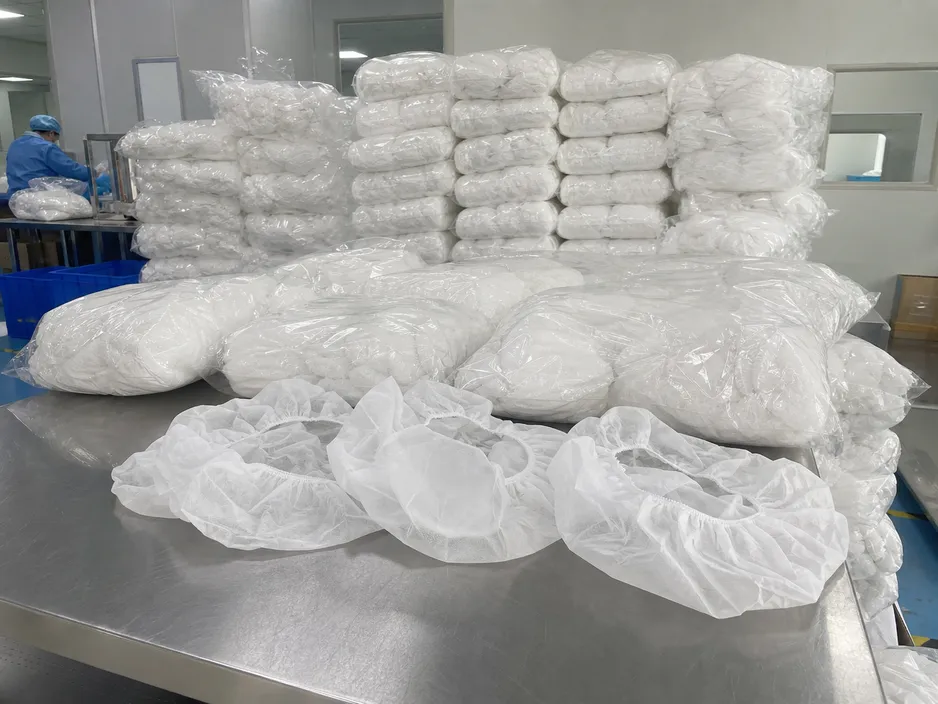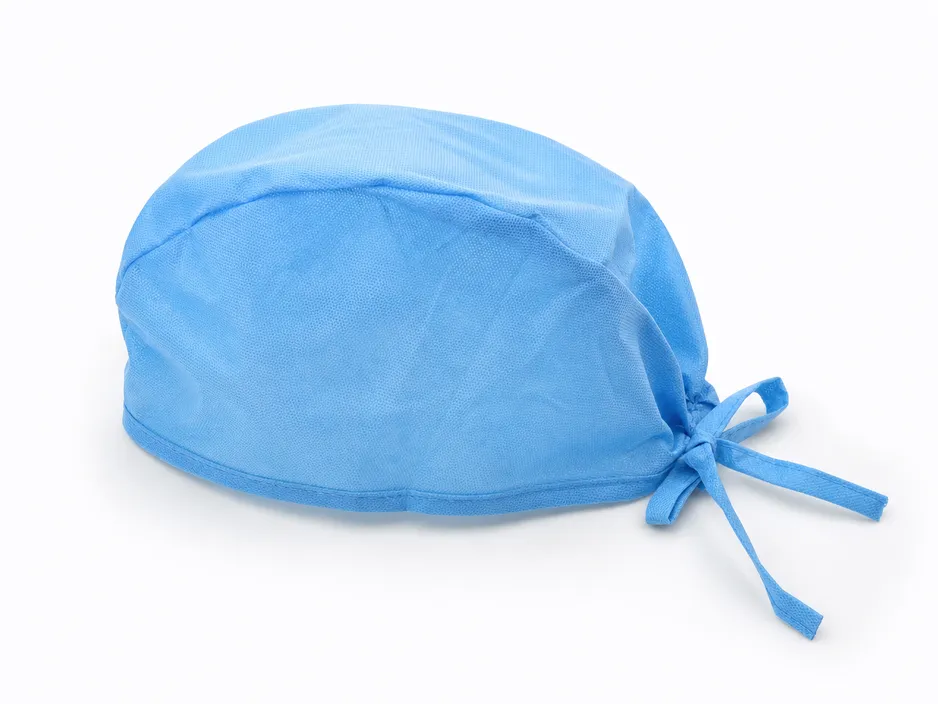
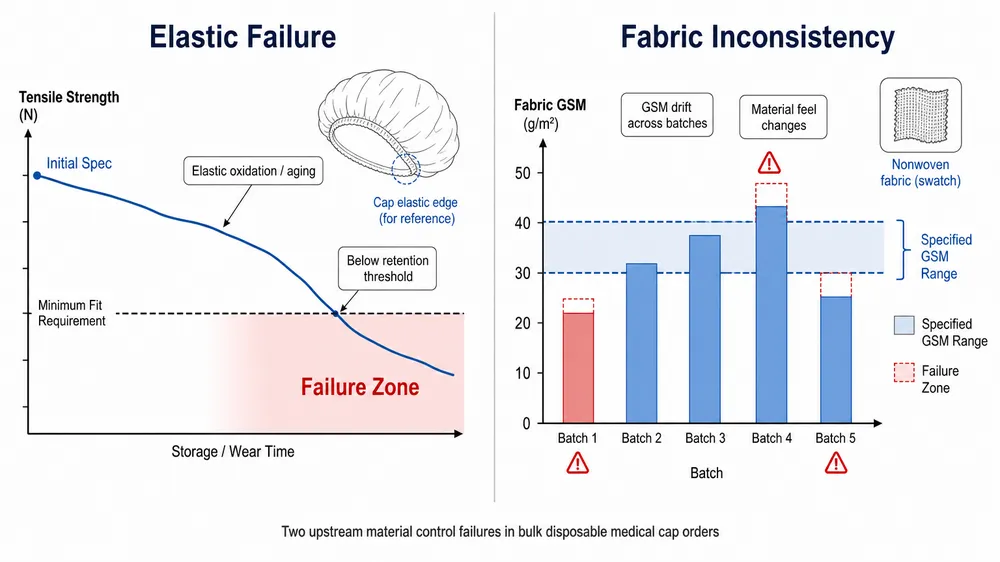
The two complaints we hear most often from buyers who've had a bad run with a previous supplier: caps that lose their fit after a few hours of wear, and batches where the fabric feels noticeably different from the last order. Both problems are preventable. Both trace back to decisions made before the order was placed — not during production.
This guide walks through the sourcing steps that actually matter for Disposable Medical Caps in bulk: how to specify correctly, what to ask suppliers before you commit, and what documentation to require with every shipment.

The Two Failure Modes That Cost Buyers the Most
Elastic failure and fabric weight drift are not random quality problems. They have specific mechanisms, and once you understand them, you can screen for them before placing an order.
Elastic degradation happens when the elastic band or ear-loop material doesn't hold its tensile strength across the product's expected use window. In a clinical setting, a cap worn for a 6-8 hour shift needs to maintain consistent circumferential pressure throughout. When the elastic is undersized in cross-section, made from a lower-grade spandex blend, or heat-bonded at the wrong temperature during assembly, it relaxes faster than it should. The cap starts slipping. In an OR or sterile processing environment, that's not a comfort issue — it's a contamination control failure.
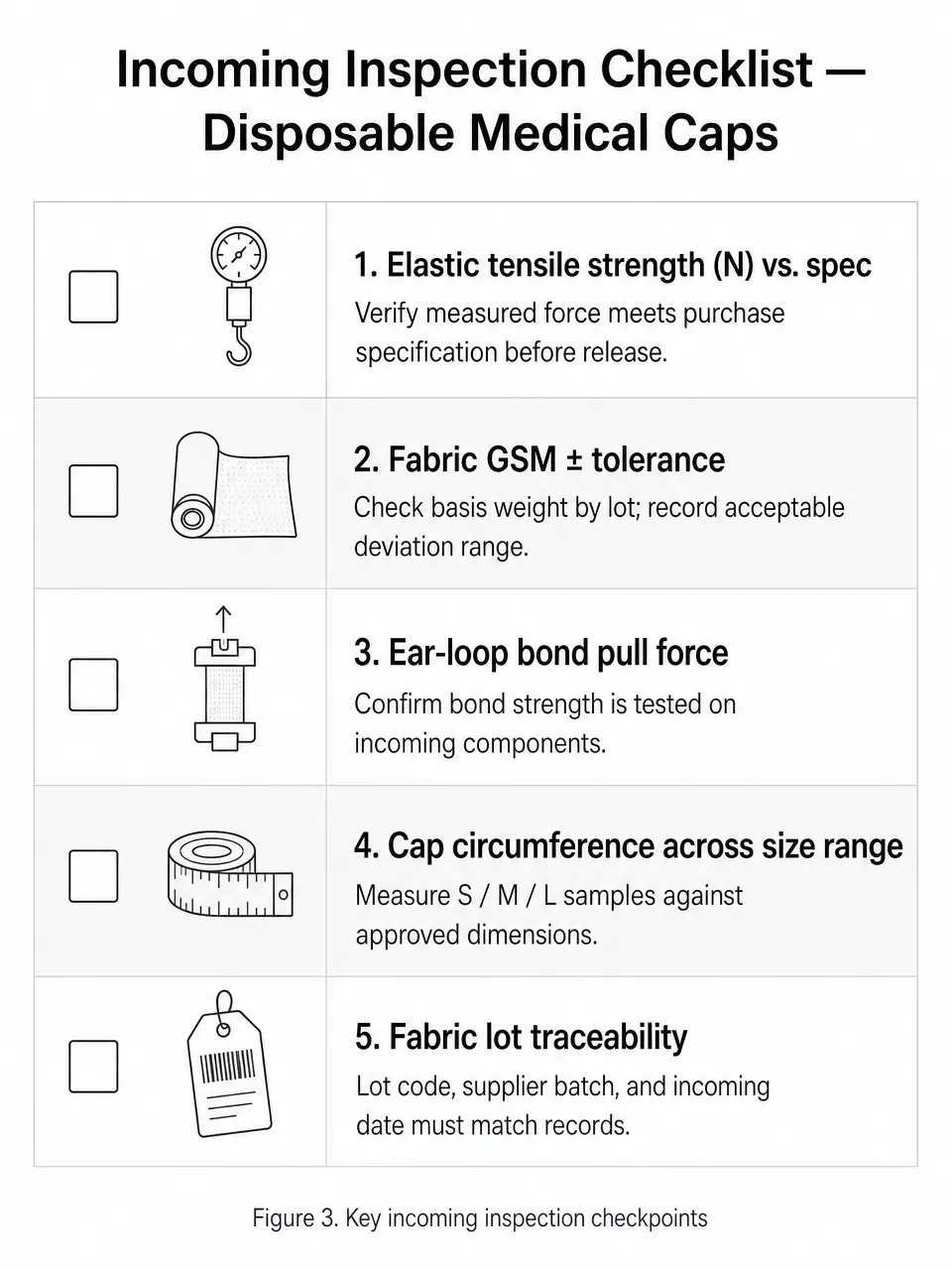
The failure usually doesn't show up in a quick visual inspection of a sample. It shows up at hour four of a shift, or in the second batch of a reorder when the supplier quietly switched elastic suppliers. We've seen this pattern enough times that our incoming inspection now tests elastic tensile strength at the dock, before production starts — not after the caps are assembled.
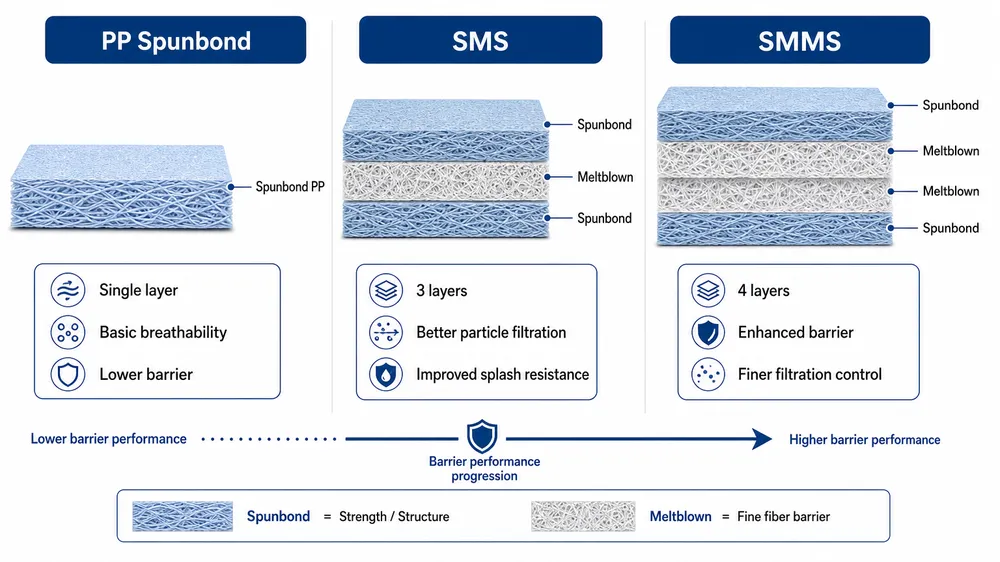
Fabric weight drift is subtler but just as damaging to your supply chain. Nonwoven polypropylene fabric for medical caps is typically specified at 20-25 GSM for standard bouffant caps, with some surgical cap constructions running slightly heavier. When a supplier sources fabric from the spot market or uses multiple mills without a locked spec, the GSM can drift 15-20% between batches. The caps still look the same. But the barrier performance changes, the feel changes, and if you're selling into a hospital system with a documented product spec, you have a compliance problem.
The root cause is almost always that the supplier doesn't control their own fabric supply. They buy from whoever has stock.
Step 1: Specify the Cap Type and Construction Before Contacting Suppliers
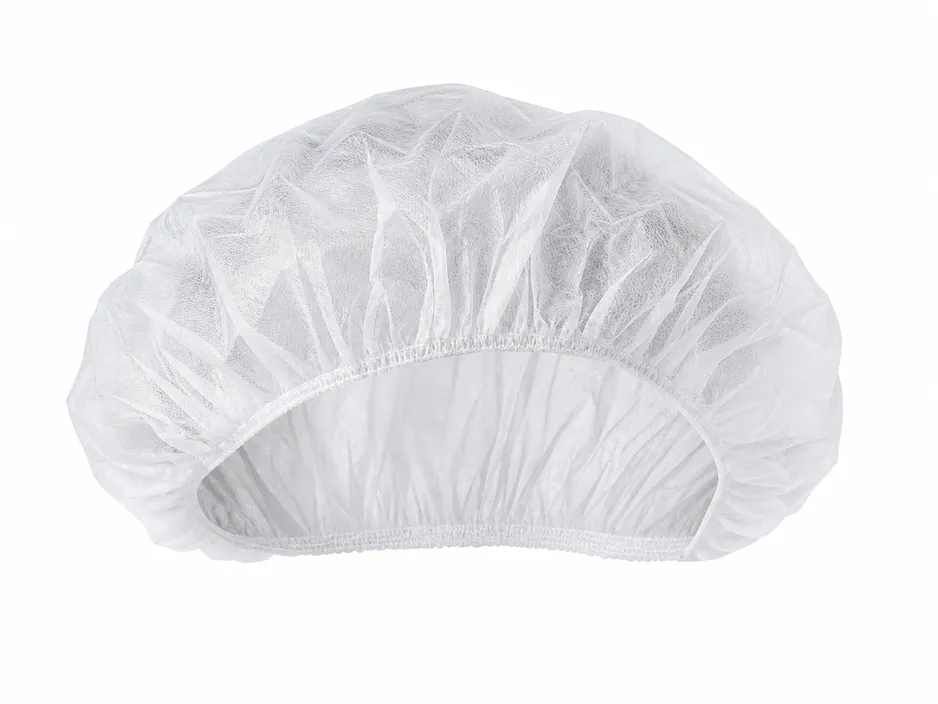
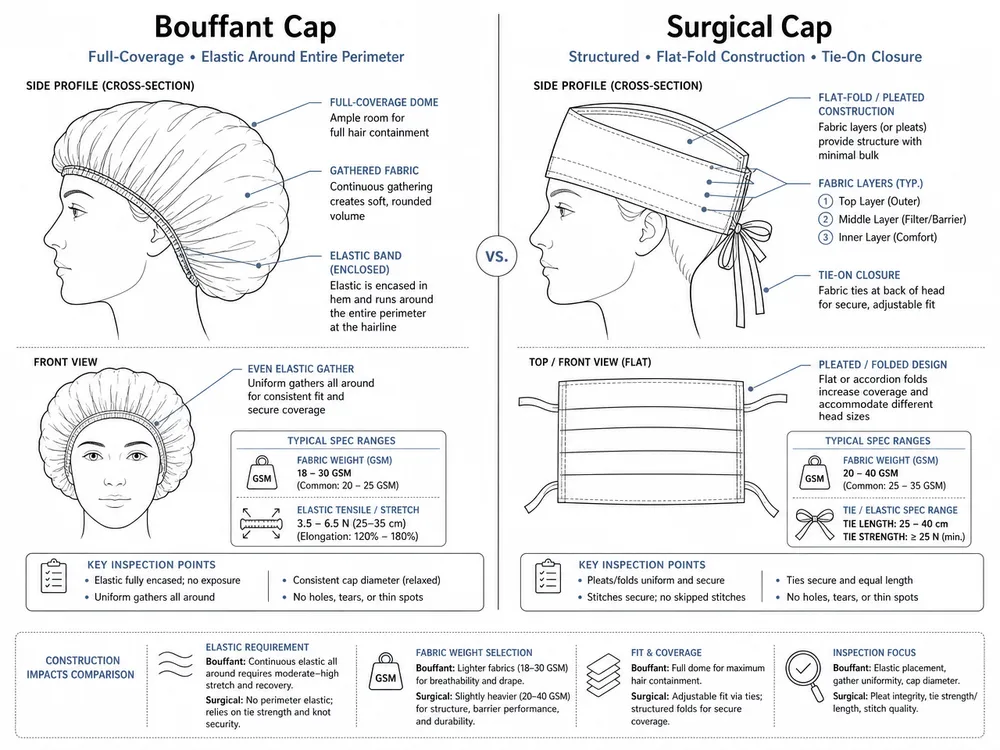
Buyers who skip this step end up comparing quotes that aren't comparable. A Bouffant Medical Cap and a Surgical Medical Cap are different products with different construction requirements, and within each type there are meaningful spec decisions that affect both performance and price.
Before you send an RFQ, lock down:
- Cap type: Bouffant (gathered, full-coverage) or surgical (flat-folded, ties or elastic)
- Closure method: Elastic band, ear-loop, or tie-on — each has different tensile requirements and failure modes
- Fabric weight: Specify GSM range, not just "nonwoven polypropylene." 20 GSM and 25 GSM are not interchangeable in a clinical protocol
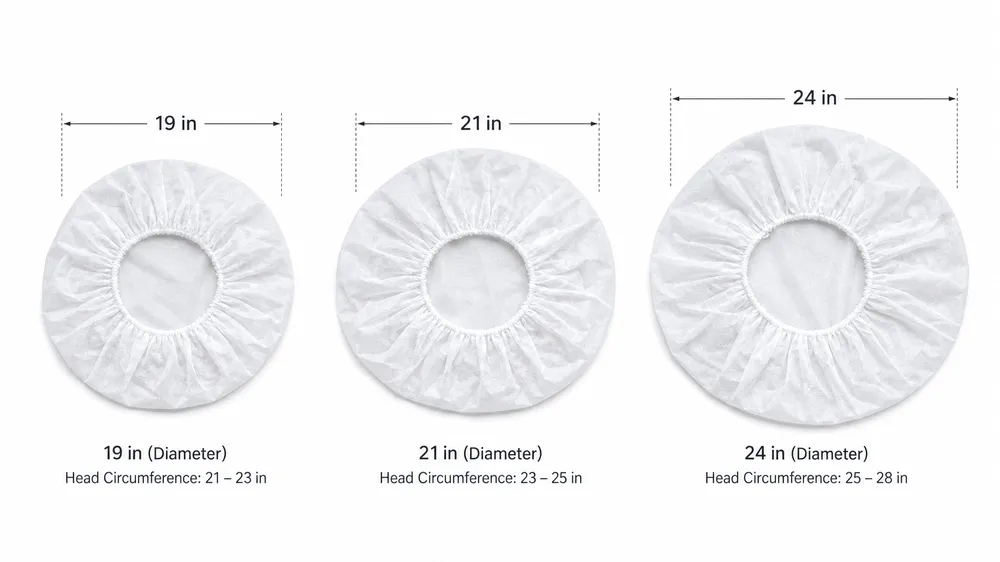
- Size range: Standard one-size-fits-most vs. S/M/L sizing — if you need a size range, confirm the supplier runs all sizes on the same line with the same elastic spec
- Color and packaging: Sterile individual wrap vs. bulk poly bag — this affects MOQ and lead time significantly
(A note on sizing: the most common spec drift we see in multi-size orders is elastic circumference — suppliers sometimes use the same elastic length across sizes and just adjust the fabric gather. That produces a cap that fits differently at each size. Ask specifically how elastic length is adjusted across the size range.)
Step 2: Qualify the Supplier's Material Controls
This is where most buyers don't dig deep enough. A supplier can hold ISO 13485 certification and still source fabric from three different mills depending on availability. The certification covers their process controls — it doesn't guarantee material consistency unless their QMS explicitly locks the approved supplier list.
Ask these questions directly:
On fabric supply:
- Do you produce your own nonwoven fabric, or do you source it from third parties?
- If third-party, how many approved fabric suppliers are on your AVL (Approved Vendor List)?
- What is your incoming inspection spec for fabric GSM — what's the acceptable tolerance?
- Can you provide incoming inspection records for the last three fabric lots?
On elastic and ear-loop components:
- What is the tensile strength spec for your elastic band/ear-loop material?
- At what point in production is tensile strength tested — incoming material, in-process, or finished product?
- What is your rejection threshold?
A supplier who can answer these questions with specific numbers and show you the records is operating a real QMS. A supplier who says "we use high-quality materials" and can't produce incoming inspection data is running on trust — which is fine until the spot market tightens and they switch suppliers without telling you.
We produce our own nonwoven fabric in-house, which means our fabric GSM is controlled at the source, not at the receiving dock. When a buyer asks for batch-level fabric consistency data, we can pull it because we generated it ourselves.
Step 3: Request Incoming Inspection Records for Elastic and Ear-Loop Components
This step is specific enough that it deserves its own section. Most buyers ask for finished-product test reports. That's necessary but not sufficient for catching elastic failure before it reaches your customers.
Finished-product testing tells you the cap passed inspection on the day it was tested. It doesn't tell you whether the elastic will hold its tensile strength after 6 months in a warehouse, or whether the ear-loop bond will survive the mechanical stress of repeated donning and doffing.
What to request:
| Document | What It Tells You |
|---|---|
| Incoming elastic tensile test report | Whether the raw elastic met spec before assembly |
| Elastic aging/retention data | Whether tensile strength holds over time (ask for 6-month data if available) |
| Ear-loop bond strength test | Pull force required to separate the ear-loop from the cap body |
| Fabric GSM incoming inspection log | Batch-by-batch fabric weight records, not just a single certificate |
| Finished product dimensional check | Cap circumference and depth across the size range |
Under ISO 13485, incoming inspection of critical components is a documented requirement — not optional. If a supplier can't produce these records, they either don't have them or their QMS isn't functioning as certified.
(We run elastic tensile testing at the dock on every incoming lot. The threshold is set based on the finished-product performance spec, not just the raw material spec — because the bonding process affects final tensile strength, and we need to know the incoming material has enough headroom to survive assembly.)
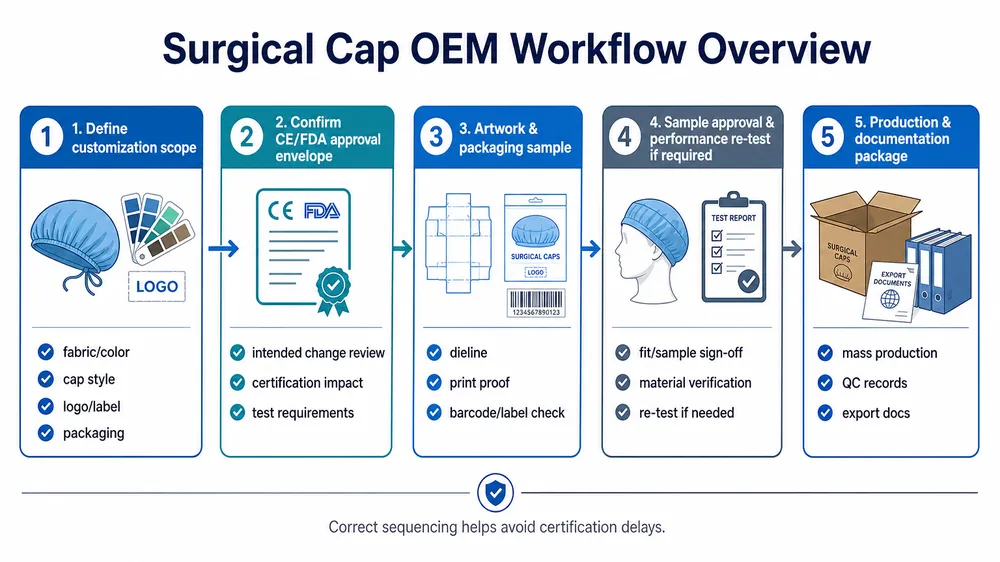
Step 4: Verify Certification Scope — Confirm It Covers Caps, Not Just Masks
This is a sourcing trap that catches buyers more often than it should. A manufacturer can hold FDA 510(k) registration and CE marking for surgical masks without those certifications covering their cap products. The scope of a medical device registration is product-specific.
Before you rely on a supplier's certifications for your compliance documentation:
- Ask for the specific FDA 510(k) number and confirm the product description includes caps
- For CE, ask for the Declaration of Conformity and check that the product category listed matches what you're buying
- For ISO 13485, the certificate covers the QMS scope — confirm that caps are within the certified product scope, not just masks or other PPE
- If you're selling into the EU under MDR, confirm the supplier's CE is issued under EU MDR 2017/745, not the older MDD
Most Medical Caps sold on Alibaba and wholesale directories carry no certification detail at all. The ones that do often show mask certifications applied to cap products — which doesn't hold up in a procurement audit or customs review.
Our ISO 13485:2016 and CE (EU MDR) certifications cover our full disposable medical cap line. We can provide the specific documentation scope on request before you place an order.
Step 5: Run a Trial Order Before Committing to Volume
The purpose of a trial order is not just to check whether the caps look right. It's to stress-test the supplier's consistency before you're committed to a large volume.
A useful trial order protocol for bulk disposable medical caps:
- Order at minimum MOQ — our standard MOQ for caps is 50,000 pieces, which is enough to run a meaningful incoming inspection and distribute to a test site
- Request caps from at least two production batches if possible — this tests batch-to-batch consistency, not just single-batch quality
- Run your own incoming inspection against the spec you defined in Step 1 — measure GSM, test elastic tensile, check cap circumference across the size range
- Deploy to a test site for at least 2-4 weeks — clinical staff will identify fit and durability issues that lab testing misses
- Compare the trial order documentation to what you'll require for full-volume orders — if the supplier can't produce batch-level test reports for a 50,000-piece trial, they won't produce them for 500,000 pieces either
The 50,000-piece MOQ exists specifically to make trial orders viable. A supplier with a 200,000-piece minimum is asking you to commit to volume before you've validated consistency — that's a risk structure that favors the supplier, not you.
What Documentation to Require with Every Bulk Shipment
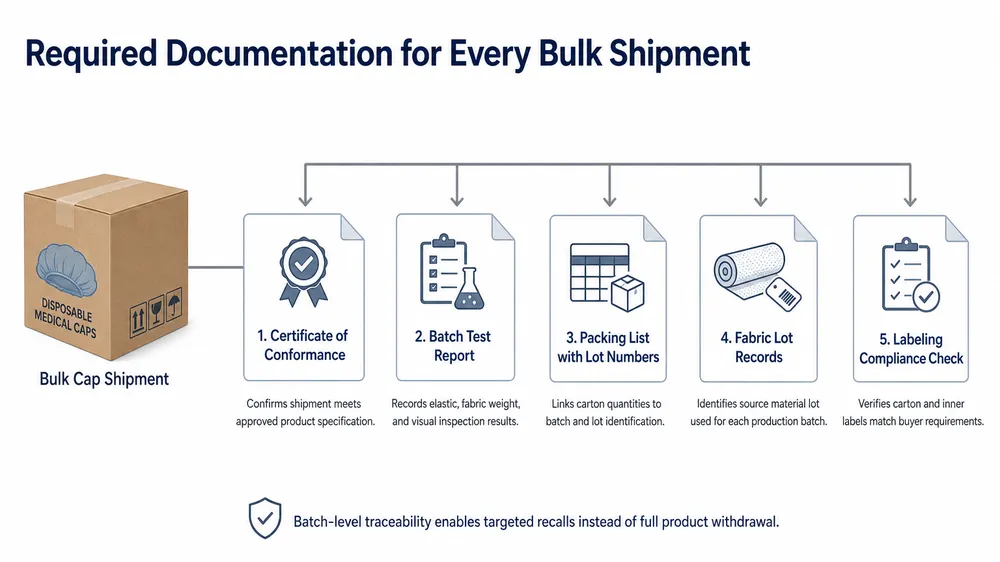
Once you've qualified a supplier and placed a volume order, the documentation package that ships with each order is your audit trail. For healthcare procurement, this matters.
Require these with every shipment:
- Certificate of Conformance (CoC): Signed statement that the batch meets the agreed specification. Should reference the specific batch/lot number, not just the product name.
- Batch test report: Results from finished-product testing for that specific lot — not a generic product certificate. Should include cap dimensions, elastic performance, and any applicable barrier test results.
- Packing list with lot traceability: Each carton should be traceable to a production lot. If a quality issue surfaces after distribution, you need to be able to pull the affected lot without recalling everything.
- Fabric lot records: If you've specified a GSM range, the supplier should be able to show which fabric lot was used in each production batch.
- Shipping marks and labeling compliance: Confirm labeling meets the requirements of your target market — FDA labeling requirements differ from EU MDR requirements.
(One thing we've learned from working with US and UK hospital procurement teams: they often need the CoC and batch test report before the shipment clears customs, not after. Build that into your supplier agreement so the documents travel with the commercial invoice, not two weeks later.)
Common Sourcing Mistakes and How to Avoid Them
These are the patterns we see repeatedly from buyers who've had a bad experience before coming to us.
Accepting product-level certificates instead of batch-level reports. A product certificate says the product design was tested once. A batch test report says this specific lot was tested. For medical-grade products, you need the latter.
Not specifying GSM in the RFQ. If your RFQ says "20-25 GSM nonwoven polypropylene," the supplier is locked to that range. If it says "nonwoven medical cap," the supplier will use whatever fabric they have in stock.
Treating elastic closure type as interchangeable. Ear-loop caps and elastic-band caps have different tensile requirements and different failure modes. Switching between them mid-contract without re-qualifying the spec is a common source of fit complaints.
Relying on a single sample for qualification. One sample from one batch tells you the supplier can make a good cap. It doesn't tell you they make a consistent cap. Request samples from two different production runs before qualifying a new supplier.
Not confirming certification scope before the order. Ask for the specific certificate number and product scope in writing before you place the order. Getting this wrong costs you a compliance audit, not just a reorder.
Skipping the trial order to save time. The time saved by skipping a trial order is almost always less than the time lost managing a quality dispute on a 500,000-piece order.
Supplier Qualification Checklist for Bulk Disposable Medical Caps
Use this before placing any volume order with a new supplier:
Material controls
- [ ] Supplier produces own nonwoven fabric, or has locked AVL with GSM tolerance spec
- [ ] Incoming inspection records available for fabric GSM (last 3 lots minimum)
- [ ] Elastic/ear-loop tensile spec documented and tested at incoming inspection
- [ ] Elastic aging/retention data available on request
Certifications
- [ ] ISO 13485:2016 certificate — confirm scope includes caps
- [ ] CE Declaration of Conformity — confirm EU MDR (not MDD) and product scope
- [ ] FDA 510(k) registration — confirm product description includes caps (if selling into US)
- [ ] SGS or equivalent third-party audit report available
Production and QC
- [ ] Batch-level test reports available (not just product-level certificates)
- [ ] Lot traceability from fabric through finished product
- [ ] Cap circumference and elastic performance tested across full size range
- [ ] QC records available for review before shipment
Commercial terms
- [ ] MOQ allows trial order before full-volume commitment
- [ ] Documentation package (CoC, batch report, packing list) ships with each order
- [ ] Supplier can confirm certification scope in writing before order placement
If you're sourcing Disposable Medical Caps in bulk and want to verify spec, MOQ, and certification scope before committing, send us your requirements — cap type, size range, target quantity, and any market-specific certification requirements. We'll confirm what we can supply and provide the documentation scope upfront.