Most private-label surgical mask programs don't fail because the masks are bad. They fail because the documentation package is incomplete when it hits the FDA import desk, or because the hospital GPO's procurement checklist asks for a test report the factory never ran.
We've managed OEM programs for distributors in the US, Germany, and the UAE. The pattern is consistent: buyers who get rejected at customs or knocked out of a hospital tender almost always made the same upstream decisions — wrong grade selection, unverified manufacturer certifications, or a factory that outsources its meltblown layer and can't guarantee BFE consistency across batches.
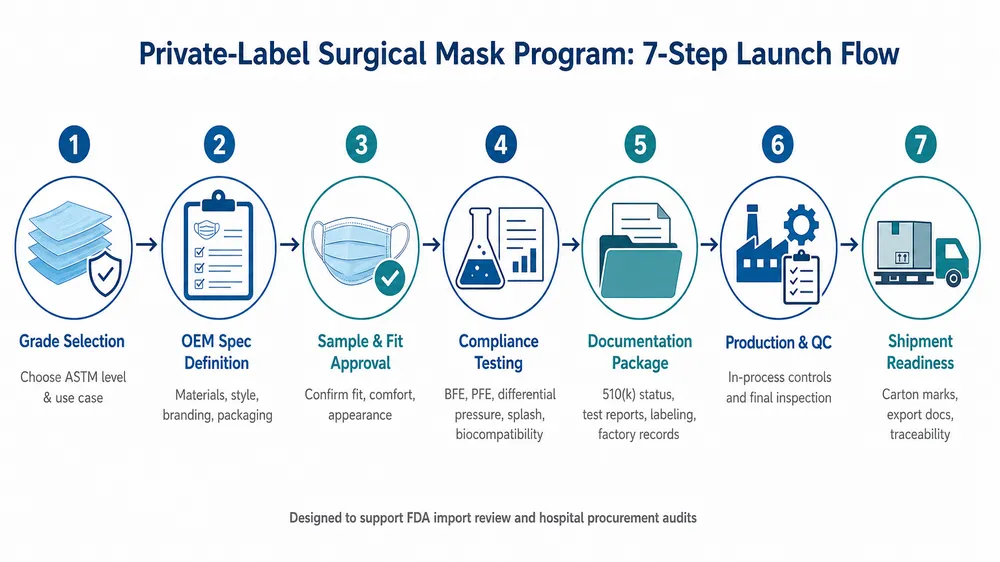
This guide walks through each step in sequence. If you're building a private-label surgical mask line for the first time, or if a previous program ran into compliance problems, this is where to start.

Why private-label programs get rejected at FDA import and hospital procurement
Before the steps, it's worth being direct about where the money gets lost.
FDA import rejection happens when the product arrives without a valid 510(k) registration number on the label, when the test reports don't match the declared ASTM level, or when the manufacturer's FDA establishment registration has lapsed. Customs brokers can't fix this after the container ships.
Hospital GPO and IDN rejection is a different problem. Group purchasing organizations and integrated delivery networks run their own supplier qualification checklists. A typical hospital GPO checklist asks for ISO 13485 certification, BFE test reports from an accredited lab (NELSON, SGS, Intertek), fluid resistance test results, and cleanroom manufacturing documentation. If your factory can't produce all of these, your product doesn't make the approved vendor list — regardless of price.
The two failure modes have different causes, but the same root: the buyer didn't verify the factory's documentation coverage before placing the order.
Step 1 — Choose the right ASTM F2100 level before you spec the product
ASTM F2100 has three levels. Choosing the wrong one either leaves margin on the table or creates a compliance problem when the product reaches a clinical setting that requires a higher grade.
| Level | BFE | PFE | Fluid Resistance | Typical application |
|---|---|---|---|---|
| Level 1 | ≥95% | ≥95% | 80 mmHg | General medical, low-fluid-exposure procedures |
| Level 2 | ≥98% | ≥98% | 120 mmHg | Moderate-fluid-exposure procedures |
| Level 3 | ≥98% | ≥98% | 160 mmHg | High-fluid-exposure, surgical environments |
For hospital procurement, Level 2 is the most common floor requirement. Level 1 is acceptable for clinic and outpatient settings. Level 3 is required for OR environments where fluid splash is a real risk.
If you're targeting the EU market alongside the US, the equivalent standard is EN 14683. Type IIR maps roughly to ASTM Level 2/3 in fluid resistance terms, though the test protocols differ. (We run both ASTM and EN 14683 testing in-house, so we can produce compliant test reports for both markets from the same production run — which matters if you're splitting a container between US and EU distributors.)
For most market-entry private-label programs, we recommend starting with ASTM Level 2. It covers the widest range of hospital procurement requirements without the premium cost of Level 3, and it gives you room to move up if a specific account requires it.
Step 2 — Verify manufacturer certifications before you discuss price
This is where most buyers make the expensive mistake. They negotiate price first, then discover the factory's certifications don't cover their target market.
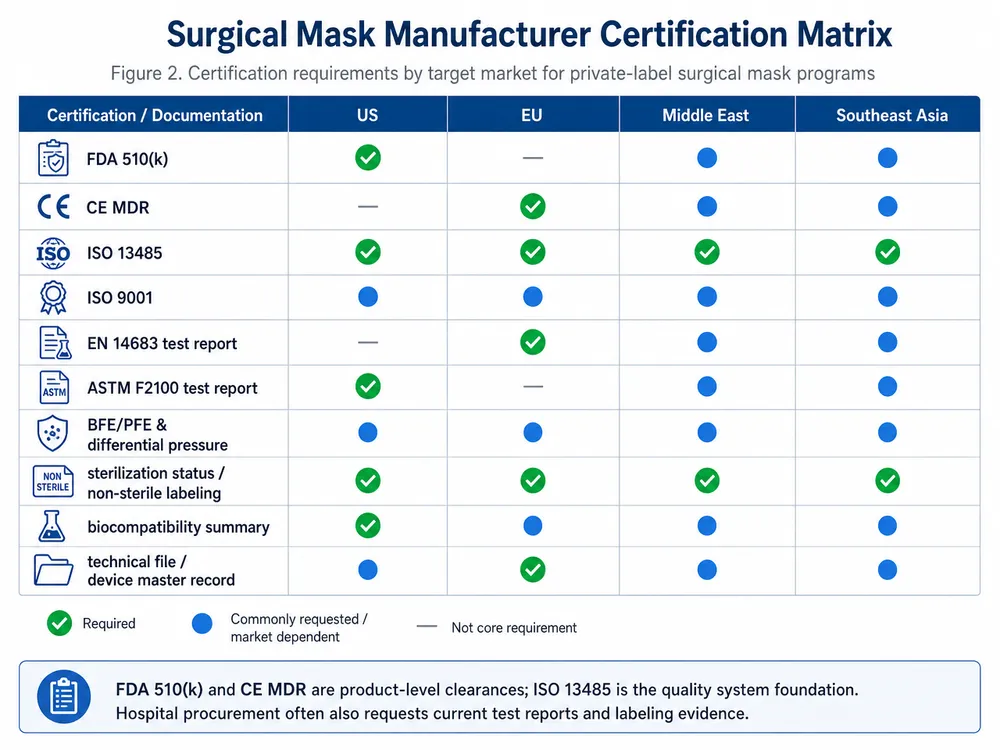
The certifications that matter for a private-label surgical mask program are not interchangeable:
ISO 13485:2016 — This is the quality management system standard for medical device manufacturers. Without it, your product cannot be registered as a medical device in most regulated markets. It also tells you the factory has documented production controls, traceability, and corrective action processes — which matters when a hospital procurement team asks for your quality system documentation.
FDA 510(k) registration — For the US market, surgical masks sold as medical devices require the manufacturer to hold a valid 510(k) clearance. This is not the same as FDA establishment registration (which is a facility listing, not a product clearance). When you put your brand on a mask and import it into the US, the 510(k) number on the label is your legal cover. If the factory doesn't have one, you're importing an uncleared medical device.
CE under EU MDR — Since the EU Medical Device Regulation replaced the old MDD, CE marking for surgical masks requires a notified body review. A factory with CE under the old MDD directive is not automatically compliant under MDR. Verify the specific regulation the CE mark was issued under.
ISO 9001:2015 — General quality management. Necessary but not sufficient on its own for medical device procurement.
We hold ISO 13485:2016, FDA 510(k) registration, CE under EU MDR, ISO 9001:2015, and SGS certification. When a hospital GPO asks for our documentation package, we can produce all of it. That's not a common combination among OEM factories — most hold ISO 9001 and maybe ISO 13485, but the FDA 510(k) and EU MDR CE together is a shorter list.
Step 3 — Understand OEM vs. ODM before you commit to a program structure
These two terms get used interchangeably in supplier conversations, but they describe fundamentally different commercial arrangements with different cost structures and timelines.
OEM (Original Equipment Manufacturer) in the mask context means you put your brand on an existing, validated SKU. The factory's product, your label. The mask has already passed BFE, PFE, Delta-P, and fluid resistance testing. You're not changing the filtration spec, the ear-loop configuration, or the nose wire. You're customizing the packaging, the label, and sometimes the color of the outer layer.
This is the right path for most market-entry programs. The product is already certified. The test reports exist. Your documentation package is essentially the factory's existing compliance file plus your brand's labeling. Lead time from order confirmation to first shipment is typically 25-35 days for standard SKUs.
ODM (Original Design Manufacturer) means you're commissioning a custom specification — a different filtration layer weight, a modified ear-loop tension, a specific nose wire gauge, or a non-standard outer layer material. The factory develops the product to your spec, which means new tooling (if needed), new production validation, and new testing. BFE and PFE testing alone takes 5-7 business days at an accredited lab. Add production validation and you're looking at 60-90 days before you have a certified product ready for bulk production.
ODM makes sense when you have a specific clinical requirement that no standard SKU meets, or when you're building a premium product line where the spec differentiation is part of your brand story. For most distributors entering the private-label market, OEM is the faster and lower-risk path.
We run both programs. The honest guidance: start OEM, validate your market, then consider ODM if your volume and margin justify the development investment.
Step 4 — Meltblown sourcing risk and why it determines BFE consistency across your batches
This is the section most OEM content skips, and it's the one that causes the most expensive problems.
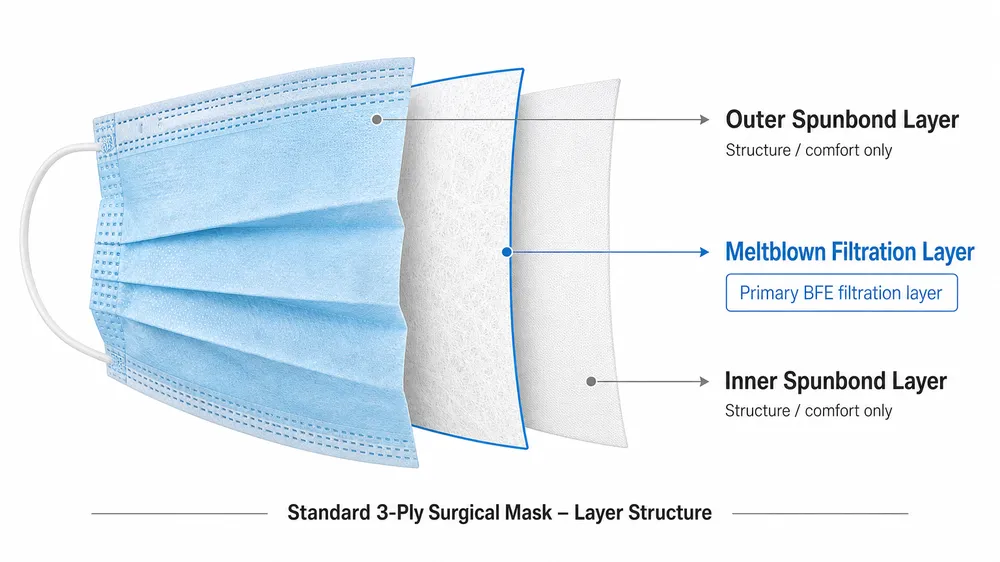
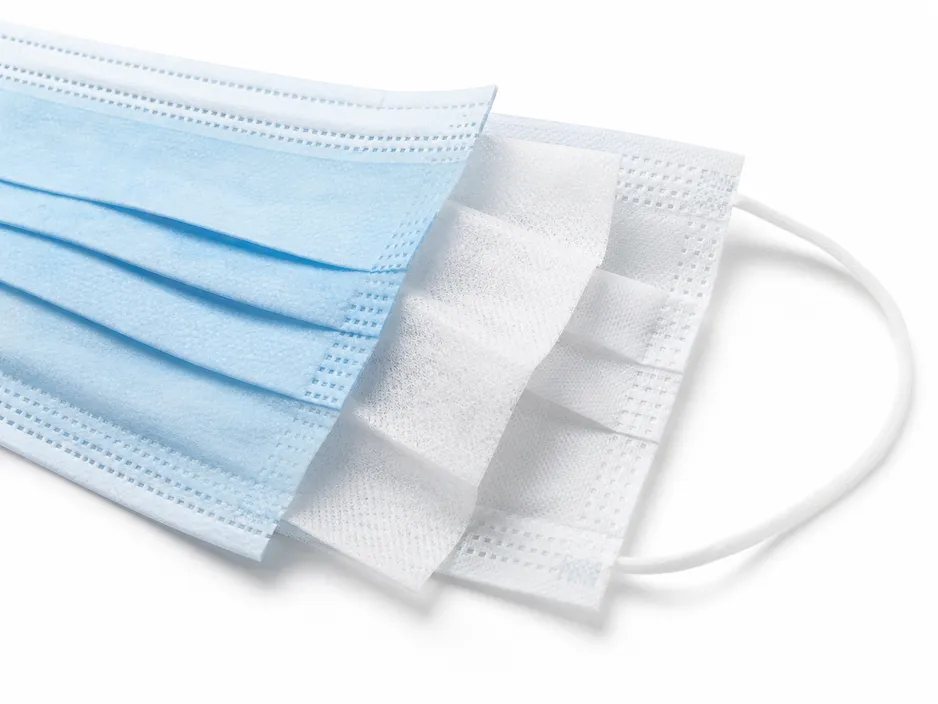
The meltblown nonwoven layer is the filtration core of a surgical mask. BFE performance — whether your mask tests at 95%, 98%, or 99%+ — is almost entirely determined by the meltblown layer's fiber diameter, basis weight, and electrostatic charge consistency. The outer and inner spunbond layers contribute almost nothing to filtration.
When a factory outsources its meltblown supply, BFE consistency across production batches depends entirely on the supplier's process stability. We've seen this play out: a factory passes BFE testing on the sample batch, the buyer approves the order, and then the third or fourth production run tests at 94% because the meltblown supplier changed their electrostatic treatment process or switched to a different polymer lot. The factory didn't know. The buyer finds out when their own QC lab runs incoming inspection.
We produce meltblown nonwoven fabric in-house. That means we control the fiber diameter, the basis weight, and the electrostatic charge treatment on every production run. When we quote a BFE of ≥98% for an ASTM Level 2 mask, that number holds across batches because the filtration layer comes from our own line, not from a spot-market supplier.
For a private-label buyer, this matters commercially: your brand is on the box. If a hospital's incoming inspection fails your product on BFE, the rejection is against your label, not the factory's. In-house meltblown production is the upstream control that prevents that scenario.
When you're evaluating OEM factories, ask directly: do you produce your own meltblown fabric, or do you source it externally? Ask for the meltblown supplier's name and their own BFE test data. If the factory can't answer that question clearly, the BFE consistency risk is real.
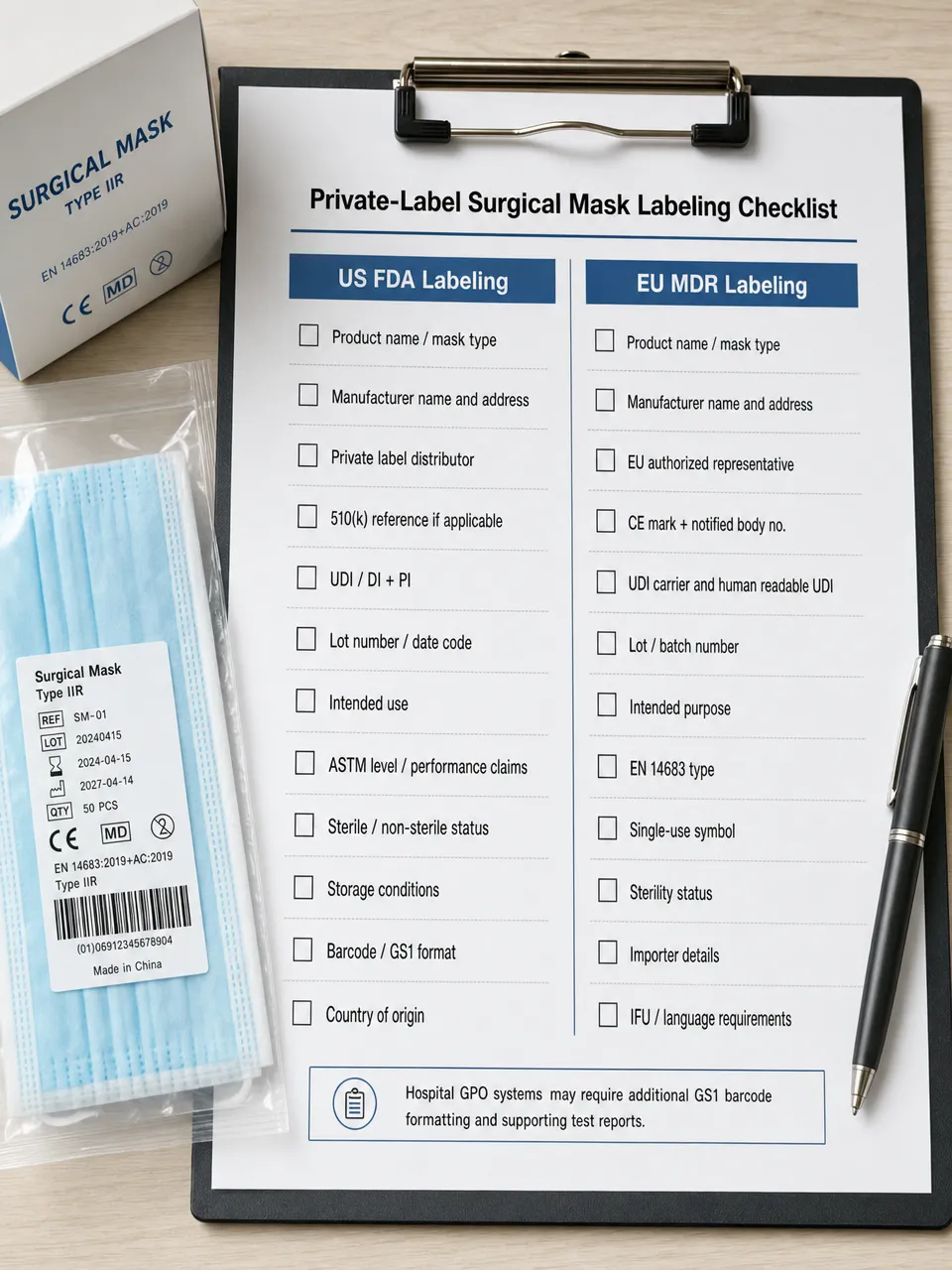
Step 5 — Packaging and labeling requirements for FDA import and EU MDR compliance
Packaging is where private-label programs generate the most last-minute rework. The label requirements for FDA import and EU MDR are specific, and getting them wrong means relabeling at the port or, worse, a customs hold.
For FDA import (US market):
The label must include:
- The manufacturer's name and address (the factory, not just your brand)
- The FDA 510(k) clearance number
- The ASTM F2100 level designation (Level 1, 2, or 3)
- Lot number and expiration date
- Quantity per box
- Single-use designation
- Latex content statement (even if latex-free — this must be stated)
The FDA also requires Unique Device Identification (UDI) for Class II medical devices. Surgical masks cleared under 510(k) are Class II. UDI compliance means your product needs a device identifier (DI) in both human-readable and AIDC (barcode) format on the label. If you're selling into hospital systems, their receiving departments scan barcodes — a label without a valid UDI barcode will fail their receiving workflow.
For EU MDR (European market):
EU MDR labeling requirements include:
- CE mark with the notified body number
- Manufacturer name and address
- Authorized representative in the EU (required for non-EU manufacturers)
- Lot/batch number
- Expiration date
- Single-use symbol (IEC 7000-1051)
- EN 14683 type designation
The EU authorized representative requirement catches many buyers off guard. If you're a US or non-EU brand importing into Europe, you need a registered EU authorized representative on the label. This is a legal entity, not just a contact name — they take on regulatory liability for the product in the EU market.
For hospital procurement specifically:
Hospital GPO and IDN systems often require GS1-compliant barcodes (GS1-128 or GS1 DataMatrix) that encode the GTIN, lot number, and expiration date in a single scannable code. This is separate from the FDA UDI requirement, though a properly formatted UDI barcode can satisfy both if structured correctly. Confirm with your target hospital system's procurement team what barcode format their receiving system accepts before you finalize the label artwork.
We handle label artwork review as part of our OEM program setup. We've seen enough FDA import rejections and hospital receiving failures to know where the common errors are — wrong font size on the lot number, missing latex statement, UDI barcode that doesn't scan correctly. We catch these before the label goes to print.
Step 6 — MOQ, sampling, and production timeline: what to plan for
The numbers that matter for program planning:
Standard OEM program (existing SKU, custom label):
- MOQ: 50,000 pieces per SKU
- Sample lead time: 7-10 business days from spec confirmation
- Production lead time after sample approval: 25-35 days
- Documentation package delivery: concurrent with shipment
ODM program (custom spec development):
- MOQ: negotiated based on tooling and development investment, typically 100,000+ pieces for the first production run
- Development timeline: 45-75 days from spec sign-off to certified sample
- Production lead time after sample approval: 30-45 days
The 50,000-piece MOQ on standard SKUs is designed for market-entry programs. Most of our new private-label buyers in North America start with a single SKU at 50,000 pieces — enough to test a hospital account or regional distributor relationship without committing to a full container of one product. (A 20-foot container holds roughly 200,000-250,000 pieces of boxed surgical masks depending on box count, so a 50,000-piece order typically ships as part of a consolidated load.)
One thing worth stating clearly: sample approval is not optional. We require signed sample approval before we schedule production. This protects both sides — you confirm the product matches your spec before we commit the production line, and we have documented evidence that the product was approved before bulk manufacturing. Hospital procurement teams sometimes ask for sample approval records as part of their supplier qualification process.
Step 7 — The documentation package your customs broker and hospital procurement team will ask for
This is the checklist. Have all of these before you submit to a hospital GPO or clear a US customs entry:
For FDA import clearance:
- [ ] FDA 510(k) clearance certificate (manufacturer's)
- [ ] FDA establishment registration number (manufacturer's)
- [ ] ASTM F2100 test report from accredited lab (BFE, PFE, Delta-P, fluid resistance, flammability)
- [ ] Certificate of Conformity (CoC) for the specific lot
- [ ] Packing list with lot numbers
- [ ] Commercial invoice with correct HTS code (6307.90.9889 for surgical masks)
For EU MDR import:
- [ ] CE certificate with notified body number and EU MDR regulation reference
- [ ] EU Declaration of Conformity
- [ ] EN 14683 test report (BFE, differential pressure, splash resistance for Type IIR)
- [ ] EU authorized representative declaration
- [ ] Technical file summary (some notified bodies require this for distributor qualification)
For hospital GPO/IDN supplier qualification:
- [ ] ISO 13485:2016 certificate (current, not expired)
- [ ] BFE test report from NELSON, SGS, Intertek, or equivalent accredited lab
- [ ] Fluid resistance test report
- [ ] Cleanroom manufacturing documentation (ISO class or equivalent)
- [ ] Quality manual or quality system overview
- [ ] Corrective and Preventive Action (CAPA) process documentation
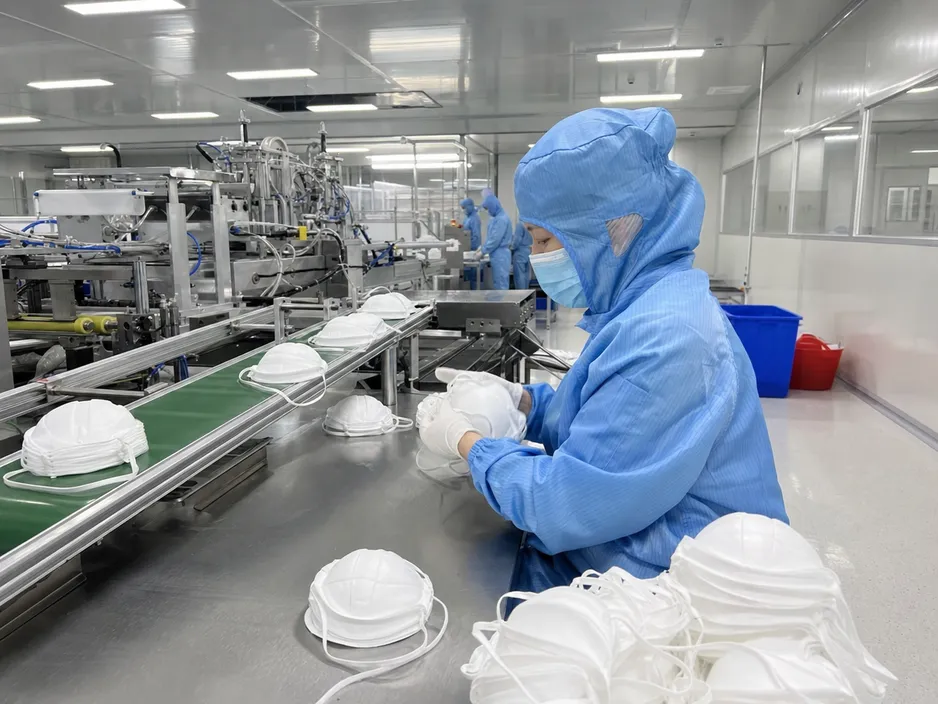
We provide the full documentation package with every OEM order. The test reports are from SGS — an accredited third-party lab, not internal testing only. ISO 13485 certificate, FDA 510(k) clearance, CE MDR certificate, and lot-specific CoC are standard deliverables. If a hospital GPO asks for something beyond this list, we've usually seen the request before and can respond quickly.
Three mistakes that kill private-label programs before they launch
These come up often enough that they're worth naming directly.
Skipping sample approval to save time. The pressure to move fast is real, but approving production without a signed sample creates a dispute resolution problem if the bulk product doesn't match expectations. More practically: if a hospital's incoming inspection rejects the product, you need documented evidence that the product was manufactured to an approved spec. Without sample approval records, that evidence doesn't exist.
Underestimating EU MDR documentation requirements. The EU MDR transition caught a lot of buyers who assumed their factory's old CE certificate was still valid. MDR requires a notified body review — it's not a self-declaration. If your factory's CE certificate references the old MDD directive (93/42/EEC), it is not valid for new product placements in the EU. Verify the specific regulation reference on the certificate before you commit to an EU distribution program.
Choosing a factory without in-house meltblown production. We covered this in Step 4, but it's worth repeating as a standalone decision point: if the factory can't tell you where their meltblown comes from and show you their own BFE test data by production lot, the filtration consistency risk is real. For a private-label program where your brand is on the box, that risk lands on you.
Practical next steps for your program
If you're at the evaluation stage, the most useful thing you can do right now is confirm three things with any factory you're considering: their FDA 510(k) clearance number (verify it on the FDA 510(k) database), their ISO 13485 certificate expiry date, and whether they produce meltblown in-house.
For our Surgical Medical Masks product line, all three are confirmed. We hold FDA 510(k) registration, ISO 13485:2016 (current), and we produce meltblown nonwoven fabric in our own facility.
If you're ready to spec a program, the 3-Ply Medical Mask and Disposable Surgical Medical Mask pages have the base SKU specs, available ASTM levels, and packaging options. Start there to confirm the product base, then send an RFQ with your target grade, estimated monthly volume, destination market, and packaging requirements. We'll confirm MOQ, lead time, and documentation coverage within one business day.
FAQ
What is the minimum order quantity for a private-label surgical mask program?
50,000 pieces per SKU for standard OEM programs (existing SKU, custom label). ODM programs with custom filtration specs typically require 100,000+ pieces for the first production run to cover development and validation costs. Both MOQs are negotiable for buyers with confirmed ongoing volume.
Does FDA 510(k) registration cover my private-label brand, or only the manufacturer?
The 510(k) clearance belongs to the manufacturer (the factory). When you private-label the product, you're selling under the manufacturer's clearance. Your label must display the manufacturer's 510(k) number. If you want your own brand to hold the 510(k) independently, you would need to file your own 510(k) application — a process that takes 6-12 months and requires substantial technical documentation. Most private-label programs operate under the manufacturer's clearance, which is legally valid as long as the label is correct.
What BFE percentage should I specify for hospital procurement?
For general hospital procurement, ≥98% BFE (ASTM Level 2) is the standard floor requirement. Level 1 (≥95% BFE) is acceptable for clinic and outpatient settings but will be rejected by most hospital GPO checklists that specify surgical mask grade. If you're targeting OR environments or high-fluid-exposure procedures, specify Level 3 with 160 mmHg fluid resistance. When in doubt, specify Level 2 — it covers the widest range of hospital procurement requirements without the cost premium of Level 3.
How long does it take to get test reports for a new private-label SKU?
For an OEM program using an existing validated SKU, the test reports already exist — you receive the factory's current test reports as part of your documentation package. No new testing is required unless the hospital GPO specifically requests lot-specific testing. For an ODM program with a custom spec, BFE and PFE testing at an accredited lab takes 5-7 business days after the sample is submitted. Full ASTM F2100 testing (including fluid resistance and flammability) typically takes 10-15 business days.
What does "Class 100,000 cleanroom" mean for hospital procurement qualification?
ISO Class 8 (equivalent to the older Federal Standard 209E Class 100,000) means the manufacturing environment is controlled to a maximum of 100,000 particles ≥0.5 microns per cubic foot of air. Hospital procurement teams and GPO qualification checklists often require cleanroom manufacturing documentation because it demonstrates that the production environment meets the contamination control standards expected for medical devices. Our facility operates in a Class 100,000 (ISO 8) cleanroom environment, and we can provide the environmental monitoring documentation that procurement audits typically request.