Japanese healthcare distributors sourcing medical protective clothing face a specific problem that most supplier lists don't address: the gap between what a supplier claims and what actually clears Japanese customs, passes PMDA-aligned procurement audits, and holds spec consistency across repeat orders.
This guide covers 10 real suppliers — domestic Japanese distributors, global PPE brands with Japan distribution, and factory-direct Chinese manufacturers — with an honest assessment of what each model delivers and where it falls short. The goal is not a theatrical ranking. It's a sourcing framework that helps you decide which supplier type fits your order profile, your compliance requirements, and your margin targets.
We've shipped protective clothing to Japan and handled the documentation requirements firsthand. The trade-offs below are based on that experience, not on directory listings.

How Japanese Healthcare Distributors Should Evaluate PPE Suppliers
Before the list, the criteria. Most supplier evaluations in this category fail because buyers weight brand recognition over the factors that actually determine whether a shipment clears customs and performs in the field.
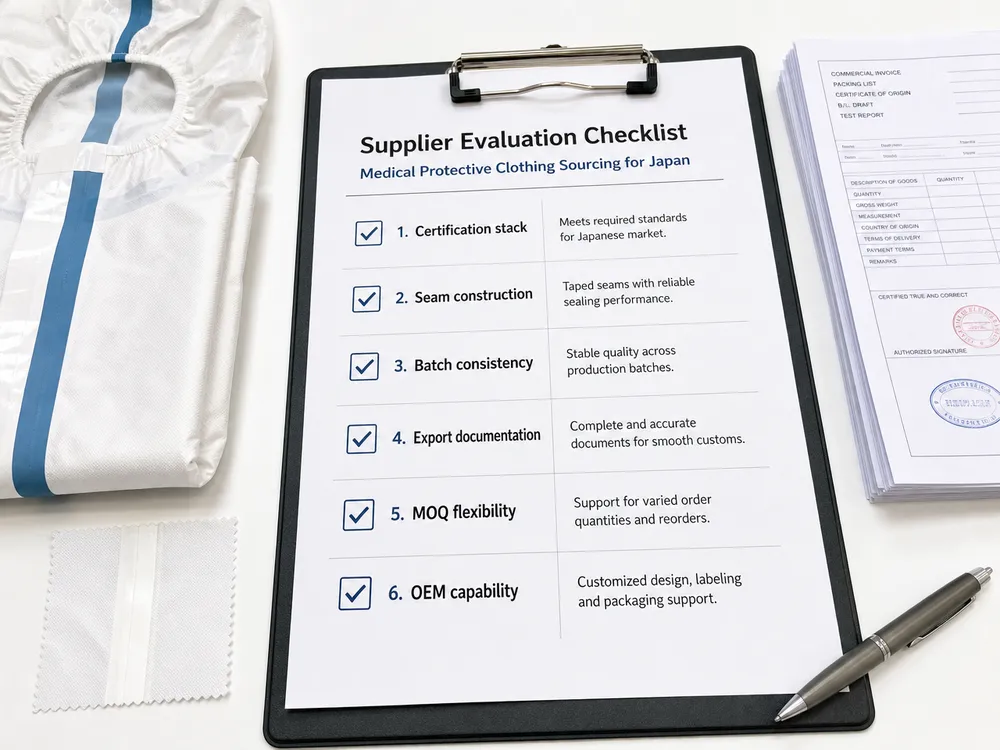
The criteria that matter for the Japanese market specifically:
Certification stack alignment. Japan's PMDA (Pharmaceuticals and Medical Devices Agency) does not maintain a mandatory pre-market registration system for most Class I medical protective clothing, but hospital procurement committees and institutional buyers routinely require CE marking under EU MDR, ISO 13485:2016, or AAMI PB70 compliance documentation. A supplier without these cannot support your downstream sales into hospital accounts.
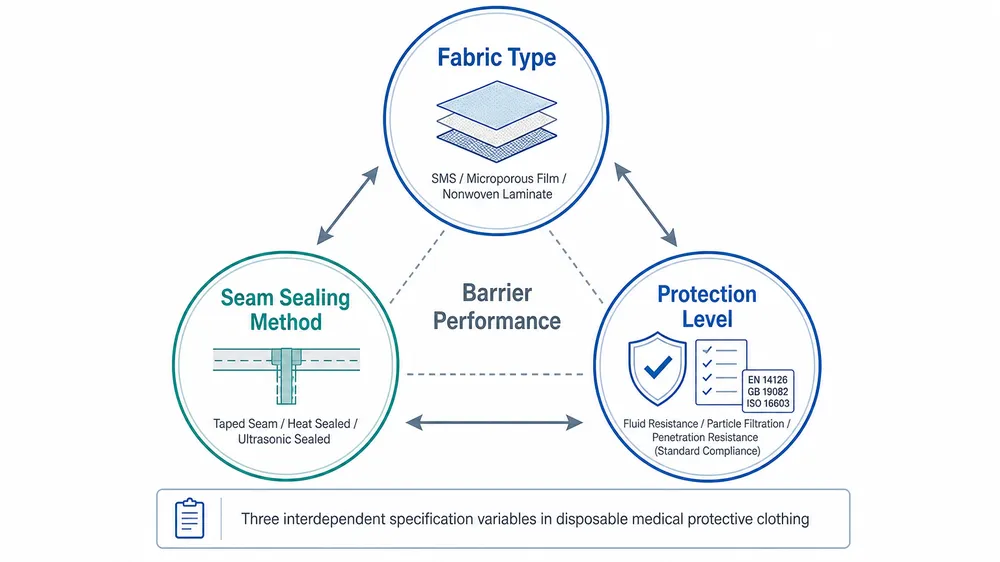
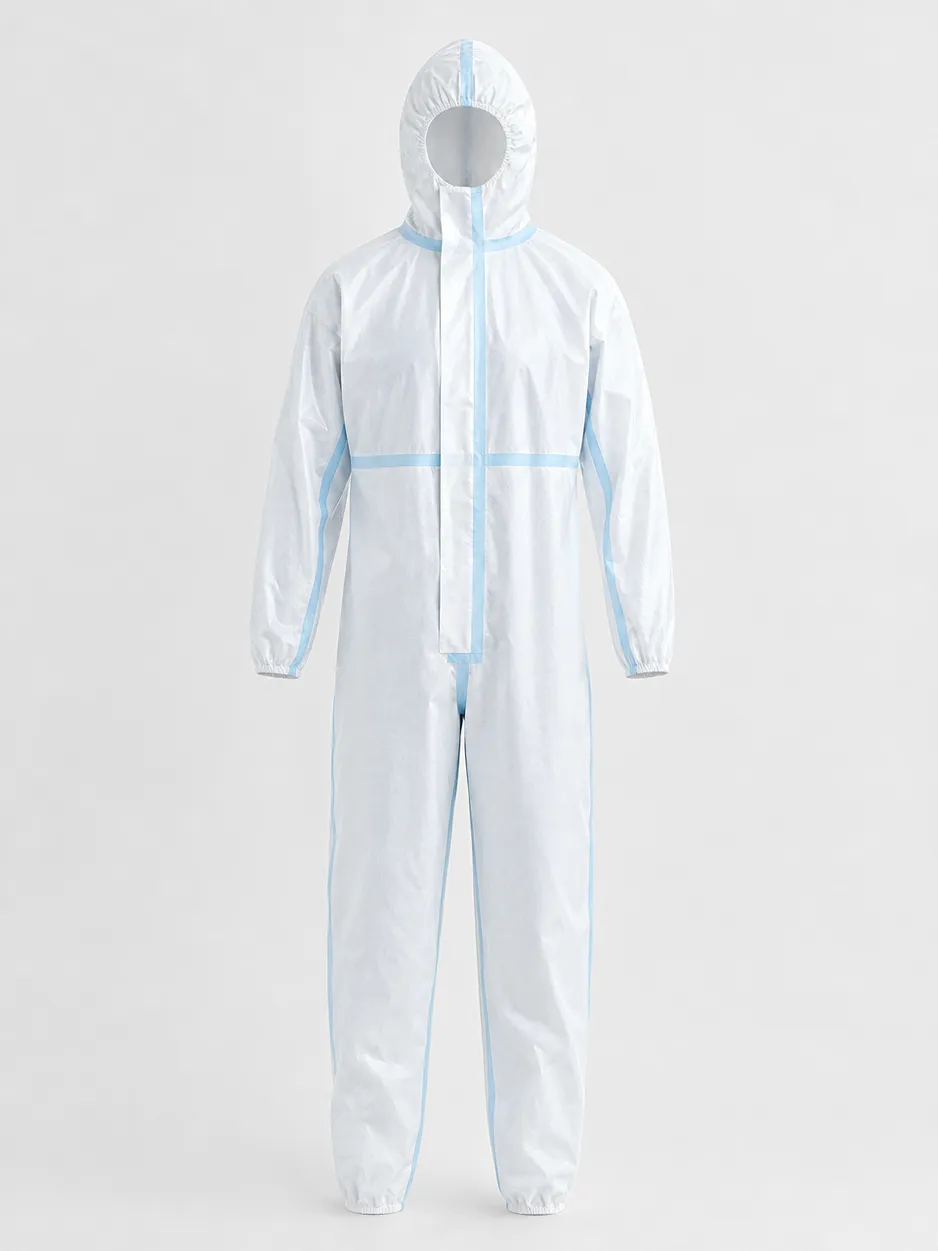
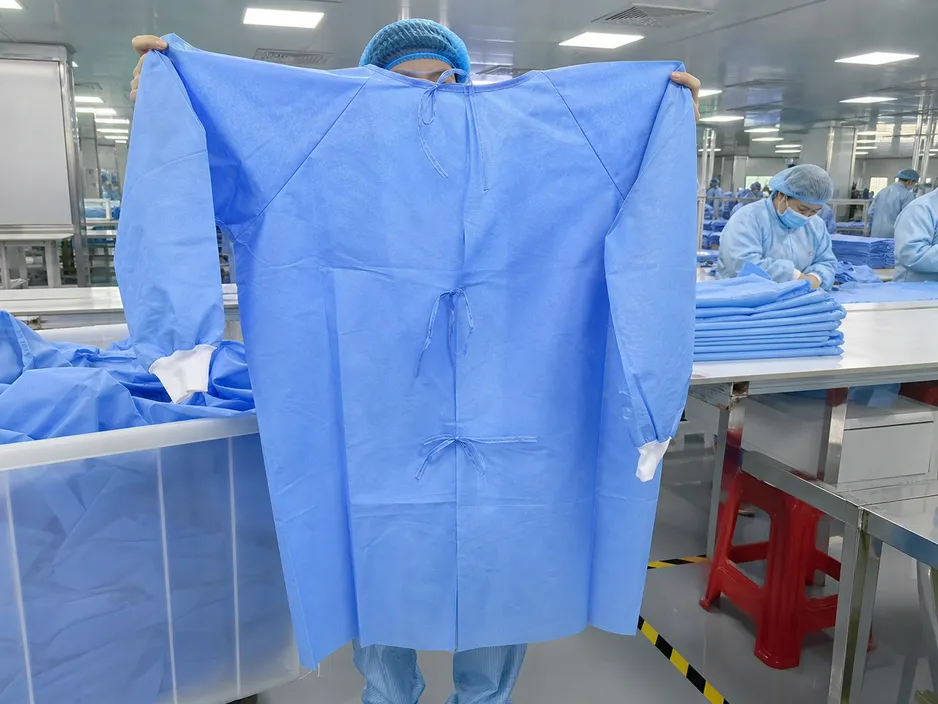
Seam construction and barrier integrity. This is the detail most buyers skip. Isolation gowns and coveralls fail at the seams — specifically at the sleeve-to-body junction and the front closure. Stitched seams without seam tape provide minimal liquid barrier protection. Ultrasonic-welded or heat-sealed seams with taped construction are the standard for AAMI Level 3 and Level 4 gowns and EN 14126 coveralls. Ask for seam construction specs before you approve samples. (We've seen buyers approve a gown based on fabric feel and BFE numbers, then discover the seam construction doesn't meet their hospital's procurement spec — that's an expensive lesson.)
Batch-to-batch spec consistency. This is where trading companies and multi-product distributors frequently fail. If the supplier doesn't control their own filtration material production, the BFE and PFE numbers on your first order may not match your fifth. For distributors building repeat supply relationships with hospital groups, spec drift is a compliance and reputational risk.
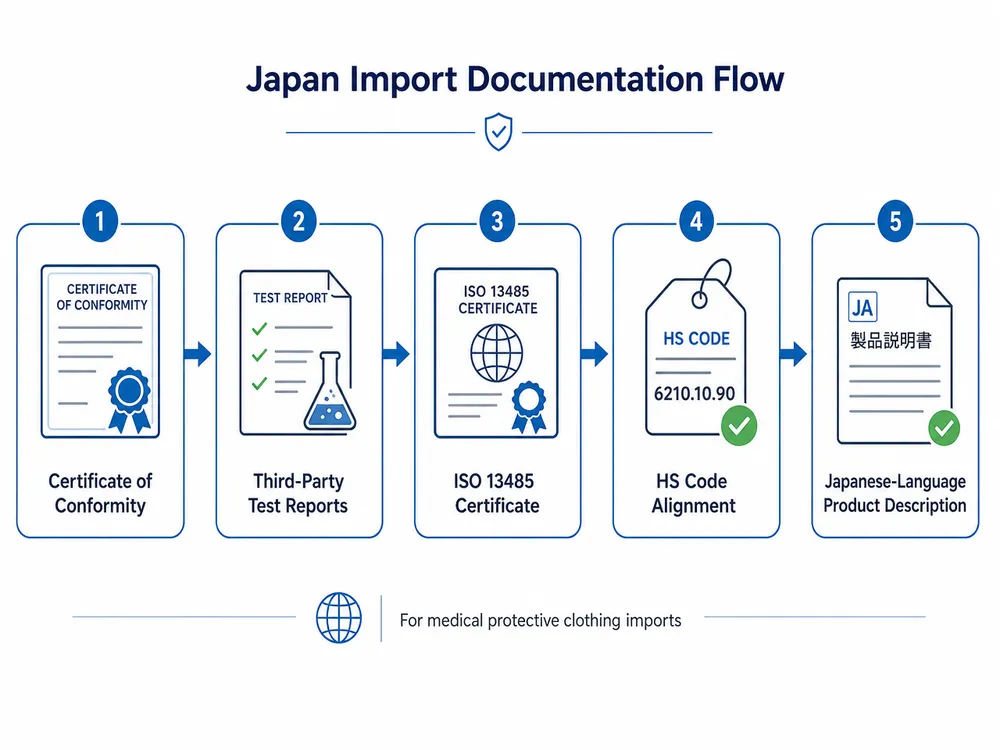
Export documentation quality. Japanese customs and institutional procurement require specific documentation: certificate of conformity, third-party test reports (SGS, Intertek, or equivalent), packing lists with HS code alignment, and in some cases a Japanese-language product description. Suppliers who treat documentation as an afterthought create delays and compliance exposure for your import process.
MOQ and trial order flexibility. New market entrants and distributors expanding into protective clothing need the ability to run a trial order — typically 50,000–100,000 pieces — before committing to container-scale volumes. Suppliers with rigid MOQ structures push buyers toward trading companies, which adds a markup layer.
The 10 Suppliers: Local Distributors, Global Brands, and Factory-Direct Manufacturers
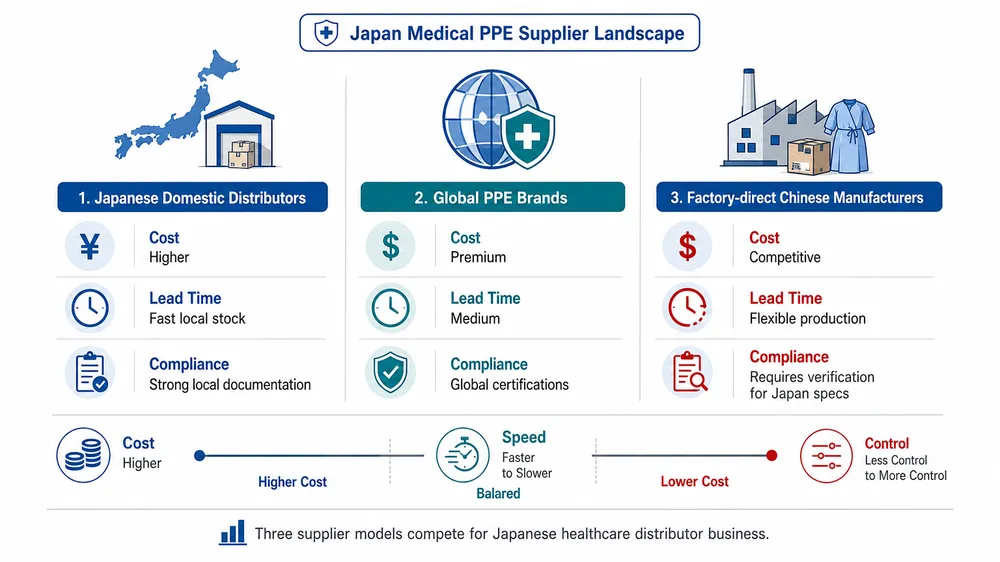
The suppliers below are organized by model type, not by a fabricated performance ranking. Understanding the model tells you more about what you're actually buying than any numbered list.
1. Hogy Medical Co., Ltd. — Japan's Dominant Domestic Surgical Textile Supplier
Website: hogyo.co.jp Supplier type: Japanese domestic manufacturer and distributor Product focus: Surgical gowns, drapes, and sterile barrier systems for operating room use
Hogy Medical is the largest domestic producer of surgical textiles in Japan, with manufacturing operations in Japan and a distribution network that reaches virtually every major hospital group in the country. Their product line centers on sterile surgical gowns and drape systems — high-specification, high-margin products for OR environments.
What they do well: Domestic manufacturing means short lead times, Japanese-language technical support, and deep familiarity with hospital procurement committee requirements. For OR-grade sterile products, Hogy's local presence is a genuine advantage.
Where they fall short for distributors: Hogy's focus is on the high end of the surgical textile market. If you're distributing general-purpose isolation gowns, disposable coveralls, or non-sterile protective clothing for clinical or industrial healthcare settings, their product range doesn't cover your needs. Pricing reflects the domestic manufacturing cost structure — expect a significant premium over imported alternatives for equivalent protection class.
2. Marusan Pharma Biotech Co., Ltd. — Established Japanese Healthcare Distributor
Website: marusan-pharma.co.jp Supplier type: Japanese domestic distributor (multi-product) Product focus: Medical consumables, PPE, and healthcare supplies for clinical and institutional buyers
Marusan operates as a broad-line healthcare distributor serving hospitals, clinics, and long-term care facilities across Japan. Their PPE range includes isolation gowns, disposable coveralls, and protective clothing sourced from both domestic and overseas manufacturers.
What they do well: Established relationships with Japanese healthcare institutions, local warehousing for fast replenishment, and a sales team that understands the procurement cycle of Japanese hospital groups. For distributors who need a domestic supply buffer for emergency orders, Marusan's inventory depth is useful.
Where they fall short: As a multi-product distributor, Marusan sources protective clothing from multiple manufacturers — which means the product behind the same SKU can change between order cycles. Spec consistency is not guaranteed at the factory level. For buyers building a private-label program or requiring documented batch traceability, this model creates compliance risk.
3. Kimberly-Clark Professional (Japan Distribution) — Global Brand, Local Markup
Website: kcprofessional.com Supplier type: Global PPE brand with Japan distribution Product focus: Kleenguard protective coveralls, isolation gowns, and disposable protective clothing
Kimberly-Clark's Kleenguard line is one of the most recognized PPE brands globally, and their products are available in Japan through authorized distributors. The Kleenguard A-series coveralls and isolation gowns carry CE marking and meet AAMI and EN standards.
What they do well: Strong brand recognition that supports downstream sales into institutional accounts. Consistent product quality backed by global manufacturing standards. Useful for distributors whose hospital customers specify brand by name.
Where they fall short: You are buying through a distribution layer, not from the factory. The margin structure reflects that. For distributors competing on price in the general clinical PPE segment, Kimberly-Clark's landed cost in Japan makes it difficult to build a competitive offer. OEM and private-label programs are not available through this channel.
4. Ansell Healthcare — Barrier Protection Specialist with Japan Presence
Website: ansell.com Supplier type: Global PPE manufacturer with Japan distribution Product focus: Protective clothing, gloves, and barrier protection systems for healthcare and industrial use
Ansell's healthcare division covers protective clothing including isolation gowns and coveralls, with products certified to EN 13795, EN 14126, and AAMI PB70. Their Japan distribution operates through local partners.
What they do well: Deep technical expertise in barrier protection, with products that cover both healthcare and industrial PPE segments. Useful for distributors serving mixed healthcare and industrial accounts who want a single supplier relationship.
Where they fall short: Similar to Kimberly-Clark, the distribution layer adds cost. Ansell's strength is in high-specification barrier products — if your volume is in standard clinical isolation gowns or disposable coveralls, the price point is difficult to justify against direct-import alternatives.
5. Mölnlycke Health Care — Surgical Textile Specialist
Website: molnlycke.com Supplier type: Global surgical textile manufacturer with Japan distribution Product focus: Surgical gowns, drapes, and sterile barrier systems for operating room environments
Mölnlycke is a Swedish manufacturer with a strong position in the OR surgical textile segment globally, including Japan. Their Barrier brand surgical gowns are widely used in Japanese hospital operating rooms.
What they do well: High-specification sterile surgical textiles with strong clinical evidence and hospital procurement acceptance. For distributors serving OR supply chains, Mölnlycke's product quality and brand recognition are genuine assets.
Where they fall short: Mölnlycke's focus is surgical textiles, not general clinical PPE. Their product range and pricing are calibrated for the high end of the market. Distributors looking for volume-priced isolation gowns or disposable coveralls for general clinical use will find limited options here.
6. Cardinal Health (Japan Market) — Broad-Line Medical Supply Distributor
Website: cardinalhealth.com Supplier type: Global medical supply distributor with Asia-Pacific operations Product focus: Medical consumables, surgical supplies, and PPE including isolation gowns and coveralls
Cardinal Health operates across Asia-Pacific and supplies Japanese healthcare institutions through its regional distribution network. Their PPE range covers isolation gowns, coveralls, and disposable protective clothing.
What they do well: Broad product range that allows distributors to consolidate multiple medical supply categories under one supplier relationship. Useful for buyers who prioritize supply chain simplification over unit cost optimization.
Where they fall short: Cardinal Health is a distributor, not a manufacturer. The products behind their PPE SKUs are sourced from multiple factories, and the documentation trail for specific batch certifications can be difficult to obtain. For buyers who need factory-level traceability — increasingly required by Japanese hospital procurement committees — this model creates friction.
7. DuPont Personal Protection — Tyvek Coverall Standard-Setter
Website: dupont.com/personal-protection Supplier type: Global material science company and PPE manufacturer Product focus: Tyvek and Tychem protective coveralls for healthcare, pharmaceutical, and industrial use
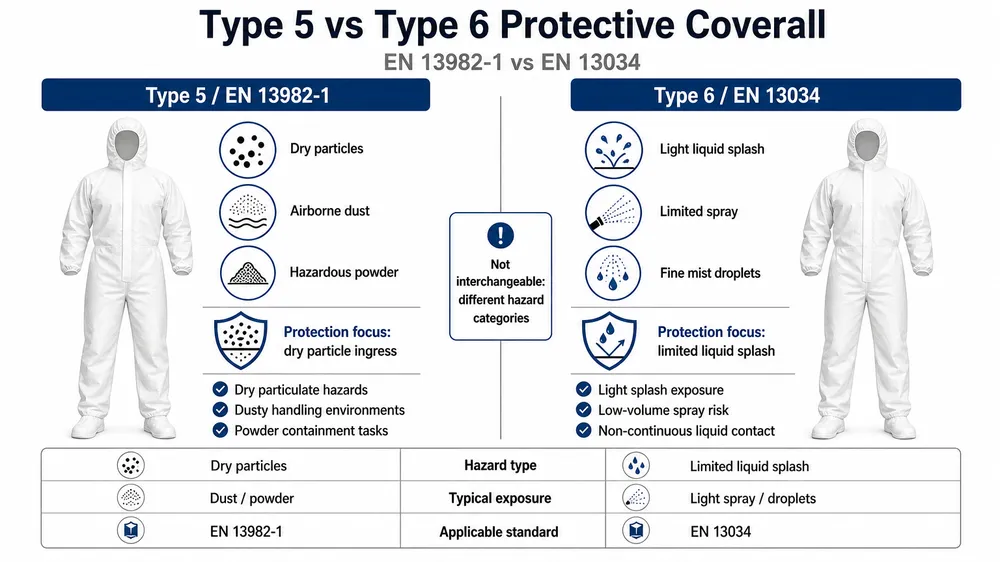
DuPont's Tyvek coveralls are the reference standard for disposable protective clothing in pharmaceutical and cleanroom environments, and they are used in Japanese healthcare and industrial settings. The Tyvek 500 and 600 series carry CE marking and meet EN 13982 and EN 14126 standards.
What they do well: Tyvek's material performance is genuinely differentiated — the flash-spun polyethylene fiber structure provides a combination of particle barrier, breathability, and durability that nonwoven SMS alternatives don't match at equivalent weight. For pharmaceutical manufacturing, cleanroom, and high-exposure healthcare environments, Tyvek is often the specified material.
Where they fall short: DuPont sells material and branded coveralls, not a flexible OEM program. If your downstream customers need private-label packaging or custom configurations, DuPont is not the right model. Pricing reflects the material premium — Tyvek coveralls cost significantly more than SMS or microporous film alternatives, which limits their use to applications where the performance premium is justified.
8. Lakeland Industries — Industrial and Healthcare PPE Manufacturer
Website: lakeland.com Supplier type: Global PPE manufacturer with Asia-Pacific distribution Product focus: Protective coveralls, chemical protective clothing, and disposable PPE for healthcare and industrial use
Lakeland Industries manufactures protective clothing across a wide range of protection classes, from basic disposable coveralls to chemical-resistant suits. Their ChemMax and MicroMax lines are used in healthcare, pharmaceutical, and industrial settings globally, including Japan.
What they do well: Wide protection class range under one manufacturer, with products certified to EN 14126, EN 13982, and NFPA standards. Useful for distributors serving both healthcare and industrial accounts who need a single manufacturer relationship across multiple protection levels.
Where they fall short: Lakeland's primary strength is in industrial and chemical protective clothing. Their healthcare-specific product range is narrower than dedicated medical PPE manufacturers. For distributors focused on clinical healthcare accounts, the product fit is partial.
9. Winner Medical Co., Ltd. — Chinese Medical Textile Manufacturer
Website: winnermedical.com Supplier type: Chinese medical textile manufacturer (listed on Shenzhen Stock Exchange) Product focus: Wound care, surgical textiles, and medical protective clothing including isolation gowns and coveralls
Winner Medical is one of China's largest publicly listed medical textile manufacturers, with production facilities in Hubei and Hunan provinces. Their protective clothing range includes isolation gowns and coveralls certified to EN 13795, AAMI PB70, and EN 14126.
What they do well: Scale and certification depth. Winner Medical's size means they carry a broad product range with established export documentation for multiple markets. Their ISO 13485 certification and CE marking are maintained across their protective clothing line.
Where they fall short: Winner Medical's scale is also a sourcing complexity. They are a large multi-product manufacturer — protective clothing is one of many product categories. Buyers who need dedicated account management, flexible MOQ for trial orders, or OEM packaging programs may find the engagement model less responsive than a focused manufacturer. (We've had buyers come to us after trying to run a 50,000-piece trial order through a large manufacturer and getting routed to a trading arm instead of the factory.)
10. eztio (Gaomi Eztio Medical Technology Co., Ltd.) — Factory-Direct from Gaomi, Shandong
Website: eztio.com Supplier type: Dedicated medical mask and protective clothing manufacturer, factory-direct Product focus: Disposable medical masks, isolation gowns, and medical protective coveralls
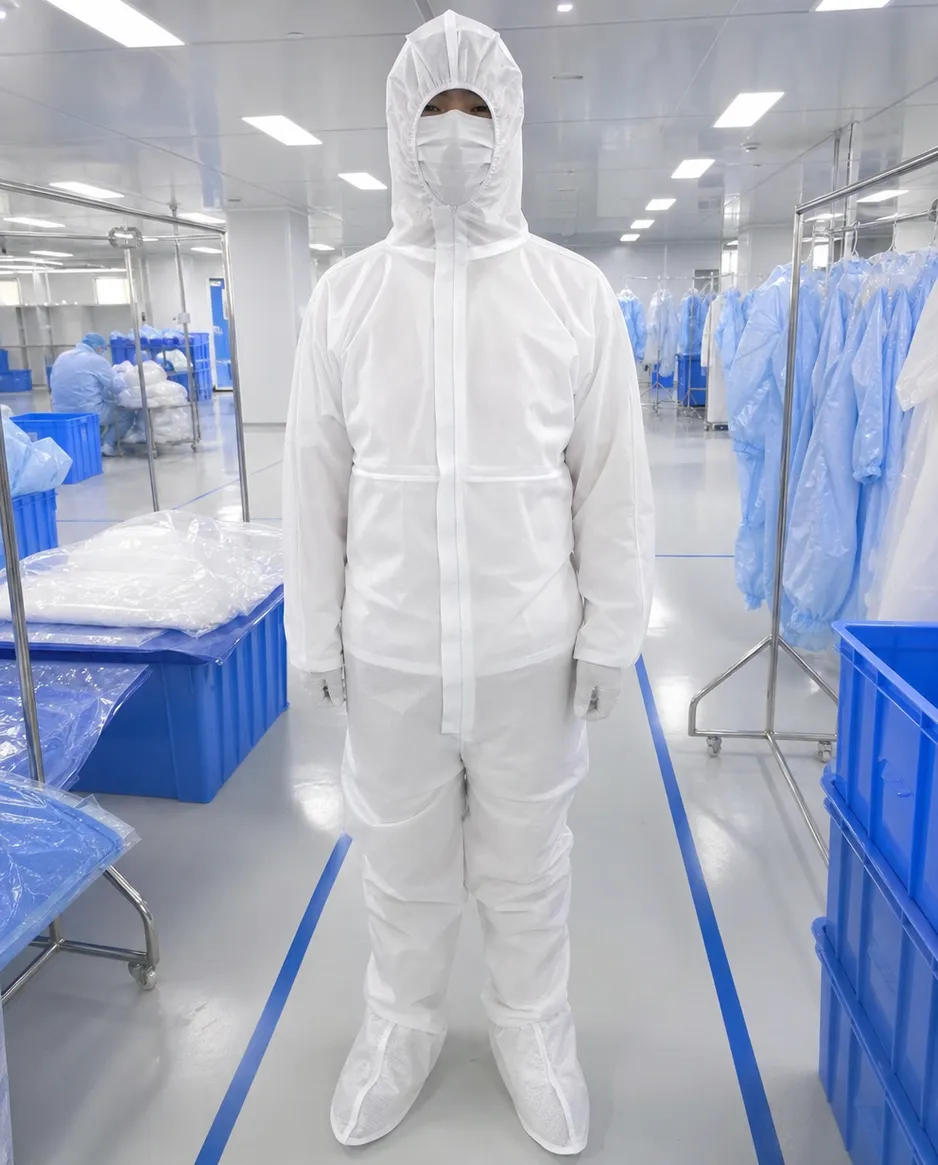
We're a 12,000 m² facility in Gaomi, Shandong, running 6 fully automated production lines with 150 people and 120 million pieces of annual output capacity. We've been doing this since 2012 — one factory, one product category, no trading arm in the middle.
The certification stack we carry — ISO 13485:2016, ISO 9001:2015, CE under EU MDR, FDA 510(k) registration, and SGS — covers the documentation requirements for Japanese institutional procurement, EU market access, and US import clearance simultaneously. For distributors who sell into multiple markets or plan to expand beyond Japan, that multi-market compliance stack means your product is already cleared for your next market before you need it.
The detail that matters most for spec-sensitive buyers: we produce our own meltblown nonwoven fabric in-house. Meltblown is the filtration layer — the component that determines whether a mask or gown actually performs to its rated BFE or PFE spec. Most factories buy this from outside suppliers, which means their filtration performance is only as consistent as their fabric supplier's last production run. We control that variable ourselves. When you order a product rated at ≥95% BFE, we're not relying on a third-party roll — we set the fiber diameter, basis weight, and electrostatic charge to hit that spec, and we test every batch in our in-house QC lab before it ships.
Our Class 100,000 (ISO 8) cleanroom manufacturing environment is not a marketing claim — it's a documented facility requirement for ISO 13485 compliance, and it's what separates a product that passes hospital procurement review from one that doesn't. Particle counts are monitored continuously, and access is controlled. Japanese hospital procurement committees increasingly ask for cleanroom certification documentation as part of supplier qualification; we have it.
For Japanese distributors specifically: our OEM/ODM program handles Japanese-language packaging, private-label printing, and custom configurations without routing you through a separate packaging supplier. MOQ on standard SKUs starts at 50,000 pieces — sized for trial orders and market-entry programs, not just container-scale commitments. We've handled Japan export documentation before, including certificate of conformity, SGS test reports, and HS code-aligned packing lists. (If you're navigating PMDA-adjacent documentation requirements for the first time, we can walk you through what your customs broker will need before you place the order.)
The Cost of Convenience: What the Local Distribution Layer Actually Costs
Local Japanese distributors and global brand distributors offer real advantages — domestic inventory for emergency replenishment, Japanese-language support, and established relationships with hospital procurement committees. For urgent small orders or emergency replacement needs, that local presence is worth paying for.
The trade-off becomes visible at repeat volume. A domestic distributor or global brand distributor is carrying a margin layer between you and the factory. On a 100,000-piece isolation gown order, that margin layer typically adds 25–40% to the unit cost compared to factory-direct import pricing. At 500,000 pieces, the arithmetic is harder to ignore.
The second cost is less visible: spec control. When you buy through a distributor, you're buying whatever the distributor sourced. If their factory changes a material supplier, adjusts a seam construction, or substitutes a component, you may not know until a batch fails your customer's incoming inspection. Factory-direct sourcing gives you a direct line to the production record — you can request batch test reports, audit the facility, and build a documented supplier qualification file that survives your own procurement audits.
The third cost is OEM flexibility. Distributors don't run private-label programs. If you're building a healthcare brand in Japan — your own packaging, your own product identity — you need a factory relationship, not a distributor relationship.
None of this means local supply is wrong. It means the right answer depends on your order profile:
- Urgent orders under 30,000 pieces: Local distributor. The speed premium is worth it.
- Repeat orders over 100,000 pieces: Factory-direct economics start to make sense.
- Private-label or OEM programs: Factory-direct is the only viable model.
- Multi-market distribution (Japan + EU or Japan + US): A factory with multi-market certification stack eliminates the need for separate supplier relationships per market.
Japan Import Documentation: What Your Supplier Needs to Provide
This is the section most supplier guides skip, and it's where sourcing decisions actually succeed or fail at the border.
Medical protective clothing imported into Japan falls under the Pharmaceutical and Medical Device Act (PMD Act) for Class I medical devices. Most disposable isolation gowns and coveralls are classified as general medical devices (Class I), which do not require pre-market PMDA approval — but they do require the importer of record to maintain technical documentation and comply with labeling requirements under the PMD Act.
What your supplier needs to provide for a clean Japan import:
- Certificate of Conformity — confirming the product meets the claimed standard (EN 13795, AAMI PB70, EN 14126, or equivalent)
- Third-party test reports — from an accredited lab (SGS, Intertek, Bureau Veritas, or equivalent); Japanese customs and institutional buyers recognize these
- ISO 13485 certificate — increasingly required by hospital procurement committees as evidence of quality management system compliance
- HS code alignment — protective clothing typically falls under HS 6210 (garments of nonwoven fabric) or HS 6211 depending on construction; your supplier's packing list should use the correct code to avoid customs classification disputes
- Japanese-language product description — not always required at customs, but frequently required by hospital procurement committees and institutional buyers; a supplier with OEM capability can include this in the packaging
Suppliers who treat documentation as an afterthought — who send you a generic CoC and a test report from three years ago — create delays and compliance exposure. Ask for current documentation before you place your first order, not after.
Supplier Qualification Before Your First Bulk Order
The standard mistake is approving a sample and placing a bulk order. The sample tells you what the factory can produce when they're trying to impress you. The qualification process tells you what they actually produce at volume.
A practical qualification protocol for this category:
Step 1 — Certification verification. Request the actual certificate documents, not just a logo on a website. ISO 13485 certificates include the issuing body, the scope of certification, and the expiry date. CE certificates under EU MDR include the notified body number. Verify these against the issuing body's public registry if the order size justifies it.
Step 2 — Seam construction specification. Ask specifically: are the seams stitched, ultrasonically welded, or heat-sealed? Is seam tape applied? For AAMI Level 3 and Level 4 gowns and EN 14126 coveralls, the seam construction is a performance requirement, not a cosmetic detail. A supplier who can't answer this question precisely is not manufacturing to spec.
Step 3 — Batch test reports. Request test reports from the last three production batches, not just the certification test. This tells you whether BFE, PFE, and barrier performance are consistent across production runs or whether the certification test was a one-time event.
Step 4 — Sample order with full documentation. Place a 1,000–5,000 piece sample order and request the full documentation package that would accompany a commercial shipment. This tests the supplier's documentation process, not just their product. If the documentation is incomplete or delayed on a sample order, it will be worse on a bulk order.
Step 5 — Factory audit or third-party inspection. For orders over 500,000 pieces or for suppliers you're building a long-term relationship with, a factory audit — either in-person or through a third-party inspection service — is worth the cost. The audit should cover cleanroom conditions, production line documentation, QC records, and raw material traceability.
(The seam construction question in Step 2 catches more problems than any other single question. We've seen buyers receive samples with heat-sealed seams and bulk orders with stitched seams — the factory switched construction to hit a price point. If you don't specify seam construction in your purchase order, you have no recourse.)
Choosing Your Sourcing Route: A Decision Framework
The 10 suppliers above represent three distinct sourcing models. The right choice depends on your order profile, not on brand recognition.
| Sourcing Scenario | Recommended Model | Reason |
|---|---|---|
| Emergency replenishment, under 30,000 pcs | Local Japanese distributor | Speed and inventory access justify the premium |
| Standard clinical PPE, repeat orders 100K+ pcs | Factory-direct Chinese manufacturer | Unit cost and spec consistency improve at volume |
| OR-grade sterile surgical textiles | Hogy Medical or Mölnlycke | Domestic manufacturing and sterile supply chain |
| High-specification industrial/chemical PPE | DuPont Tyvek or Lakeland | Material performance premium is justified |
| Private-label / OEM program | Factory-direct manufacturer with OEM capability | Only viable model for brand development |
| Multi-market distribution (Japan + EU + US) | Factory with ISO 13485 + CE + FDA 510(k) stack | Single supplier covers all three markets |
For distributors building a repeatable supply chain in the clinical PPE segment — isolation gowns, disposable coveralls, and protective clothing for general healthcare use — the factory-direct model becomes financially compelling once your order volume crosses the 100,000-piece threshold. Below that, the logistics cost and documentation overhead of direct import may not justify the unit cost savings. Above it, the economics shift clearly.
The certification question is the other deciding factor. If your downstream customers — hospital groups, institutional buyers, government tenders — require ISO 13485 documentation, CE marking, and batch-level test reports, you need a factory that maintains these, not a distributor who may or may not be able to produce them on request.
Our Medical Protective Clothing category page covers the full product range we manufacture — isolation gowns, coveralls, and disposable protective clothing — with protection class specifications and certification documentation. If you're evaluating specific products, the Medical Isolation Gown and Medical Protective Coverall pages include detailed construction specs, seam type, and barrier performance data.
Frequently Asked Questions
What certifications should a medical protective clothing supplier have for the Japanese market?
For general clinical use, ISO 13485:2016 is the baseline quality management certification that Japanese hospital procurement committees increasingly require. CE marking under EU MDR (for isolation gowns and coveralls) provides the product-level performance documentation. AAMI PB70 compliance is relevant if your downstream customers include US-affiliated healthcare institutions. Japan does not have a mandatory pre-market registration requirement for Class I medical protective clothing under the PMD Act, but the documentation requirements for institutional procurement are effectively equivalent — you need current test reports, a certificate of conformity, and a traceable quality management system behind the product.
What is the difference between SMS and microporous film for isolation gowns?
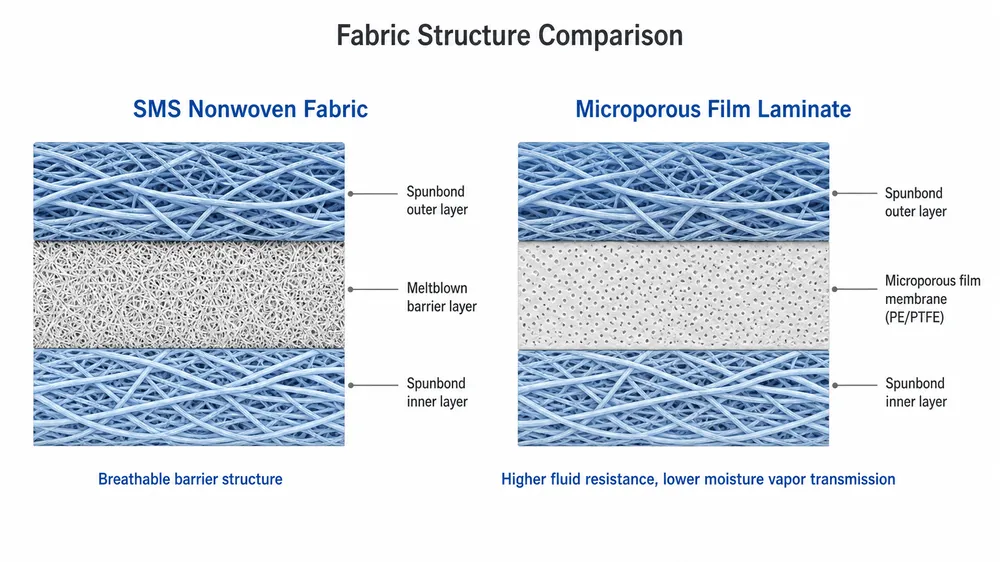
SMS (spunbond-meltblown-spunbond) nonwoven fabric provides a balance of breathability and barrier performance suitable for AAMI Level 1 and Level 2 gowns — standard clinical use, low-splash-risk procedures. Microporous film laminate (typically a polyethylene film bonded to a nonwoven backing) provides higher liquid barrier performance for AAMI Level 3 and Level 4 applications — high-splash procedures, surgical use, and infectious disease isolation. The trade-off is breathability: microporous film is less breathable than SMS, which matters for extended wear. For Japanese hospital procurement, specify the AAMI level or EN 13795 performance class first, then let the material follow from the spec — don't start with the material and work backward.
What MOQ is realistic for a trial order of factory-direct medical protective clothing from China?
50,000 pieces is the practical floor for a factory-direct trial order from a certified manufacturer. Below that, the per-unit cost of documentation, line setup, and export logistics makes the economics unfavorable for both sides. Some factories will accept lower MOQs on standard SKUs if they're running a production batch for another buyer — but you're then dependent on their scheduling, not yours. For OEM or custom-configuration orders, MOQ is typically higher to justify the line changeover and material procurement. If a supplier quotes you 10,000-piece MOQ on a custom configuration, ask how they're absorbing the setup cost — the answer tells you something about their manufacturing model.
How do I verify that a Chinese supplier's ISO 13485 certificate is current and legitimate?
ISO 13485 certificates are issued by accredited certification bodies — BSI, TÜV SÜD, SGS, Bureau Veritas, and others. Each certificate includes the issuing body name, the certificate number, the scope of certification, and the expiry date. You can verify the certificate directly with the issuing body — most maintain public registries or will confirm certificate validity by email. The scope of certification matters: a certificate that covers "disposable medical masks" does not automatically cover "medical protective clothing." Check that the scope matches the product you're buying. Certificates that are expired, have a scope mismatch, or cannot be verified through the issuing body are red flags regardless of how the supplier presents them.
When does factory-direct sourcing from China make financial sense for a Japanese distributor?
The break-even point depends on your current landed cost from local or global brand distributors, your order volume, and your logistics setup. As a rough framework: at 100,000 pieces per order, factory-direct import from a certified Chinese manufacturer typically reduces unit cost by 20–35% compared to buying through a Japanese distributor, after accounting for freight, customs, and documentation costs. At 500,000 pieces, the savings are larger and the per-unit logistics cost decreases. The non-financial factors — spec consistency, OEM capability, documentation quality — often matter as much as the unit cost for distributors building long-term supply relationships. The right time to evaluate factory-direct is before you need it, not when you're under margin pressure from a competitor who already made the switch.